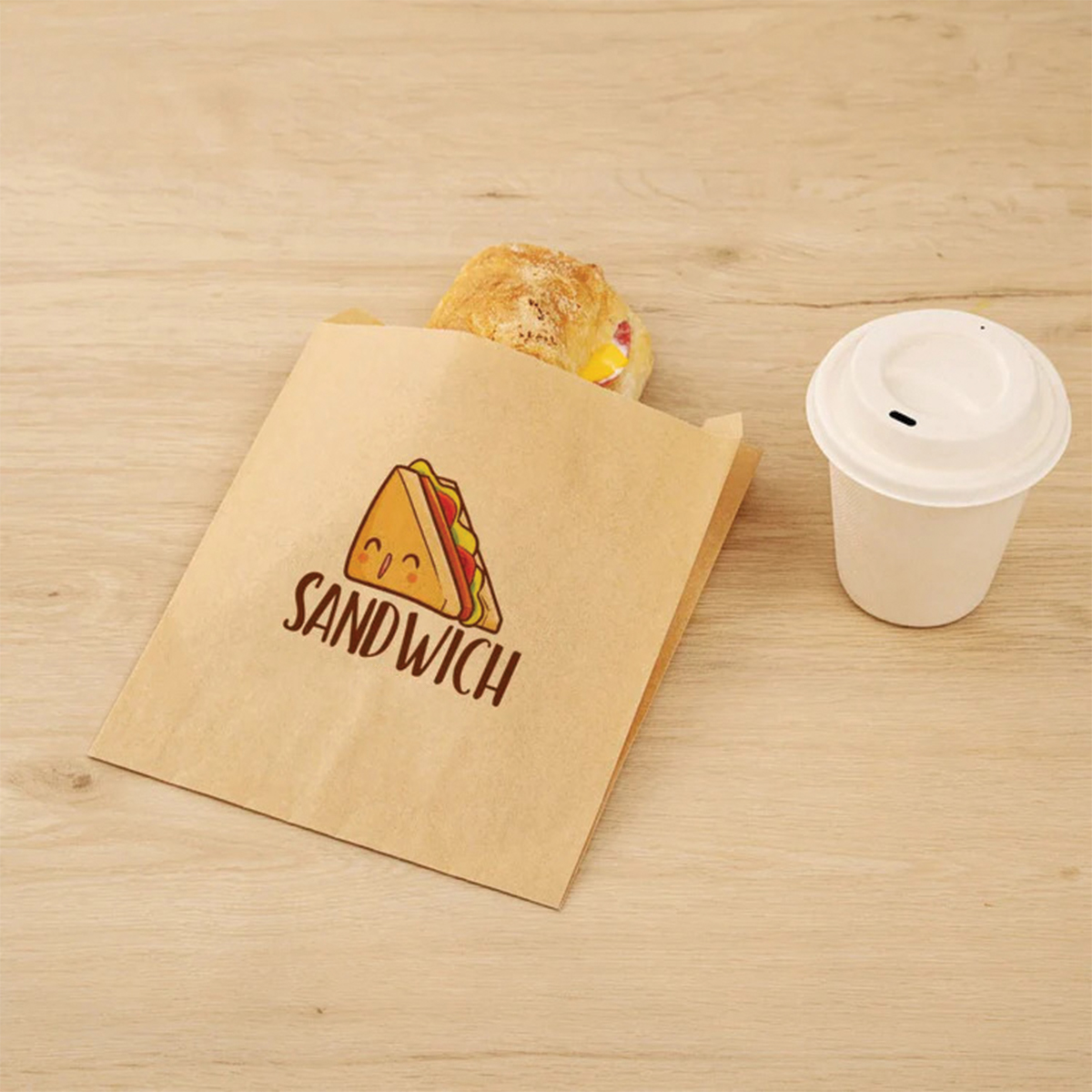
Custom Sandwich Paper
Custom sandwich paper cut to your wrap size and printed with your brand — greaseproof, PFAS-free, food-safe — in dispenser packs from 100. Spec and price the same working day.
The wrap is the packaging, the plate and the napkin
- Stock
- Greaseproof 30–45 gsm, kraft or white; PFAS-free
- Formats
- Cut sheets 250–350 mm square and custom; interfolded dispenser packs; flat packs
- Flexo 1–2 colors, food-contact ink, one face; repeating pattern
Get a price for Sandwich Paper
Send the size and quantity — we reply the same working day with a price, a dieline and a date. Artwork optional at this stage.
- Free dielineThe flat drawing comes with the quote, before you commit.
- Proof before pressNothing is printed until you have seen it laid on the dieline.
- Die kept for reordersTooling is paid once. Every reorder skips straight to press.
- Quoted in four marketsUS, UK, Canada and Australia, in the delivery currency.


Sheet sizes for the wrap
| 250 × 250 mm | A half sandwich, a wrap, a burger |
|---|---|
| 300 × 300 mm | A full sandwich; the deli standard |
| 350 × 350 mm | A sub or a large roll; basket liner |
| Custom | Cut to your fold — send a wrapped sandwich |
Greaseproof, and what that means here
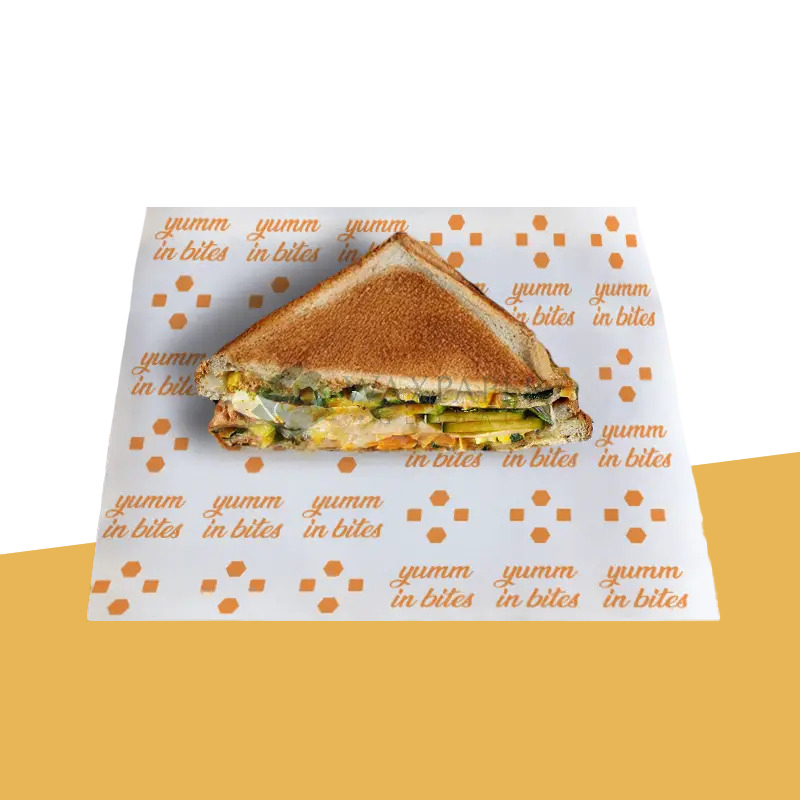
Sandwich paper is a dense greaseproof sheet at 30–45 gsm: the fat resistance is in the fiber, with no wax and no PFAS treatment. It folds crisply, holds a warm sandwich without softening, and recycles or composts. A heavier sheet for a hot, greasy sandwich; a lighter one for a cold deli wrap. Our food paper range for counters covers the wax and parchment sheets that sit beside it.
Print that touches food
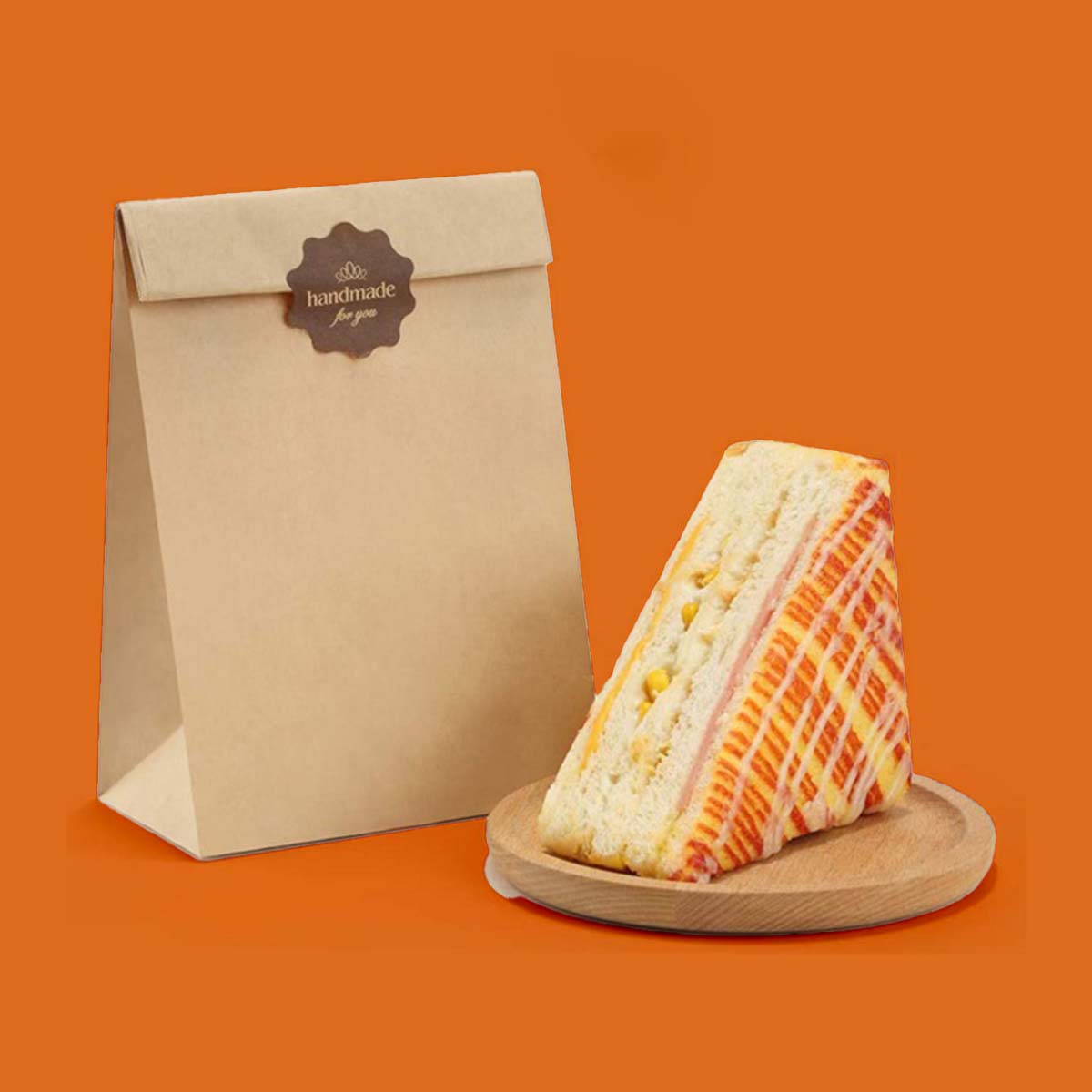
- One or two colors flexo in food-contact ink, on one face.
- A repeating pattern or logo, so the fold shows the brand from any side.
- Kraft-brown or white base; the same ink reads differently on each.
- Solid full-coverage prints are avoided — they reduce breathability and look patchy on a thin sheet.
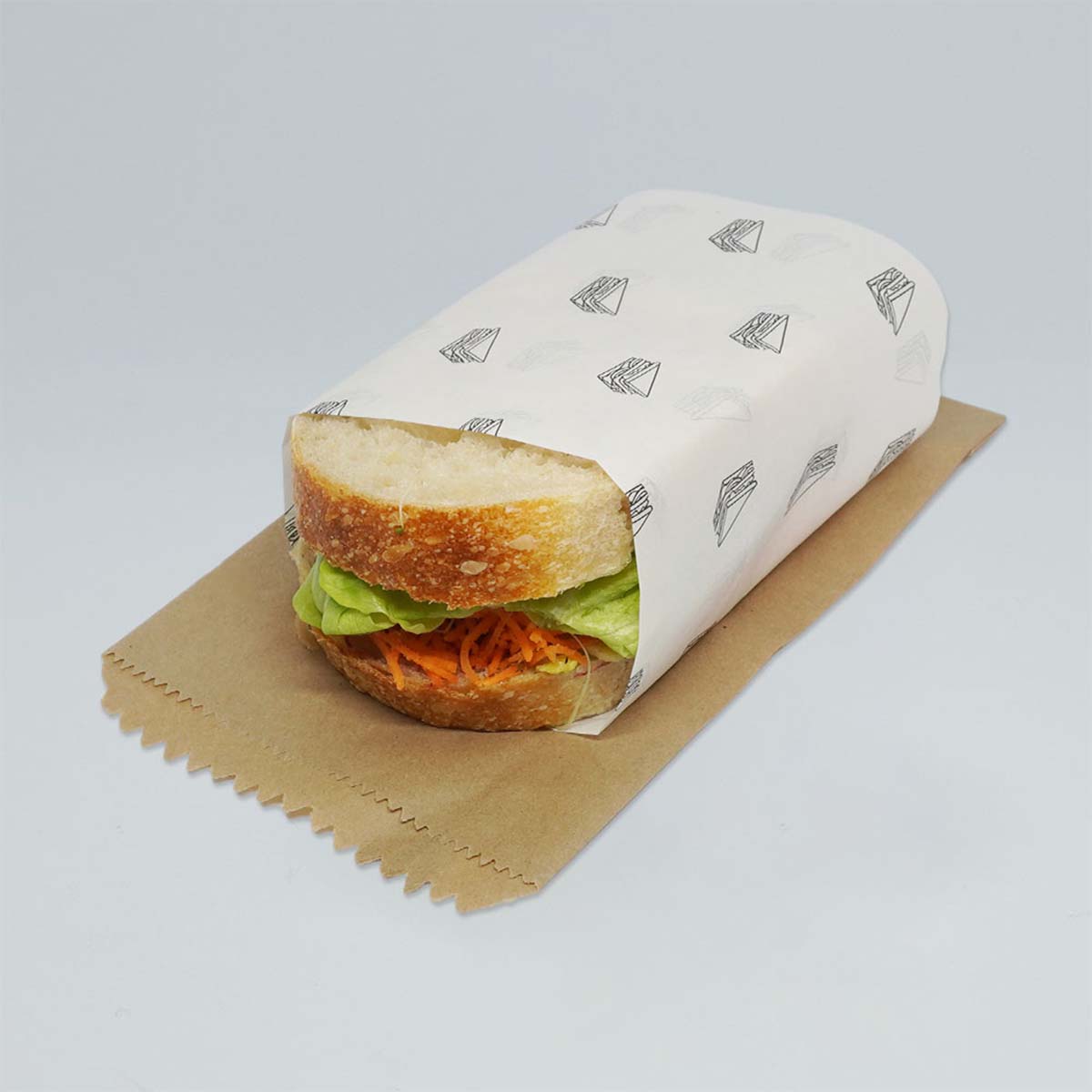
Dispenser packs and the speed of a counter
Sheets are supplied interfolded in a dispenser box, so one pulls the next and the counter takes a sheet without touching the stack. Flat packs of 500 for a bench. A busy deli uses a thousand sheets a day; a hundred packs is a starter run and reorders come from the same plates.
Send a sandwich wrapped the way you wrap it. The sheet size follows the fold, and the print is placed to show after folding.
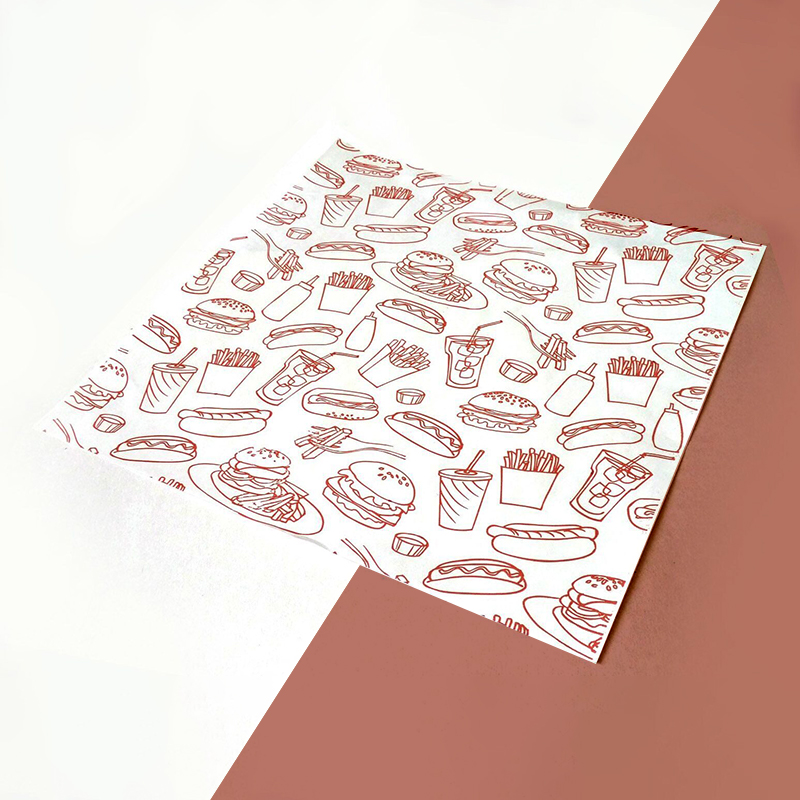
Where it is used
Delis, sandwich bars, cafés, food trucks, burger counters, bakeries lining baskets and trays, and caterers wrapping for delivery. The same sheet lines a tray, wraps a portion and cushions a box.
Sandwich Paper — specification
The rows that are specific to this build first, then what applies to every job we run. Anything not listed is a question, not a limit — send the brief.
This build
- Stock
- Greaseproof 30–45 gsm, kraft or white; PFAS-free
- Formats
- Cut sheets 250–350 mm square and custom; interfolded dispenser packs; flat packs
- Flexo 1–2 colors, food-contact ink, one face; repeating pattern
- Barrier
- Grease resistant; breathable; not a moisture barrier
- End of life
- Recyclable and compostable
- Packing
- Dispenser boxes of 500; flat packs of 500
- Minimum
- 100 packs
On every job
- Print process
- Flexo in one to six colors, printed on the outer face only and before any lining goes on.
- Color
- Food-safe inks throughout. Kraft mutes color; a white board or liner is needed for anything photographic.
- Tolerance
- Cutting plus or minus 1 mm, and fit confirmed by filling a plain sample from your own kitchen or line.
- Tooling
- A cutting die per size, kept. Molded pulp needs a tool per shape, which is a longer lead and a larger one-off.
- Food contact
- Every board food-contact grade, with grease resistance built into the sheet and never a PFAS treatment.
- Sustainability
- Aqueous linings and unlined boards repulp with ordinary paper. PE-lined cups need cup collection, and we say which you have.
- Artwork
- Vector PDF or AI, 3 mm bleed, 4 mm safe area, fonts outlined. We check every file and send a proof before press.
- Dieline
- Supplied free with the quote, before you commit. Yours whether or not you order.
- Sample
- A plain unprinted sample at the finished size on request, for fit and construction.
- Reorders
- Skip the tooling and go straight to press at a lower unit price.
- Lead time
- Quoted with the price against your fill date rather than promised before we have seen the spec.
- Markets
- United States, United Kingdom, Canada, Australia — priced in the delivery currency, freight included.
Boards and films we build sandwich paper on
Food packaging is chosen for what the food does to it: grease, steam, heat and time. Every board here is food-contact grade, and none of them uses a PFAS treatment for grease resistance.
Food-grade virgin board
Bleached board made for direct food contact. Clean, bright, no recycled fiber and no mineral-oil risk from recovered paper.
14–24ptGrease-resistant board
Resistance built into the sheet rather than sprayed on. Holds fries, pastry and butter without darkening. PFAS-free.
16–24ptPE-lined cupstock
Board with a polyethylene film for hot and cold liquid. Microwave-safe for reheating; recycled only where cup collection exists.
260–350gsmAqueous-lined cupstock
A water-based lining instead of PE. Repulpable in ordinary paper recycling in more places, and compostable; a slightly shorter hold time.
260–320gsmGreaseproof and glassine
Dense, calendered paper that resists fat through the fiber. Wraps, liners and interleaves; breathable, so pastry stays crisp.
30–55gsmFood-grade corrugated
E and B flute with a food-contact liner, vented where steam has to leave. Pizza, catering and anything hot and heavy.
E and B fluteMolded pulp and bagasse
Fiber pressed into a shape. Holds heat, resists grease with no lining, composts, and takes only an embossed or one-color mark.
Molded to shapeRecycled board
Post-consumer fiber. Used for outers, sleeves and anything that does not touch food directly — not for direct contact.
Non-contact onlyNot sure which? Say what goes in it and where it is sold — the material follows from that. Our notes on recycled, recyclable and compostable cover which claims each stock can honestly carry.
- 01
Send what you have
A dimension, a photograph beside a ruler, or the product itself. No technical drawing needed — that part is ours.
- 02
We quote and draw
A price, a dieline and a date come back together. If a different build would suit the product better, that is in the reply too.
- 03
Approve the dieline
The flat drawing is yours to check: which panel is the front, where the folds fall, how deep the cavity really is.
- 04
Artwork on the dieline
You place your design on the flat we sent, or we place it for you, and you see a proof before anything goes to press.
- 05
A sample if you want one
A plain unprinted sample at the finished size shows fit and construction — the things a drawing cannot.
- 06
Cut, printed, shipped
The die is cut once and kept, so every reorder skips the tooling and goes straight to press at a lower unit price.
Format
Vector PDF or AI where possible. Raster artwork at 300dpi at final size, in CMYK.
Bleed
3 mm past every trim line, so a fraction of drift on the cutter never leaves a white edge.
Safe area
Keep type and anything important 4 mm inside the cut and away from every fold.
Color
Convert to CMYK before sending. Uncoated stock prints lighter; a spot color is the only exact match.
Fonts
Outline them or supply the files. A missing font substitutes silently and the proof will not match.
Barcodes
On a light, matte, unvarnished patch with the quiet zone clear — a code on gloss fails the scanner.
Not set up that way? Send it anyway — fixing a file is a short conversation, and we check every one before press. Our guide to preparing print files covers each point.
Food finishes are limited by what may touch food, and that is the point.
Food-safe inks
Printed on the outer face only. Every food pack we make uses them, laminated or not.
Uncoated kraft
No coating at all. Breathable, so pastry stays crisp, and it takes one or two colors.
Aqueous varnish
Scuff resistance without a plastic film, so the pack still repulps.
Molded emboss
A logo pressed into pulp or bagasse. No ink, nothing to rub off, and it survives grease.
Grease-resistant face
Not a finish you can see. It is in the sheet, it is PFAS-free, and it is why the print stays clean.
Matte lamination
Available on outers and sleeves that never touch food — a cake box lid, a carrier, a gift sleeve.
Not sure which suits the shelf it sells from? Say where the product is sold and we suggest one — our notes on specialty finishes show them on real boxes.
Sizing food packaging around a portion, hot: sandwich paper
Food is sized by serving, not by dimensions, and it is served hot, heaped and in a hurry. Send us the portion — or better, the box you use now with the food in it — and we size to how it is actually filled.
- Portion, heaped
- Fries, popcorn and salad are served above the rim. A box sized to a level fill looks mean and spills in a bag.
- Lid clearance
- Enough that a loaded burger or a topped cake does not touch the lid. This is the single most common complaint about a food box.
- Venting
- Hot food steams. Vents in the lid keep pastry and fries crisp; a sealed box is right only for cold food.
- Grease path
- Where the fat sits decides the board. Say if the food is fried, buttered or sauced, and whether it is held for minutes or an hour.
- Stacking in a bag
- Delivery boxes are stacked five high on a bike. The lid has to hold the box above it off the food below.
- Sample fill
- A plain box filled from your kitchen settles the size in one try, and we send one before the run.
Not sure your numbers are right? Send the product dimensions rather than the box dimensions and we work the box out — the full method is in our guide to measuring for a box.
Interactive · five steps · no sign-up
Build your Sandwich Paper in 3D
Pick a shape, type a size, choose a board and a finish. The preview on the left redraws as you go, and the spec lands with us exactly as you set it.
Frequently asked questions
Got a question about sandwich paper? The answers below cover what we get asked most. If yours is not here, send it with a brief, message us on WhatsApp, or call +1 503-461-4788 — we reply the same working day.
Is sandwich paper food safe?
Yes: a food-grade greaseproof sheet printed with food-contact inks, PFAS-free.
Will grease come through?
The sheet resists fat through the fiber. A heavier 40–45 gsm sheet handles a hot greasy sandwich; a lighter one suits a cold wrap.
What size should I order?
300 × 300 mm is the deli standard. Send a sandwich wrapped your way and we cut to the fold.
Can I print my logo on it?
Yes, one or two colors on one face. A repeating pattern shows the brand from any side of the fold.
Is it recyclable?
Yes, and compostable. There is no wax or plastic coating.
What is the minimum order?
100 packs.
Do you supply a dispenser?
Yes, sheets come interfolded in a dispenser box so one pulls the next.
Kraft or white paper?
Kraft reads natural and hides marks; white shows the print brighter. The same ink reads differently on each.
Can it line a basket or a tray?
Yes, the same sheet lines a basket, wraps a portion and cushions a box.
Can I print in full color?
Not well on a thin sheet. One or two colors print cleanly; full coverage reduces breathability and looks patchy.
Is it wax paper?
No. Wax paper is coated; sandwich paper is a dense greaseproof sheet with no coating.
Do you ship outside the US?
Yes, to the United States, United Kingdom, Canada and Australia, quoted in the delivery currency.
Same range