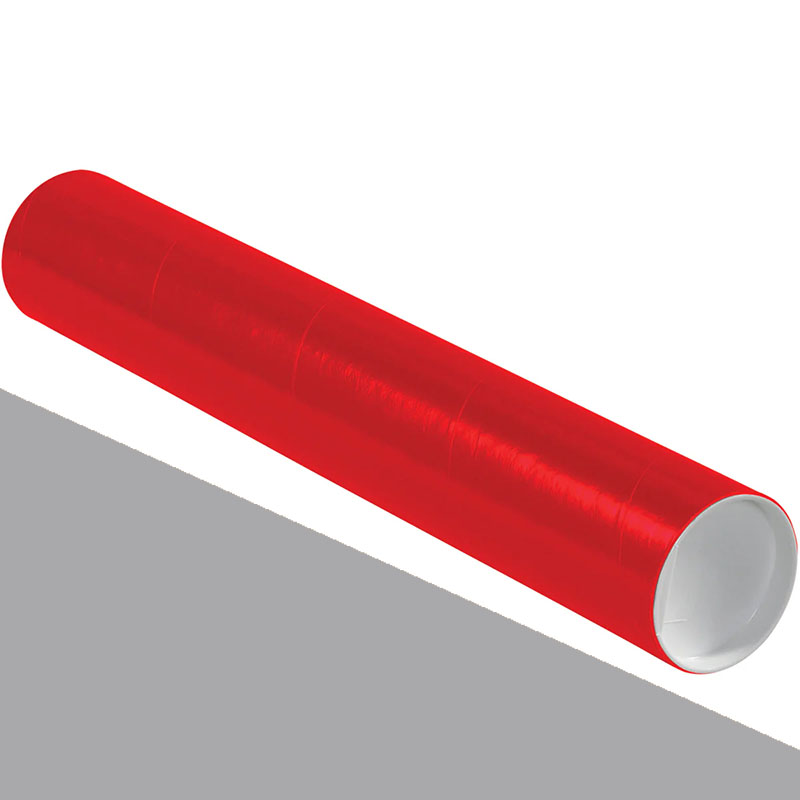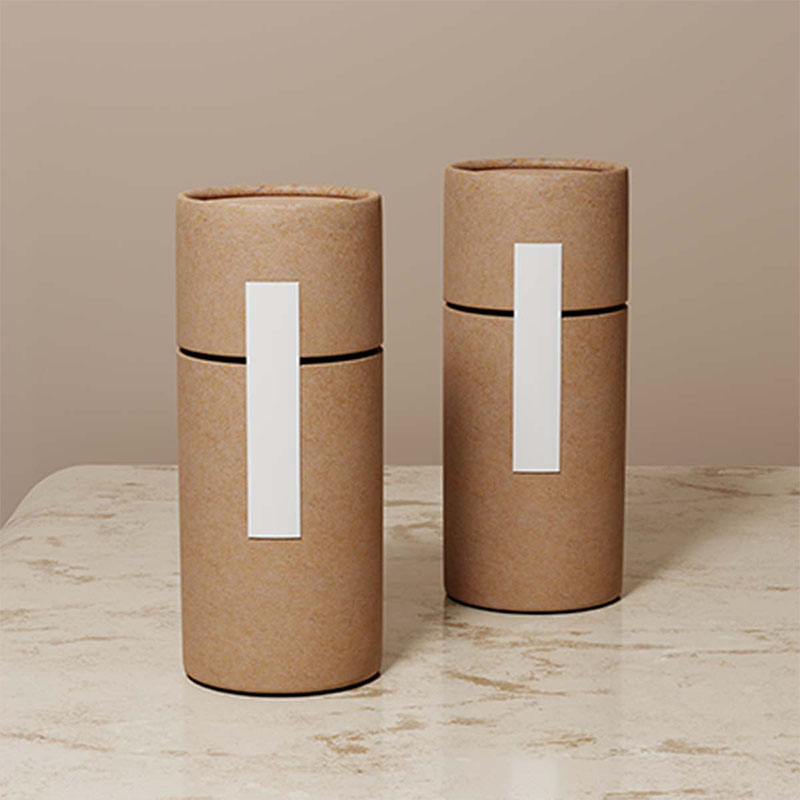
Custom Paper Tube Containers
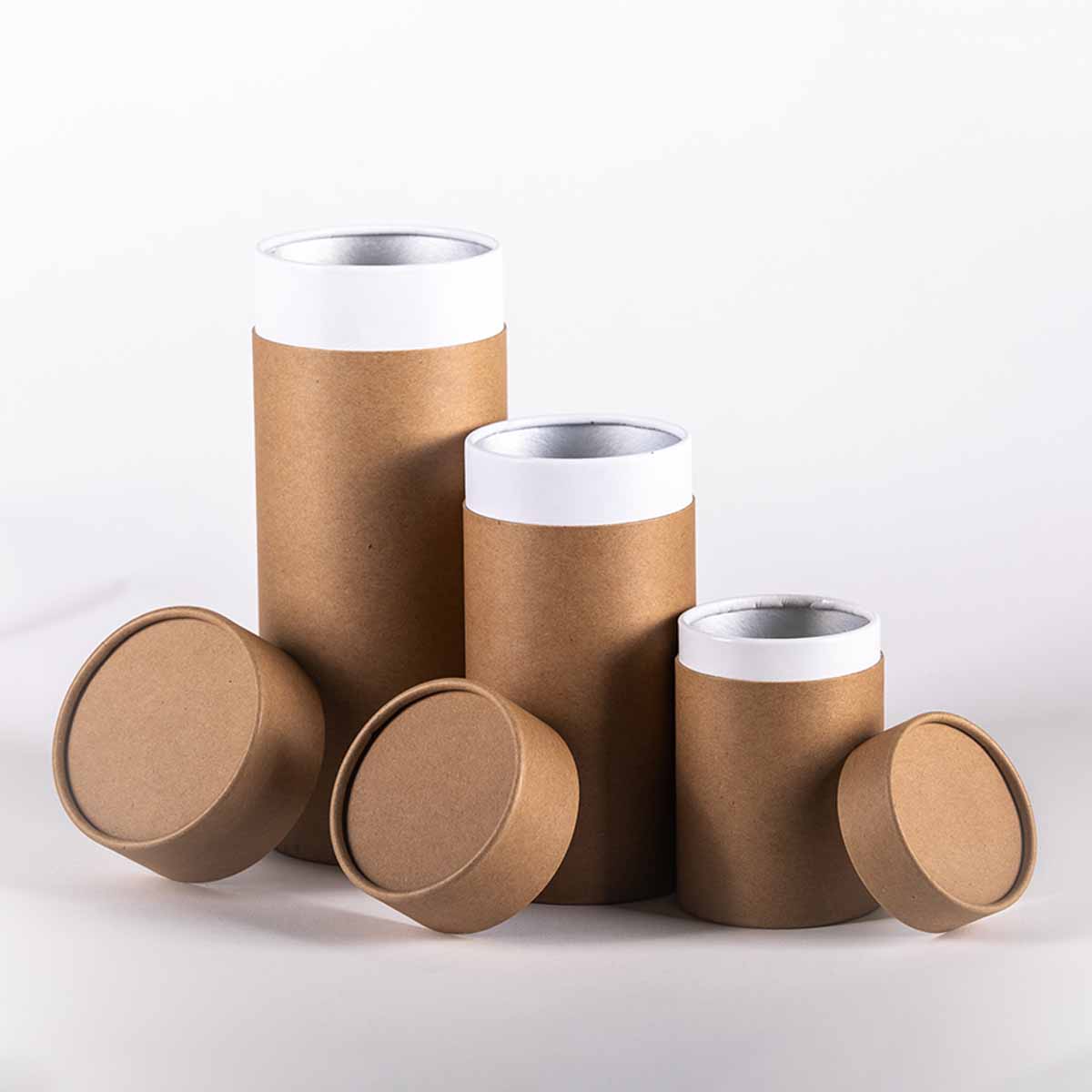
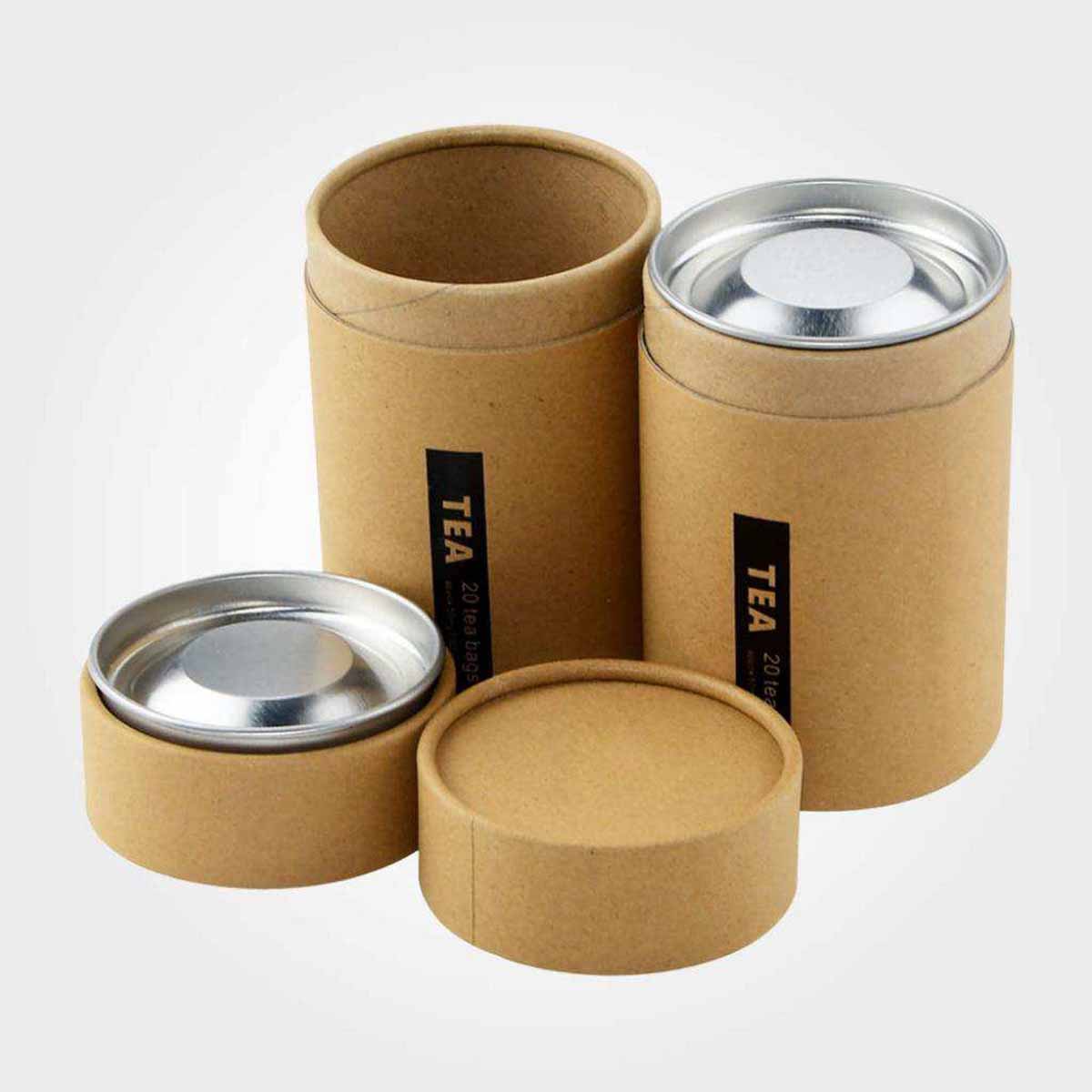
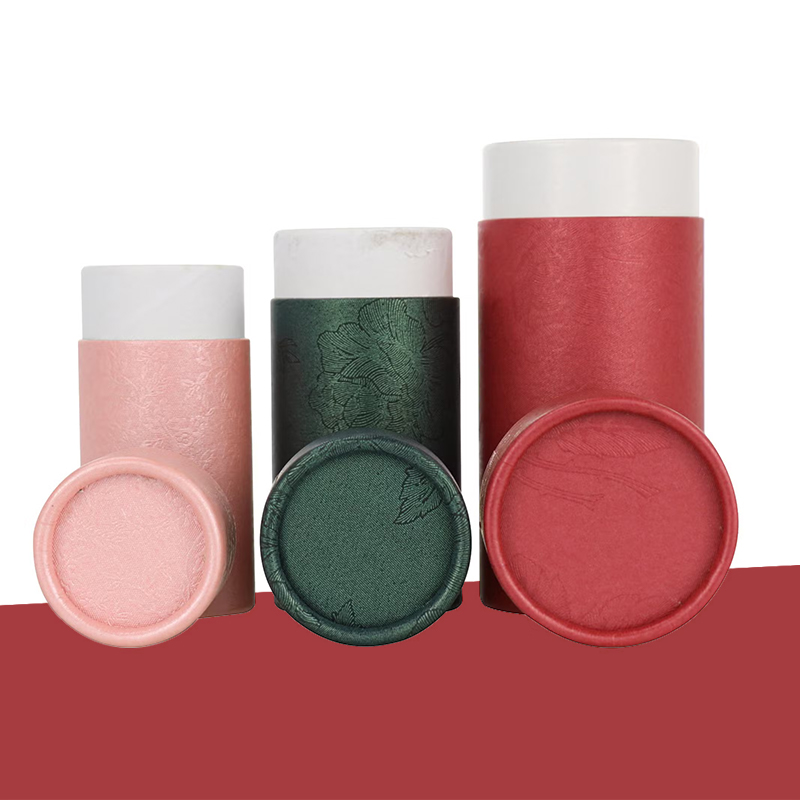
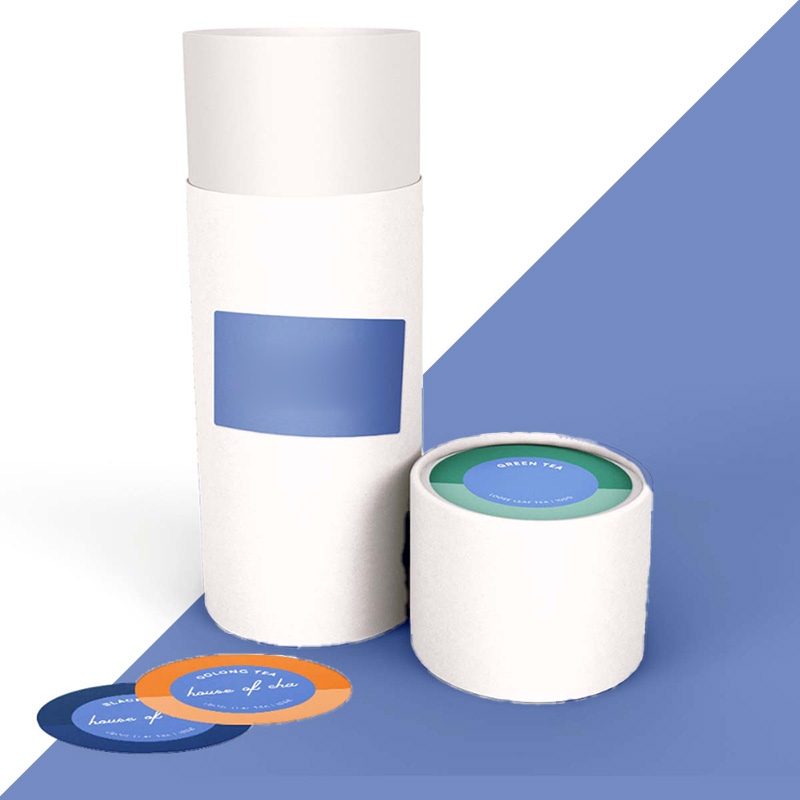
Custom paper tube containers from 100 — printed cylinders for products sold on a shelf, in tall and short formats, with lift-off or shoulder lids and wraps designed to work as a matching range.
Round packaging that is printed to be picked up
- Board
- Spiral-wound chipboard, 1–2.5 mm wall, wrapped in printed paper
- Formats
- Tall, short, nested sets, single-diameter ranges
- Lids
- Lift-off telescoping lid or flush shoulder lid
Order online
Order paper tube containers
Starting from $1.50 per unit
Printed to your artwork or plain, sold in runs of 100 up to 5,000 units per product online. Freight to the US, UK, Canada and Australia is inside the price.
How an online order runs
- Add the units you needThen check out with your delivery address. Add other products to the same order on the way.
- A digital proof comes backLaid on the dieline, before anything prints. Change it as often as you need.
- Pay once you approve itPay by PayPal invoice or bank transfer after you approve your digital proof, or cash on delivery in the US and Canada.
- We make it and ship it deliveredYour delivery date is confirmed with the proof, against the spec and your fill date. Freight and customs are handled on the way to you.
Another size, board or finish, or more than 5,000 units? Send the spec for a price instead. Freight by market and our terms cover delivery and remakes.
Get a price for Paper Tube Containers
Send the size and quantity — we reply the same working day with a price, a dieline and a date. Artwork optional at this stage.
- Free dielineThe flat drawing comes with the quote, before you commit.
- Proof before pressNothing is printed until you have seen it laid on the dieline.
- Die kept for reordersTooling is paid once. Every reorder skips straight to press.
- Quoted in four marketsUS, UK, Canada and Australia, in the delivery currency.


Designing artwork for a surface with no corners
On a box, the front panel is fixed. On a cylinder, the customer turns it. Artwork is laid out on a flat wrap that is exactly the circumference wide plus an overlap, and the brand mark sits a third of the way round from the seam so it faces forward when the seam faces the shelf. Text near the top and bottom edges is kept clear of the roll-over onto the rim.
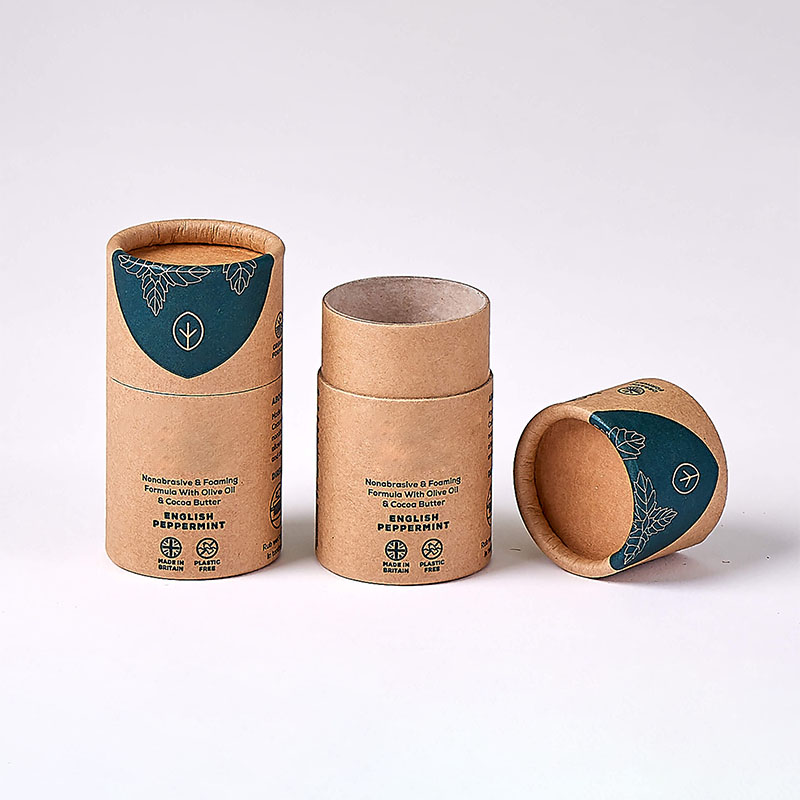
A line illustration that runs all the way round, like the ones in our photos, needs a join that matches. We send the dieline with the seam and overlap marked.
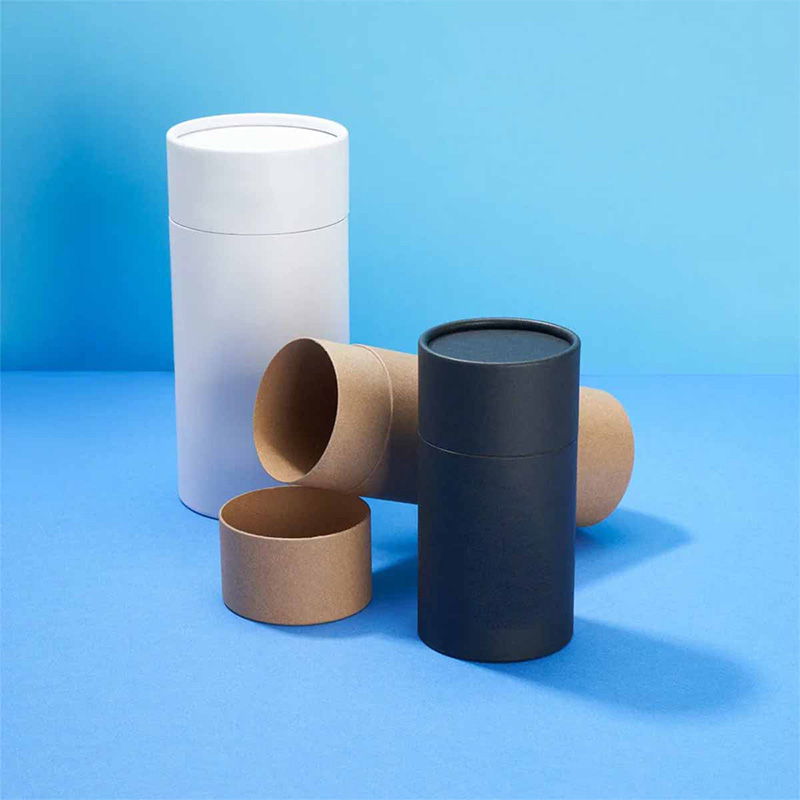
Tall, short and the set in between
| Tall and narrow | Serum bottles, lip and eye products, rolled scarves and socks, candles |
|---|---|
| Short and wide | Creams, bath bombs, tea tins, jewelry, gift cards |
| Nested set | Two or three diameters that stack or sit inside one another as a gift |
| Range of heights, one diameter | A product line where each size uses the same lid |
Keeping one diameter across a range lets every container share one lid tool, which keeps the cost per size down.
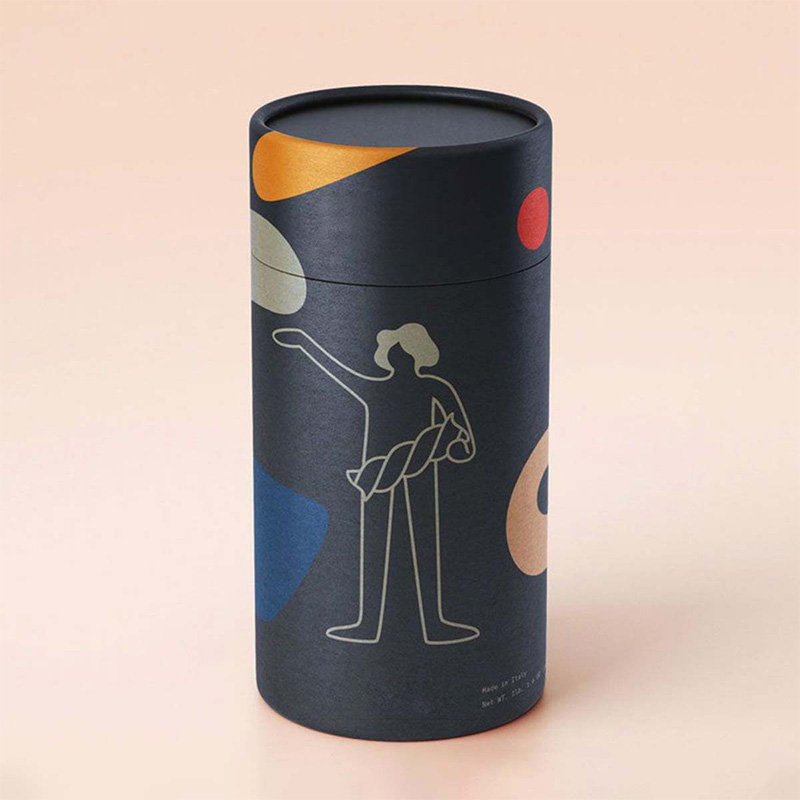
Lift-off lid or shoulder lid on a shelf product
A lift-off lid covers the top of the tube and slides down over it; the line where lid meets body is visible and is often used as part of the design. A shoulder lid closes onto an inner neck so lid and body sit flush, which looks cleaner and gives a slight resistance as it opens. Both are explained in more depth on our page for paper tubes with fitted lids.
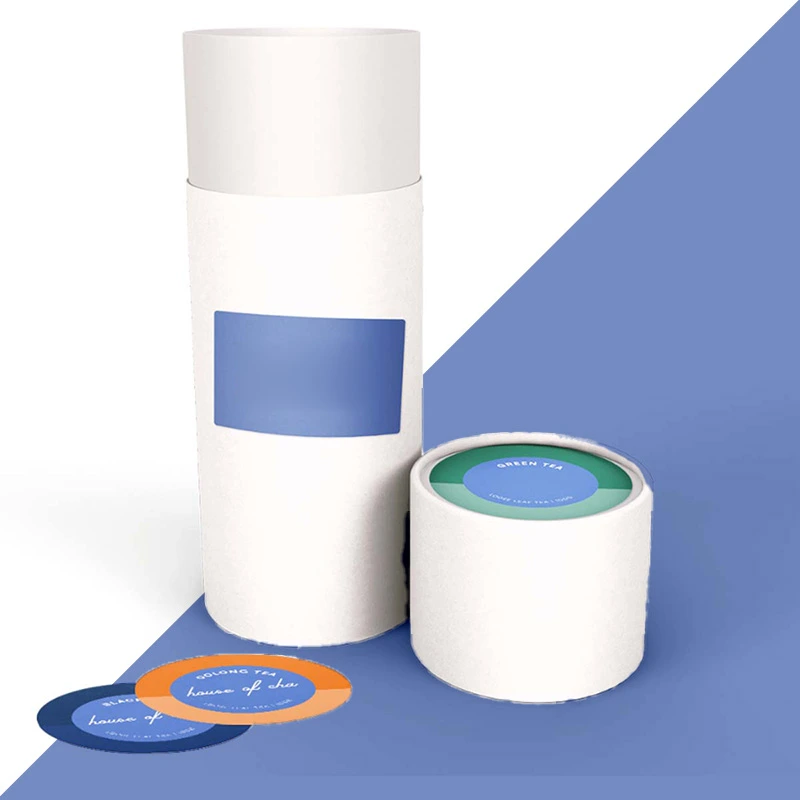
Wrap papers and how they change the feel
- Coated white wrap for full-color print with sharp detail and bright color.
- Uncoated or textured wrap for a soft, matte hand and a natural look.
- Kraft wrap printed in one or two colors for a plain, honest finish.
- Soft-touch lamination, foil stamping and embossing on the lid and around the body.
- A colored inner wrap, so the inside of the lid shows a second color when opened.
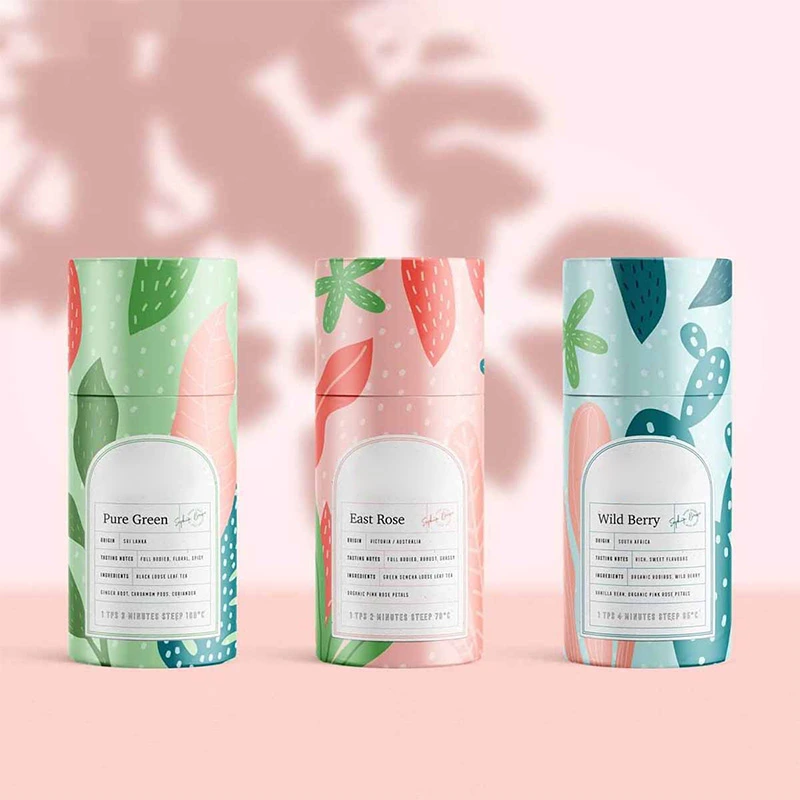
Holding the product still inside a cylinder
A bottle in a tube that is too wide rolls and rattles. A paper container is built with a card or foam collar, a raised platform, or a second inner tube that holds the item in the center. For anything that should rise as the lid comes off, see the options in cardboard tubes with fitted inserts.
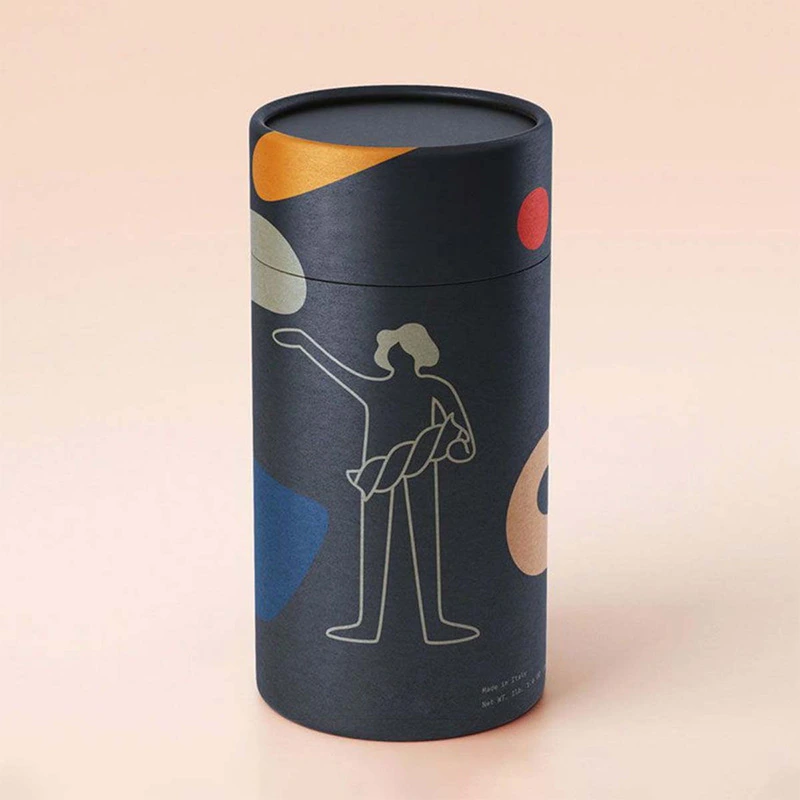
Paper Tube Containers — specification
The rows that are specific to this build first, then what applies to every job we run. Anything not listed is a question, not a limit — send the brief.
This build
- Board
- Spiral-wound chipboard, 1–2.5 mm wall, wrapped in printed paper
- Formats
- Tall, short, nested sets, single-diameter ranges
- Lids
- Lift-off telescoping lid or flush shoulder lid
- Wraps
- Coated, uncoated, textured or kraft; soft-touch, foil, emboss
- Inside
- Card or foam collar, platform, inner tube
- Minimum
- 100 containers per design
On every job
- Print process
- The tube itself is not printed. A wrap is printed offset as a flat sheet and applied, with the seam at the back.
- Color
- CMYK and spot colors on the wrap. Bare kraft takes one color directly, printed on the outer ply as the tube winds.
- Tolerance
- Diameter is fixed by the mandrel; length plus or minus 1 mm. Cap fit is set on a sample with a humidity allowance.
- Tooling
- The mandrel sets the diameter and is not a cost. Tooling is the wrap print and any foil die, made once and kept.
- Food contact
- A food-grade inner ply or a separate inner bag where the tube holds loose tea, coffee or confectionery.
- Sustainability
- The wound board and the paper wrap recycle as paper. Metal ends and plastic plugs are removed first.
- Artwork
- Vector PDF or AI, 3 mm bleed, 4 mm safe area, fonts outlined. We check every file and send a proof before press.
- Dieline
- Supplied free with the quote, before you commit. Yours whether or not you order.
- Sample
- A plain unprinted sample at the finished size on request, for fit and construction.
- Reorders
- Skip the tooling and go straight to press at a lower unit price.
- Lead time
- Quoted with the price against your fill date rather than promised before we have seen the spec.
- Markets
- United States, United Kingdom, Canada, Australia — priced in the delivery currency, freight included.
Boards and films we build paper tube containers on
A tube is wound rather than folded, so the wall is built up in layers of board on a mandrel. That gives it drum stiffness, and it means the internal diameter comes from a fixed set of mandrels.
Wound kraft chipboard
Strips of recycled board spiralled and glued. The tube body: strong in compression, recyclable as paper, and naturally brown.
1–3 mm wallLight wall, 1–1.5 mm
For retail tubes that travel inside a shipper — tea, cosmetics, candles. Keeps the tube light and the freight down.
1–1.5 mmHeavy wall, 2–3 mm
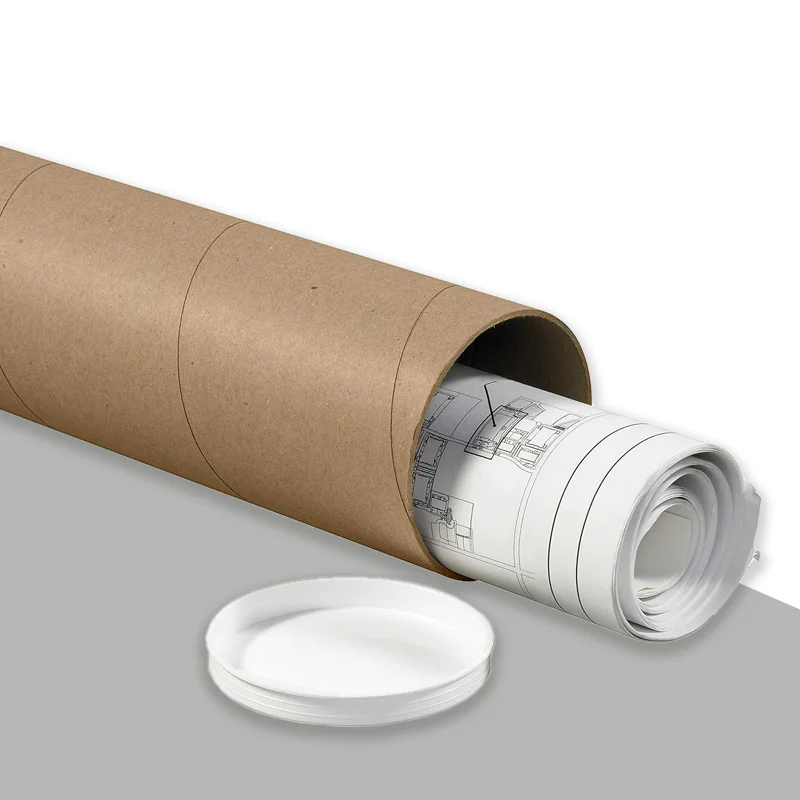
For tubes posted on their own: posters, plans, spirits. A thin-walled long tube arrives with a kink in the middle.
2–3 mmPrinted paper wrap
The tube is not printed directly. A printed label is wrapped around it in full color, with foil or emboss, and the seam sits at the back.
120–157gsmTinplate ends
Crimped metal base and lid. The traditional tea and gift tube; adds weight and a different sound when it opens.
CrimpedPlastic plugs
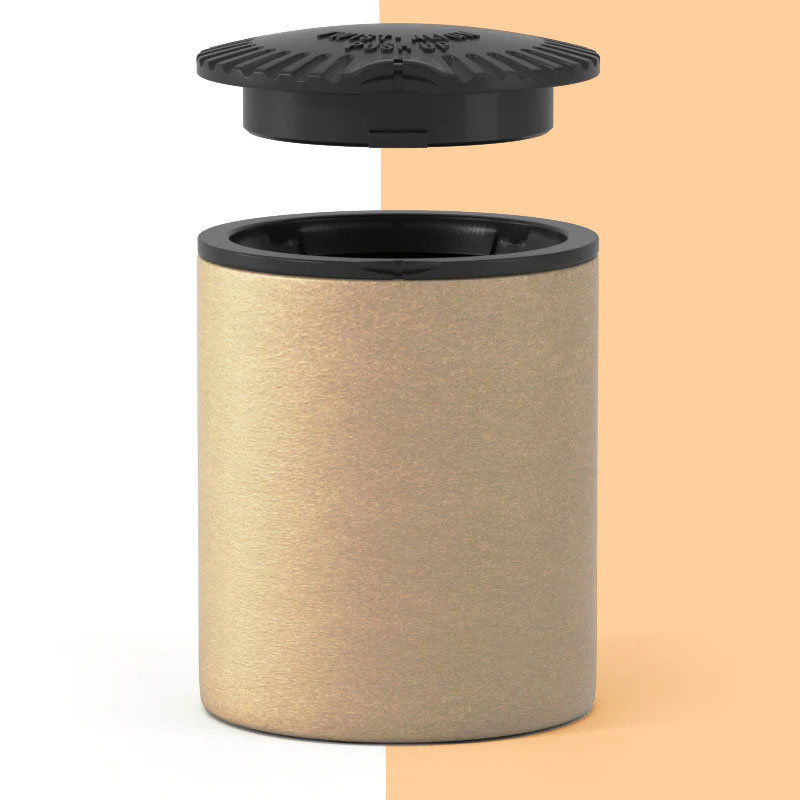
Snap-in ends for shipping and poster tubes. Reusable, removable, and the fit is what stops them pushing out under a stack.
Push-fitFood-grade liners
A laminated or greaseproof inner ply, or a separate inner bag, where the tube holds loose tea, coffee or confectionery.
Inner ply or bagShoulder and telescoping lids
A short second tube over the base, or an inner collar for a flush join. The join is the difference between a container and a gift.
Wound to matchNot sure which? Say what goes in it and where it is sold — the material follows from that. Our notes on recycled, recyclable and compostable cover which claims each stock can honestly carry.
- 01
Send what you have
A dimension, a photograph beside a ruler, or the product itself. No technical drawing needed — that part is ours.
- 02
We quote and draw
A price, a dieline and a date come back together. If a different build would suit the product better, that is in the reply too.
- 03
Approve the dieline
The flat drawing is yours to check: which panel is the front, where the folds fall, how deep the cavity really is.
- 04
Artwork on the dieline
You place your design on the flat we sent, or we place it for you, and you see a proof before anything goes to press.
- 05
A sample if you want one
A plain unprinted sample at the finished size shows fit and construction — the things a drawing cannot.
- 06
Cut, printed, shipped
The die is cut once and kept, so every reorder skips the tooling and goes straight to press at a lower unit price.
Format
Vector PDF or AI where possible. Raster artwork at 300dpi at final size, in CMYK.
Bleed
3 mm past every trim line, so a fraction of drift on the cutter never leaves a white edge.
Safe area
Keep type and anything important 4 mm inside the cut and away from every fold.
Color
Convert to CMYK before sending. Uncoated stock prints lighter; a spot color is the only exact match.
Fonts
Outline them or supply the files. A missing font substitutes silently and the proof will not match.
Barcodes
On a light, matte, unvarnished patch with the quiet zone clear — a code on gloss fails the scanner.
Not set up that way? Send it anyway — fixing a file is a short conversation, and we check every one before press. Our guide to preparing print files covers each point.
A tube is finished on the wrap, so anything a flat sheet takes, a tube takes.
Bare kraft
No wrap at all. The natural wound board, which is the look most brands choose it for.
Printed wrap
Full color on a laminated paper applied round the tube, with the seam at the back.
Hot foil
On the wrap before it is applied, or on the lid top. Gold on kraft is the category signature.
Deboss on the wrap
Pressed after wrapping so the relief follows the curve.
Two-tone
One paper on the lid, another on the base. Reads as a deliberate design for almost nothing.
Metal ends
Tinplate base and lid. A different weight and a different sound when it opens.
Not sure which suits the shelf it sells from? Say where the product is sold and we suggest one — our notes on specialty finishes show them on real boxes.
Sizing a tube, where diameter comes in steps: paper tube containers
Length is cut to order, but the internal diameter is set by the mandrel the tube is wound on. Those come in roughly 5 mm steps, so we choose the first step above your product rather than an exact figure.
- Internal diameter
- The product at its widest plus 2–3 mm, rounded up to the next mandrel. Anything more and a round product rolls inside.
- Length
- The product plus the depth of a cap at each end, plus 3 mm. Cut to any figure.
- Wall thickness
- 1–1.5 mm inside a shipper, 2–3 mm for a tube that travels alone. It is the whole protection on a mailing tube.
- Cap fit
- Set on a plain sample. A cap a fraction loose falls out in the post; a fraction tight cannot be opened by hand.
- Outside size
- Carriers measure the outside including the caps — usually about 0.25 in over the bore, and an inch over the length.
- Inserts
- Round products still rattle. A board ring or a foam disc holds a jar or a bottle centered.
Not sure your numbers are right? Send the product dimensions rather than the box dimensions and we work the box out — the full method is in our guide to measuring for a box.
Interactive · five steps · no sign-up
Spec your Paper Tube Containers
Pick a shape, type a size, choose a wall and wrap and a finish. The preview on the left redraws as you go, and the spec lands with us exactly as you set it.
Frequently asked questions
Got a question about paper tube containers? The answers below cover what we get asked most. If yours is not here, send it with a brief, message us on WhatsApp, or call +1 503-461-4788 — we reply the same working day.
What products are paper tube containers used for?
Cosmetics, tea, candles, apparel accessories, jewelry and gifts: products sold on a shelf where the package is handled and kept.
How is artwork laid out on a paper tube container?
On a flat wrap the width of the circumference plus an overlap. We mark the seam and set the main panel so it faces forward on the shelf.
Can a paper tube container have artwork that runs all the way round?
Yes. A continuous design needs its two ends to match at the seam, and the dieline shows exactly where that join falls.
What is the difference between a lift-off and a shoulder lid on a paper tube container?
A lift-off lid slides over the body and shows a line where they meet; a shoulder lid closes onto an inner neck and sits flush.
Can paper tube containers be made as a matching set?
Yes. A range can share one diameter at different heights, or come as nested sizes that stack or fit inside one another.
Why keep one diameter across a range of paper tube containers?
Every size can use the same lid tool, which lowers the cost per size and keeps the range looking consistent.
Can a paper tube container hold a glass bottle without it rattling?
Yes. A card or foam collar, a platform or an inner tube holds the bottle in the center of the cylinder.
What finishes can be used on paper tube containers?
Soft-touch lamination, foil stamping and embossing on the lid and body, on coated, uncoated, textured or kraft wraps.
Can the inside of a paper tube container be a different color?
Yes. A colored inner wrap shows a second color when the lid comes off.
Are paper tube containers sturdy enough to keep?
Yes. The wound chipboard wall holds its shape through repeated opening, which is why many are kept and reused.
Can paper tube containers be shipped to the UK and Australia?
Yes. We ship to the United States, the United Kingdom, Canada and Australia, with freight included in the quote.
Same range