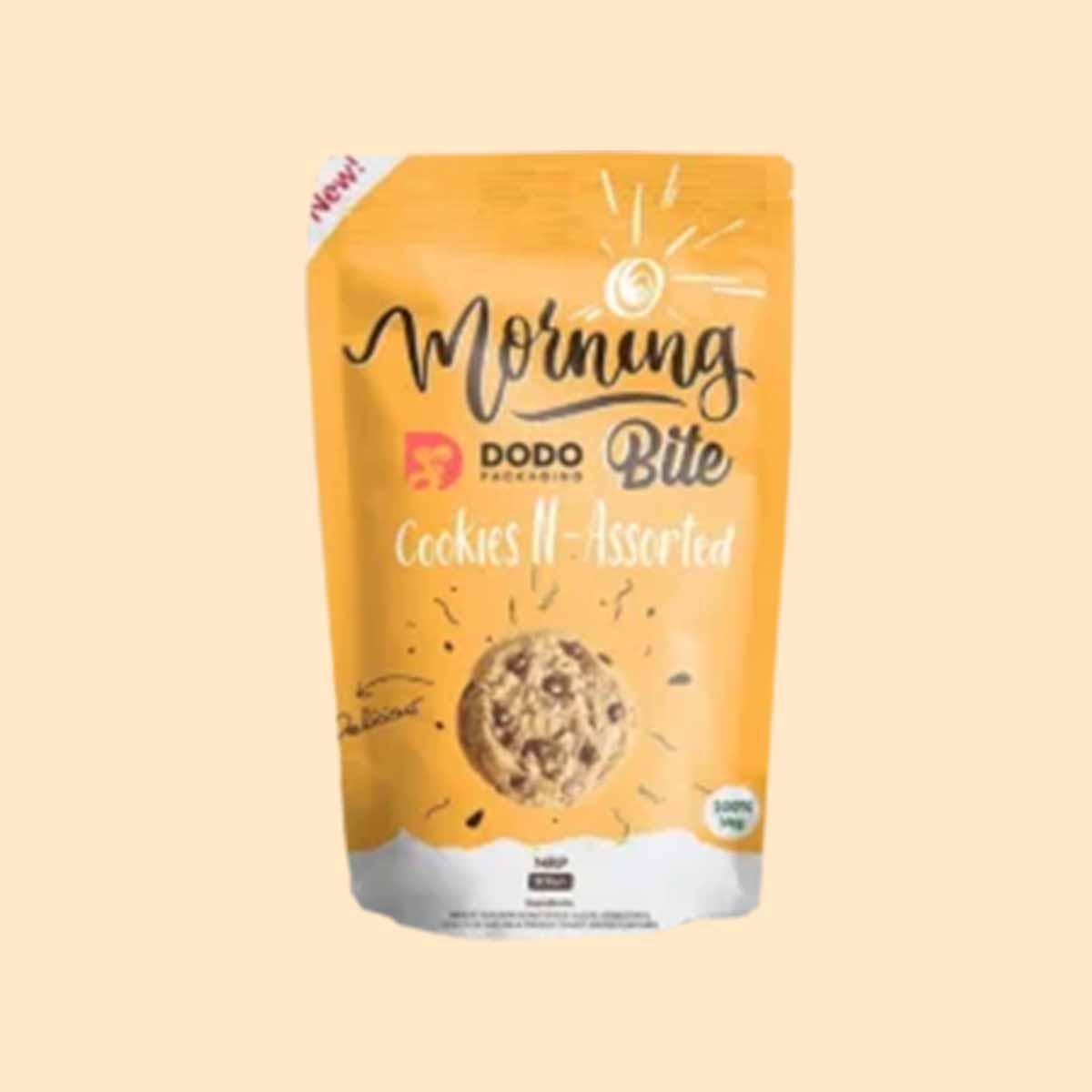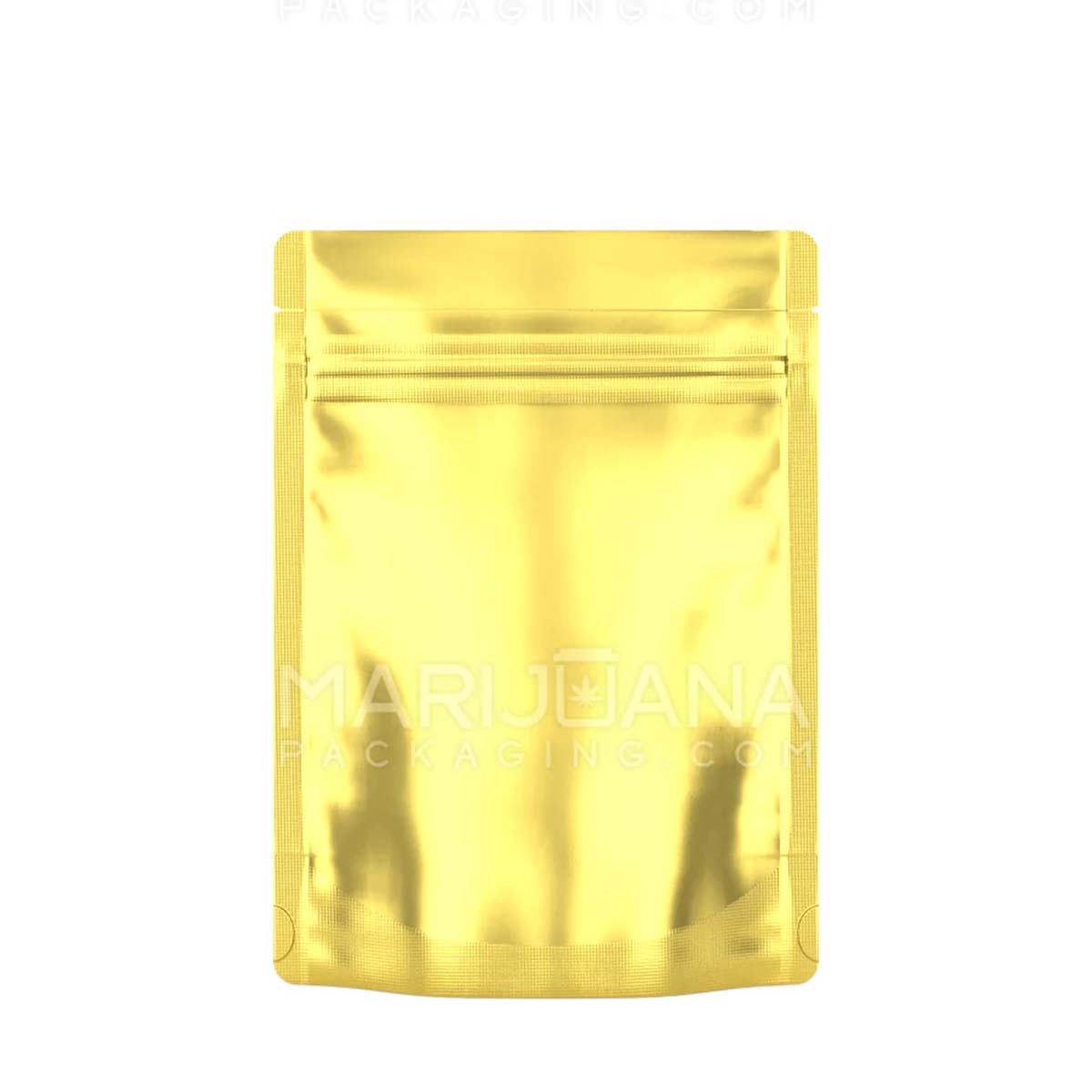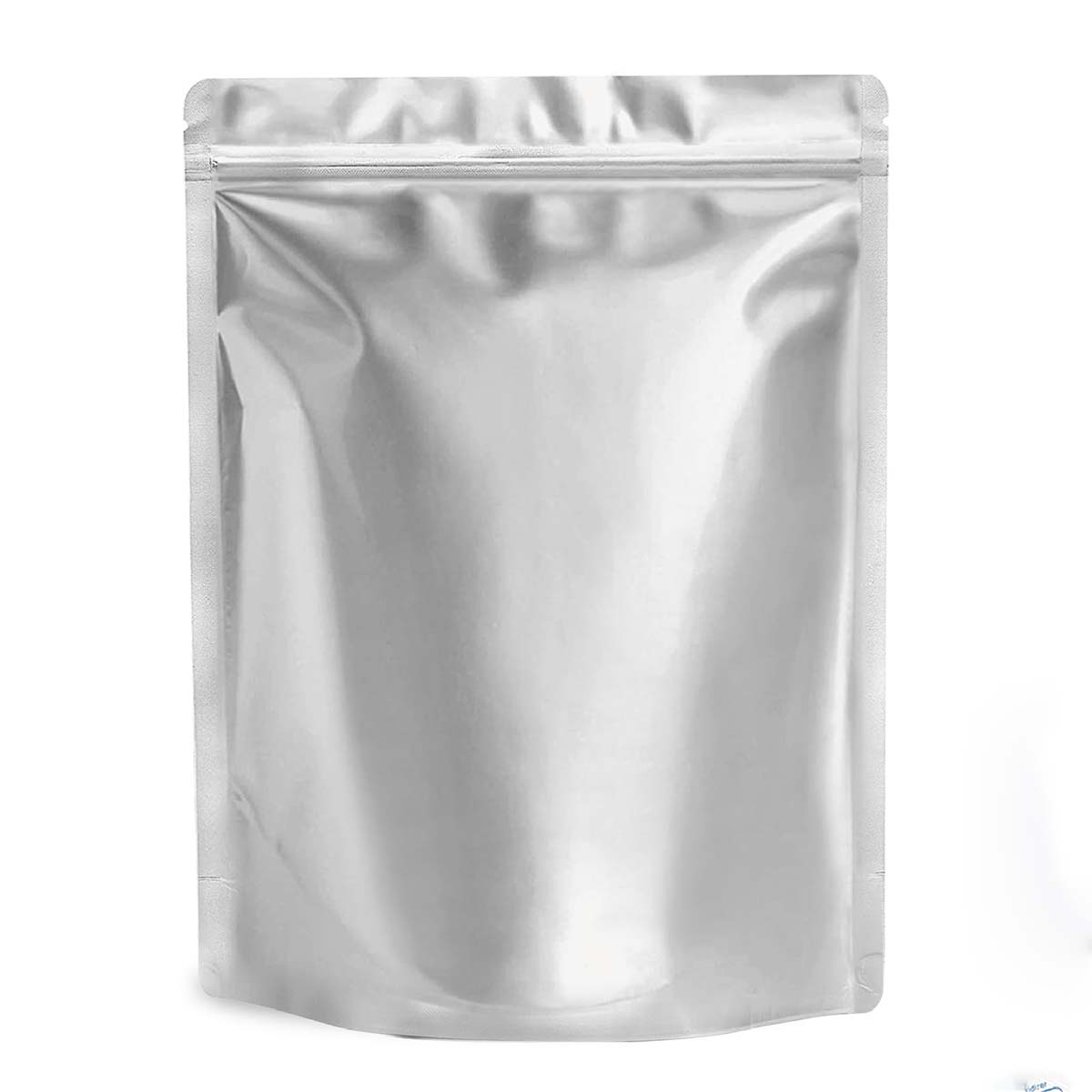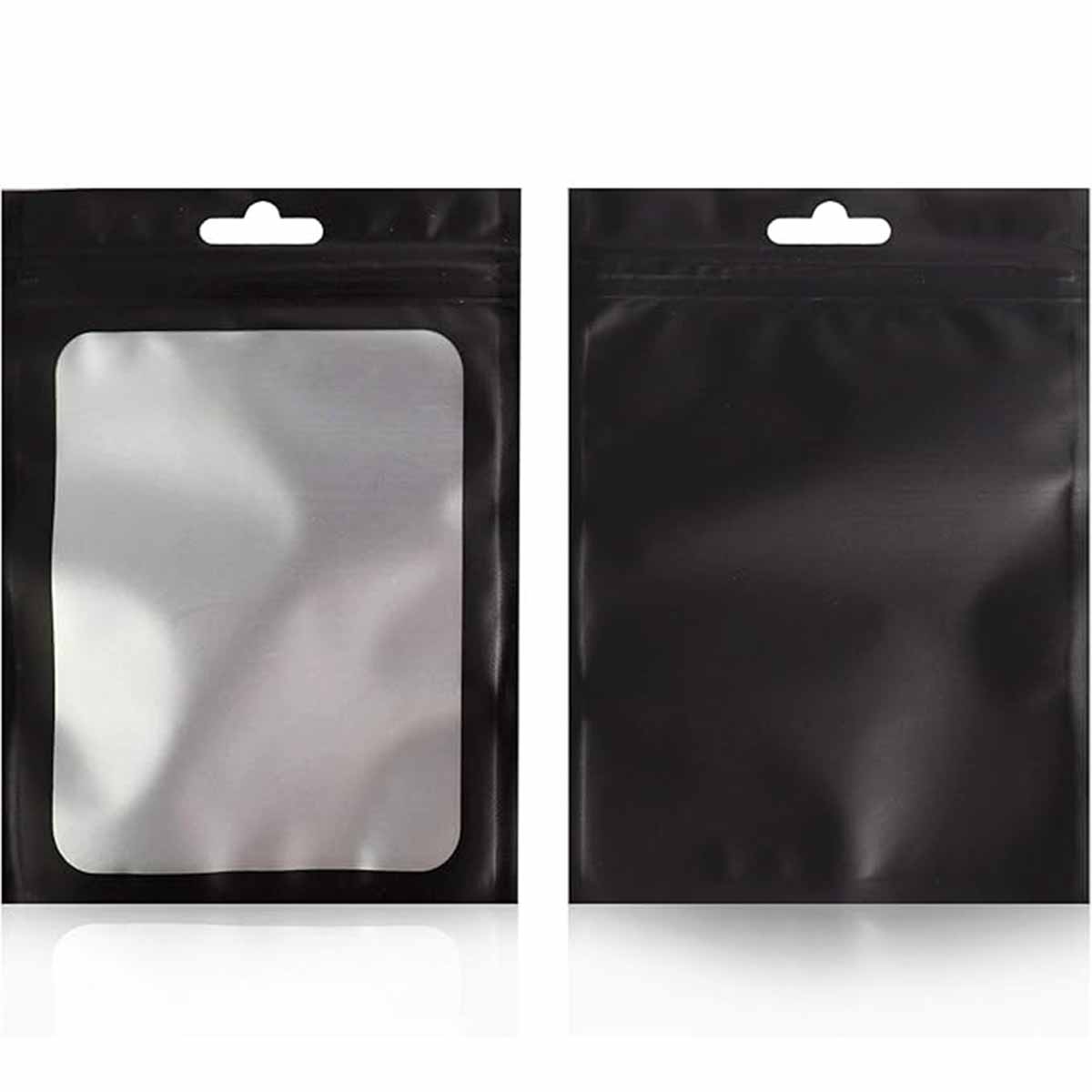
Custom Dual Compartment Mylar Bags
Custom dual compartment mylar bags with two separately sealed sections in one pouch, from 100 units. For products that are sold together and must not touch — a mix and its topping, a powder and its scoop, a two-part kit — with each side opened on its own.
Two products, one bag, and a seal between them
- Structure
- PET / foil or metallized / PE laminate, 3.5–5 mil
- Divider
- Heat-sealed center seal, horizontal or vertical; perforated on request
- Openings
- Two zippers, zipper and tear-off, two tear notches
Get a price for Dual Compartment Custom Mylar Bags
Send the size and quantity — we reply the same working day with a price, a dieline and a date. Artwork optional at this stage.
- Free dielineThe flat drawing comes with the quote, before you commit.
- Proof before pressNothing is printed until you have seen it laid on the dieline.
- Die kept for reordersTooling is paid once. Every reorder skips straight to press.
- Quoted in four marketsUS, UK, Canada and Australia, in the delivery currency.
How the divider works
The bag is a single laminate pouch with a heat seal running across it, made at the same time as the side seals. That center seal is as strong as the edge, and it makes two fully separate chambers — separate atmospheres, separate absorbers if needed, no migration of moisture or fat from one side to the other. Each chamber is filled and sealed on its own, which means the two sides can be filled on different days.
The divider can run horizontally, giving a top and bottom chamber, or vertically, giving side by side. Side by side is easier to fill and shows both products on the shelf; top and bottom suits a stand-up bag where the heavier product needs to be low.
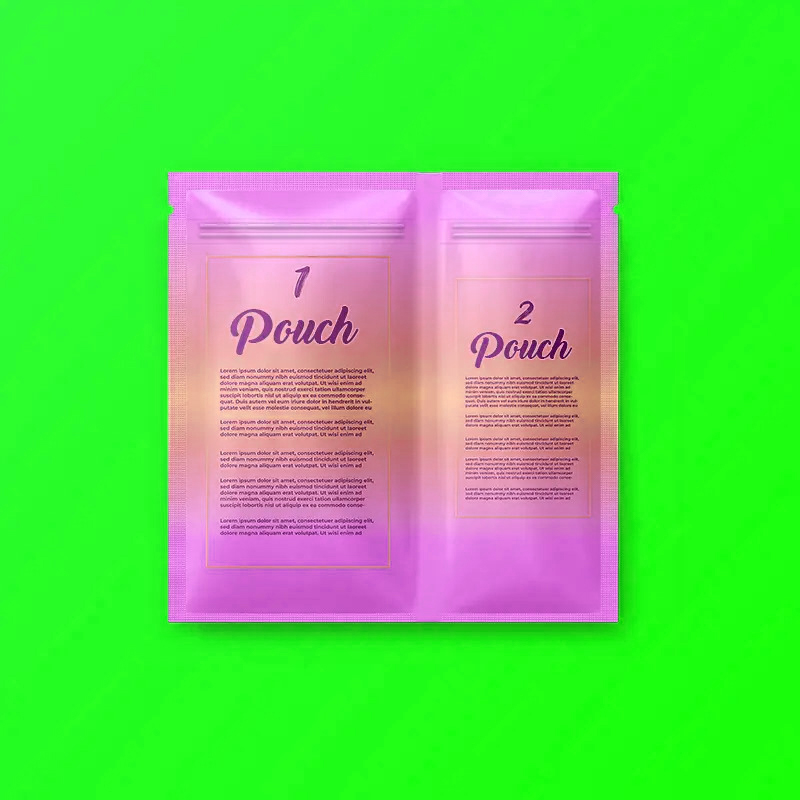
Opening one side without the other
The perforated divider is the one to think twice about. A perforation is weaker than a seal, and if the two sides must stay sealed from each other, it is the wrong choice.
| Two zippers | A zipper across each chamber; both resealable — the pairing bag |
|---|---|
| Zipper and tear-off | One reusable side, one single-use — mix plus sachet |
| Two tear notches | Both single-use, opened in order — kits and samples |
| Perforated divider | Chambers can be torn apart into two bags — the split pack |
Where it earns its extra film
What it does not suit is two products that could have been mixed at the factory. The bag costs more than a single chamber and the customer will notice if the separation has no purpose.
- A two-part product where mixing is the customer's job — a drink powder and its flavoring.
- A product with a fragile topping that would be crushed or softened by the main item.
- Trial and full-size in one pack, so the sample is not a separate SKU.
- A meal kit portion with a dry and a wet element in one hand-sized pack.
- A dosed product with a measuring scoop that should not sit in the powder.
Barrier, and the two sides needing different things
Because the chambers are independent, they can be treated differently: an oxygen absorber in the side that needs one, a desiccant in the other, a window over the side that looks good and solid foil over the side that does not. The laminate is the same across the whole bag — we choose the barrier for the more demanding of the two products and the gauge for the heavier. The window question is the same one we work through on our mylar bags with a window panel page, except that here it can be answered separately for each chamber.
Print the fill line and the contents on each chamber. A dual bag with one label gets filled the wrong way round on a production line.
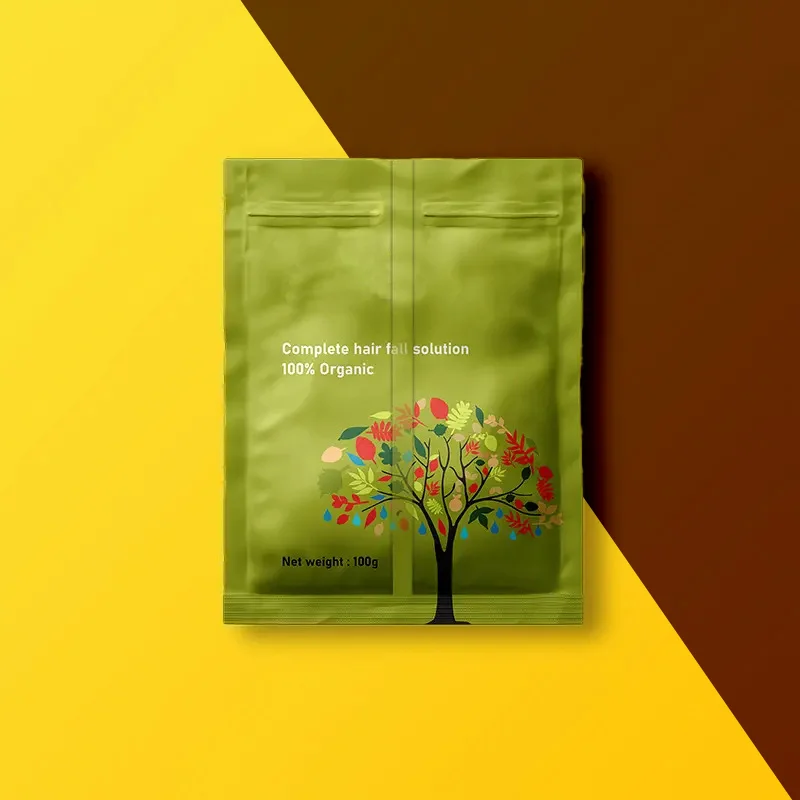
Dual Compartment Custom Mylar Bags — specification
The rows that are specific to this build first, then what applies to every job we run. Anything not listed is a question, not a limit — send the brief.
This build
- Structure
- PET / foil or metallized / PE laminate, 3.5–5 mil
- Divider
- Heat-sealed center seal, horizontal or vertical; perforated on request
- Openings
- Two zippers, zipper and tear-off, two tear notches
- Styles
- Flat pouch, stand-up with bottom gusset
- Sizes
- From 3 × 4 in to 10 × 14 in overall
- Minimum
- 100 bags
On every job
- Print process
- Flexo in up to ten colors on the outer film, or digital for short runs and changing artwork.
- Color
- A white underprint carries normal color on metallised or clear film. Without it, every color takes on what is beneath it.
- Tolerance
- Bag width plus or minus 2 mm, length plus or minus 3 mm. Film stretches, so a barcode is verified on a filled bag.
- Tooling
- Print plates or cylinders per design, kept. There is no cutting die — the bag is formed and sealed rather than cut.
- Food contact
- A food-grade sealing layer against the product, with the inks trapped between layers rather than on the food face.
- Sustainability
- Mono-material PE or PP where the shelf life allows, which recycles as a soft plastic. A foil laminate does not.
- Artwork
- Vector PDF or AI, 3 mm bleed, 4 mm safe area, fonts outlined. We check every file and send a proof before press.
- Dieline
- Supplied free with the quote, before you commit. Yours whether or not you order.
- Sample
- A plain unprinted sample at the finished size on request, for fit and construction.
- Reorders
- Skip the tooling and go straight to press at a lower unit price.
- Lead time
- Quoted with the price against your fill date rather than promised before we have seen the spec.
- Markets
- United States, United Kingdom, Canada, Australia — priced in the delivery currency, freight included.
Boards and films we build dual compartment custom mylar bags on
A flexible pack is a stack of films laminated together, and the middle layer is the barrier. The structure is chosen from the shelf life you need and what you want to be able to say about recycling.
PET / PE
A printable outer and a sealing inner. Moisture barrier, modest oxygen barrier. The everyday laminate for dry goods sold quickly.
2-ply, 70–110 micronPET / AL / PE
Aluminum foil in the middle: the strongest barrier against light, oxygen and moisture. Coffee, supplements, anything with a long shelf life.
3-ply, 90–130 micronMetallised PET
A vapour-deposited metal layer. Bright, lighter and cheaper than foil, with a weaker barrier. Most silver and gold bags are this.
2–3 plyMono-material PE
Every layer polyethylene, so the bag recycles as a soft plastic. Less barrier and a slightly softer hand; the sustainable choice where shelf life allows.
100–130 micronMono-material PP
Stiffer and clearer than PE, with better heat resistance. Suits a stand-up pouch that has to hold its shape on a shelf.
90–120 micronKraft-paper laminate
A paper outer over a film barrier. The natural look with a real barrier behind it; the paper takes only a matte, flat print.
Paper 60–80gsm + filmCompostable film
PLA and cellulose structures certified for industrial compost. Lower barrier, higher cost, and no home-compost claim unless the certificate says so.
60–90 micronLDPE mailer film
Co-extruded opaque film for shipping bags: tear- and puncture-resistant, weatherproof, and recyclable where soft plastics are collected.
60–80 micronNot sure which? Say what goes in it and where it is sold — the material follows from that. Our notes on recycled, recyclable and compostable cover which claims each stock can honestly carry.
- 01
Send what you have
A dimension, a photograph beside a ruler, or the product itself. No technical drawing needed — that part is ours.
- 02
We quote and draw
A price, a dieline and a date come back together. If a different build would suit the product better, that is in the reply too.
- 03
Approve the dieline
The flat drawing is yours to check: which panel is the front, where the folds fall, how deep the cavity really is.
- 04
Artwork on the dieline
You place your design on the flat we sent, or we place it for you, and you see a proof before anything goes to press.
- 05
A sample if you want one
A plain unprinted sample at the finished size shows fit and construction — the things a drawing cannot.
- 06
Cut, printed, shipped
The die is cut once and kept, so every reorder skips the tooling and goes straight to press at a lower unit price.
Format
Vector PDF or AI where possible. Raster artwork at 300dpi at final size, in CMYK.
Bleed
3 mm past every trim line, so a fraction of drift on the cutter never leaves a white edge.
Safe area
Keep type and anything important 4 mm inside the cut and away from every fold.
Color
Convert to CMYK before sending. Uncoated stock prints lighter; a spot color is the only exact match.
Fonts
Outline them or supply the files. A missing font substitutes silently and the proof will not match.
Barcodes
On a light, matte, unvarnished patch with the quiet zone clear — a code on gloss fails the scanner.
Not set up that way? Send it anyway — fixing a file is a short conversation, and we check every one before press. Our guide to preparing print files covers each point.
Film is finished in the lacquer and the ink, not with a laminate.
Matte lacquer
A soft, non-reflective face. Hides handling marks and the most-used finish on a premium pouch.
Gloss lacquer
Wet-looking color. Reads cheaper on some categories and exactly right on confectionery.
Spot matte on gloss
A matte shape on a gloss field, or the reverse. The film equivalent of spot UV.
Metallised effects
Print over the metal layer so a color picks up the shimmer, or lay white under it for a normal color.
Registered emboss
A raised texture pressed into the film. Rare, expensive, and unmistakable in the hand.
Kraft-paper face
A paper outer laminated to the barrier. Matte and flat by nature; no varnish needed.
Not sure which suits the shelf it sells from? Say where the product is sold and we suggest one — our notes on specialty finishes show them on real boxes.
Sizing a pouch by what goes in it, not by a bag size: dual compartment custom mylar bags
Film packs are specified by fill, not by dimensions. Two products of the same weight can need very different bags, because density decides volume — whole coffee beans take far more room than the same weight of powder.
- Fill weight and density
- Give us both, or send the product. We size from the volume it actually occupies, settled.
- Lay-flat width
- Half the circumference of the finished bag. It is the number a converter works to, and we calculate it from your product.
- Headspace
- Enough film above the fill to seal cleanly and for the bag to stand. Too little and the seal traps product; too much and the pack looks underfilled.
- Gusset
- Bottom gusset depth sets how the bag stands; side gussets add volume without width. Both are chosen from the shelf, not the fill.
- Seal width
- 5–8 mm. Wider on liquids and creams, which contaminate a seal, and on anything that will be posted.
- Sample fill
- A plain bag at the finished size, filled from your line, is the only reliable check before print.
Not sure your numbers are right? Send the product dimensions rather than the box dimensions and we work the box out — the full method is in our guide to measuring for a box.
Interactive · five steps · no sign-up
Spec your Dual Compartment Custom Mylar Bags
Pick a shape, type a size, choose a film and a finish. The preview on the left redraws as you go, and the spec lands with us exactly as you set it.
Frequently asked questions
Got a question about dual compartment custom mylar bags? The answers below cover what we get asked most. If yours is not here, send it with a brief, message us on WhatsApp, or call +1 503-461-4788 — we reply the same working day.
Are the two sections really sealed from each other?
Yes. The center seal is a heat seal made with the edge seals, as strong as the outside of the bag. Nothing migrates between the chambers.
Can each side have its own zipper?
Yes, a zipper across each chamber so both reseal. Or one zipper and one tear-off if one side is single-use.
Can I fill the two sides at different times?
Yes, each chamber is filled and sealed on its own. That is one of the reasons to use the format.
Horizontal or vertical divider?
Vertical, side by side, is easier to fill and shows both products. Horizontal suits a stand-up bag where the heavy item should be at the bottom.
Can the two chambers be different sizes?
Yes. A large chamber and a small one — a full-size product and a sample — is common, and the divider is placed wherever you need it.
Can I put an oxygen absorber in one side only?
Yes, because the chambers are independent. An absorber in one and a desiccant in the other is a normal spec.
Can the customer tear the bag into two?
With a perforated divider, yes, though a perforation is weaker than a seal. If the sides must stay sealed from each other, choose the solid divider.
Does it stand up?
Yes, with a bottom gusset. A stand-up dual bag usually has the heavier product in the lower chamber.
Is it more expensive than a single bag?
Somewhat — more film and an extra seal, and two zippers if you have them. It is cheaper than two bags and a band.
What is the minimum order?
100 bags per size. Printed mylar runs on a roll, so the set-up is in the plates rather than a die.
How long does production take?
It depends on the print and the quantity. We give a date with the quote rather than a number before we have seen the spec.
Will you send a sample?
An unprinted dual bag in your size, so you can fill both sides and check the divider position before print.
Same range