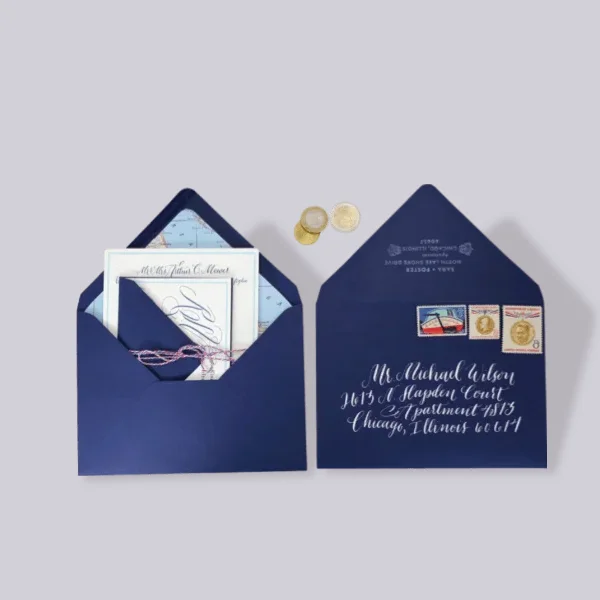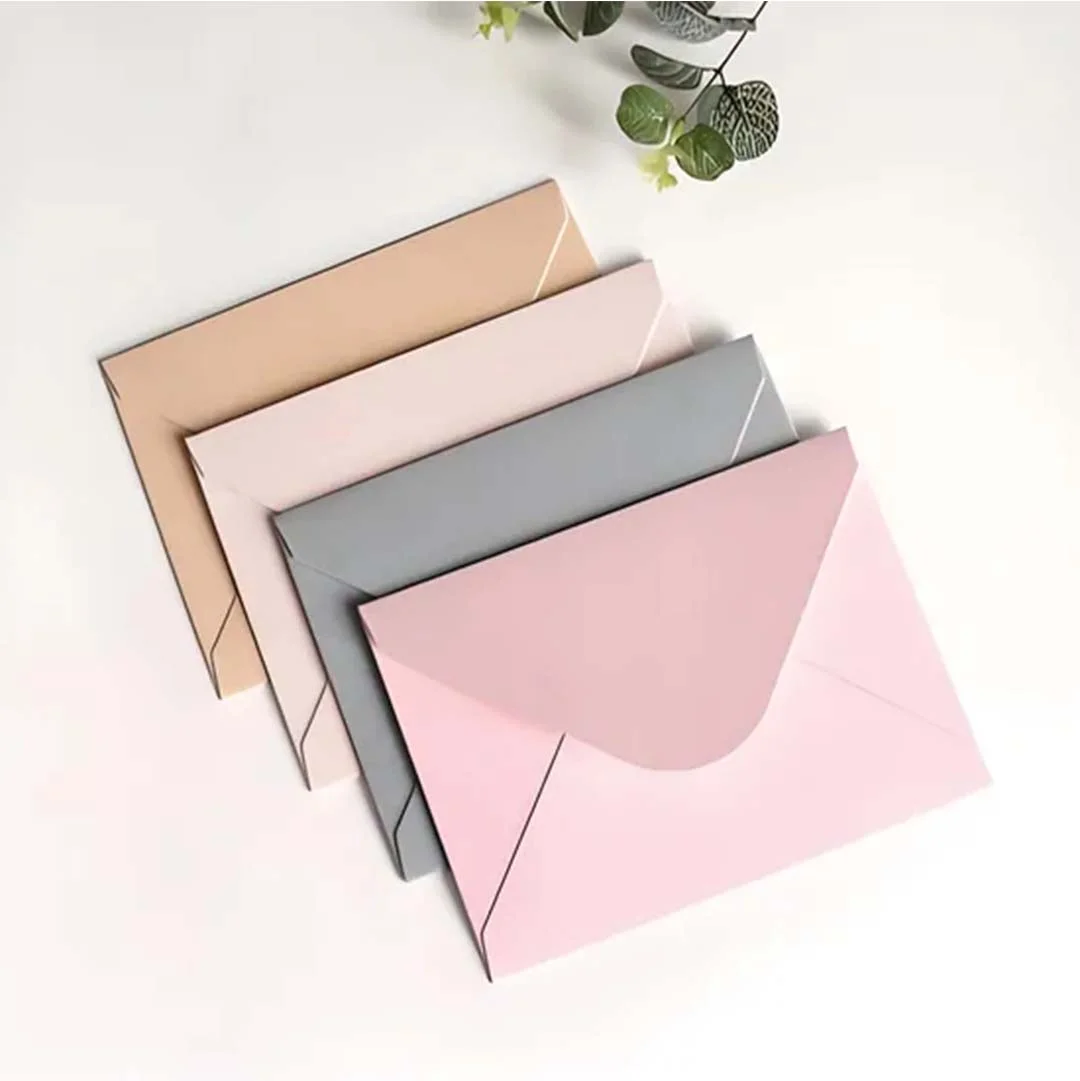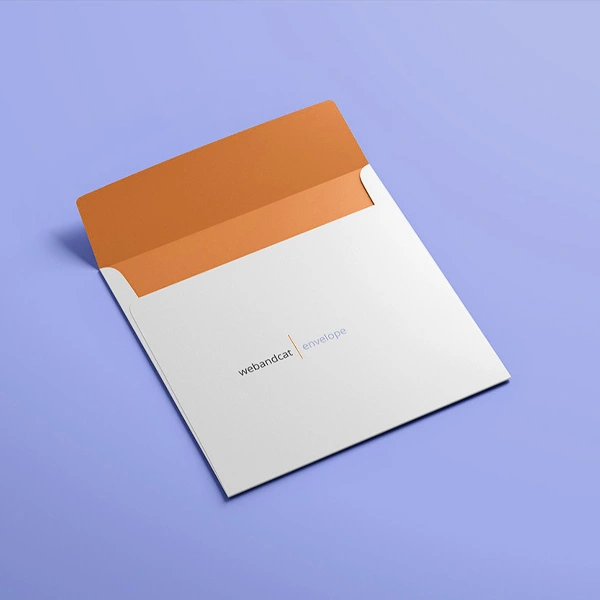
Custom 6 X 9 Envelopes
Custom 6 x 9 envelopes from 100 — open-side booklet and open-end catalog styles in kraft, white and colored stock, printed with your logo, return address and mailing panel.
Half a letter sheet, folded once, sent flat
- Paper
- Brown kraft 28 lb, white wove 24–28 lb, colored and recycled kraft stocks
- Size
- 6 × 9 in., for 5½ × 8½ in. contents
- Styles
- Open-side booklet or open-end catalog construction
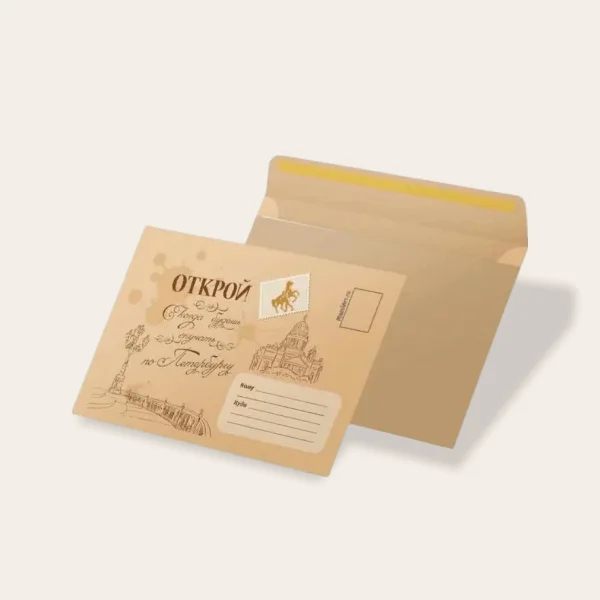
Order online
Order 6 x 9 envelopes
Starting from $0.75 per unit
Printed to your artwork or plain, sold in runs of 100 up to 5,000 units per product online. Freight to the US, UK, Canada and Australia is inside the price.
How an online order runs
- Add the units you needThen check out with your delivery address. Add other products to the same order on the way.
- A digital proof comes backLaid on the dieline, before anything prints. Change it as often as you need.
- Pay once you approve itPay by PayPal invoice or bank transfer after you approve your digital proof, or cash on delivery in the US and Canada.
- We make it and ship it deliveredYour delivery date is confirmed with the proof, against the spec and your fill date. Freight and customs are handled on the way to you.
Another size, board or finish, or more than 5,000 units? Send the spec for a price instead. Freight by market and our terms cover delivery and remakes.
Get a price for 6 x 9 Envelopes
Send the size and quantity — we reply the same working day with a price, a dieline and a date. Artwork optional at this stage.
- Free dielineThe flat drawing comes with the quote, before you commit.
- Proof before pressNothing is printed until you have seen it laid on the dieline.
- Die kept for reordersTooling is paid once. Every reorder skips straight to press.
- Quoted in four marketsUS, UK, Canada and Australia, in the delivery currency.
What a 6 × 9 envelope is really for
| Saddle-stitched booklet, 5½ × 8½ in. | Fits flat with room for a few pages of thickness |
|---|---|
| Letter sheet folded once | Statements, letters and order forms that should not be folded twice |
| Half-letter brochure or menu | A restaurant takeaway menu or a product leaflet |
| Gift certificates and photo prints | A 5 × 7 print or a gift card on a carrier sheet |
| Small samples | Fabric swatches, seed packets or a thin product sample |
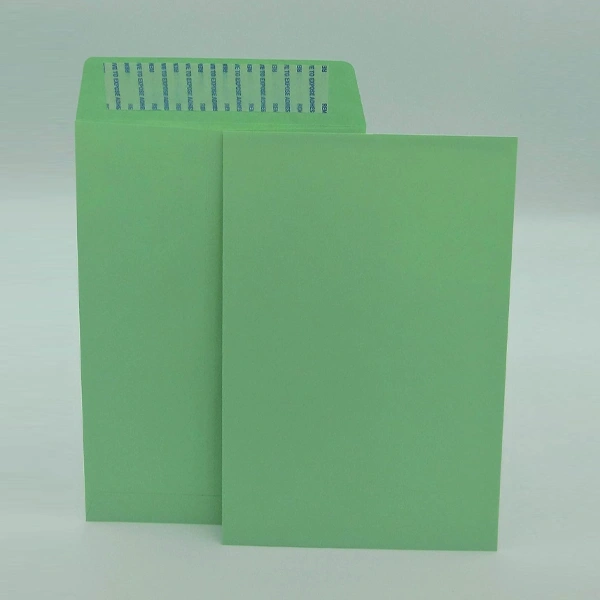
Booklet construction against catalog construction
The two constructions look alike from the front and behave very differently. An open-side booklet envelope opens along the long edge, with the flap across the top. It is the one to choose for inserting by machine or for stuffing a few hundred booklets by hand, because the opening is wide and the contents slide in flat.
An open-end catalog envelope opens on the short edge, with seams down the back. It holds thicker contents better and survives rougher handling, which is why it is used for catalogs, reports and anything that might be slid in and out more than once.
If you are not sure, tell us how the envelopes will be filled. That usually settles it.
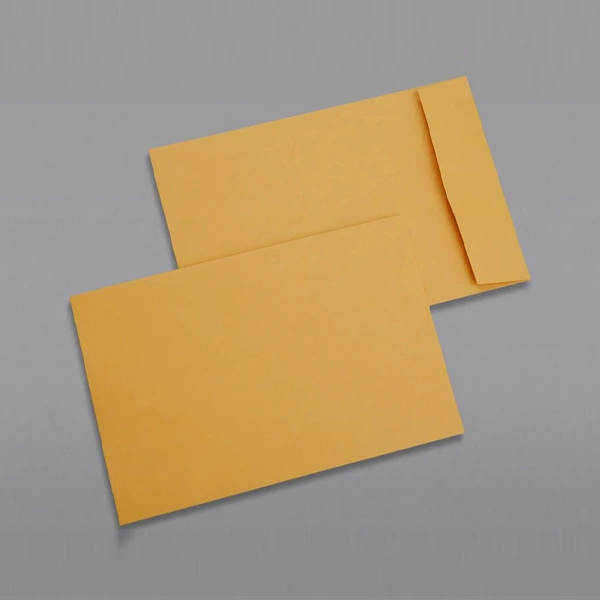
Choosing the stock by weight and by impression
Heavier contents need heavier paper. A booklet of more than about twenty pages is better in a 28 lb envelope than a 24 lb one, which can split at the corners in the sorting machines.
- Brown kraft, 28 lb. Tough, practical and the most common for statements and catalogs.
- White wove, 24–28 lb. Clean and businesslike, and the best ground for full-color print.
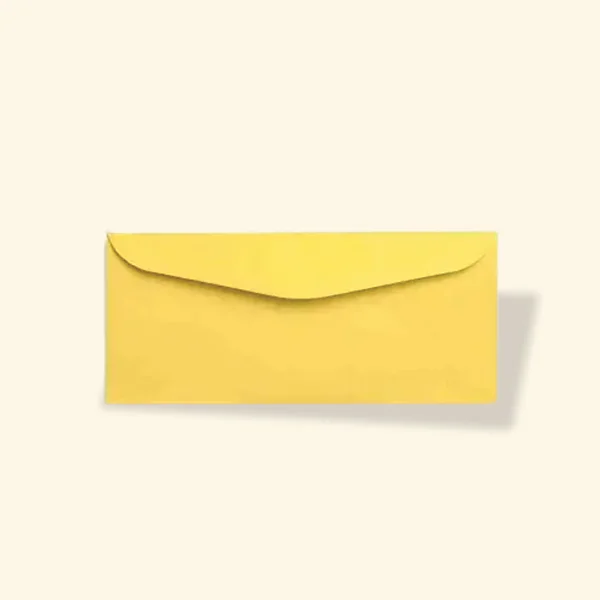
- Colored stock. Stands out in a pile of post; a strong choice for a promotional mailing.
- Recycled kraft. For brands that want the envelope to say something about the contents.
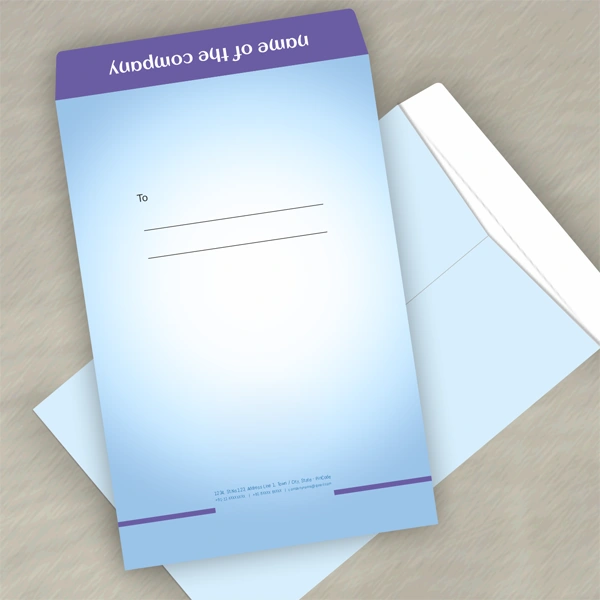
Print that turns an envelope into a mailer
Most 6 × 9 envelopes carry the return address and a logo in the top corner. Many also carry more: a teaser line on the front, a full-color image across the back, or a printed mailing panel for a postage indicia. Because the envelope is large enough to print a proper message on, a promotional mailing often works better with a printed envelope and a simple booklet than with a plain envelope and an elaborate insert.
The booklet that goes inside can be printed with us too, on our saddle-stitched brochure booklets page, sized to fit this envelope.
Windows, seals and postage
- A window positioned to the address block of a folded statement, so the address prints once.
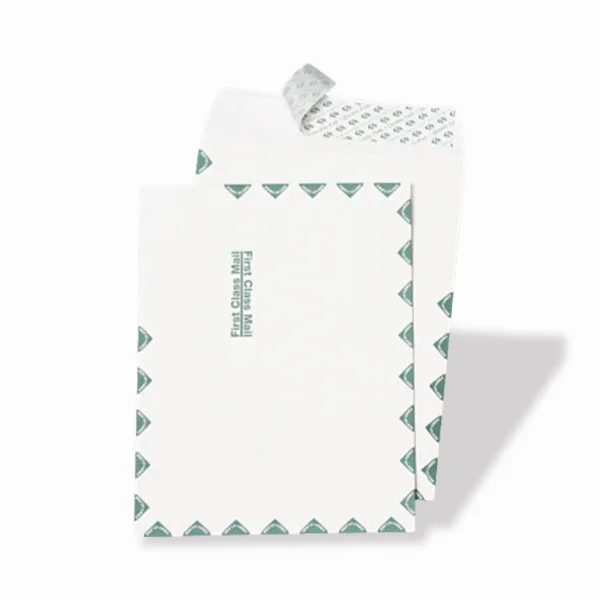
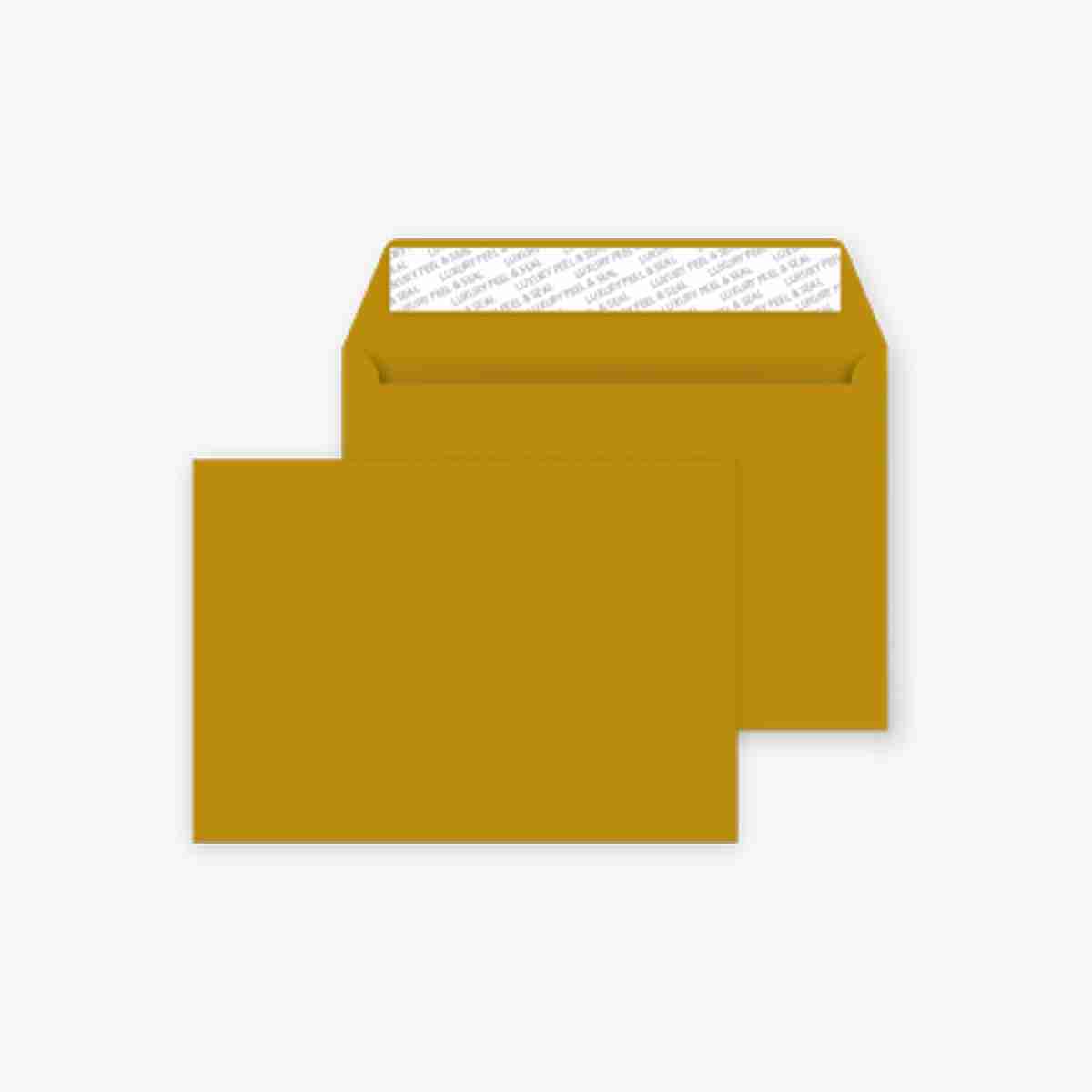
- Gummed flaps for machine inserting; peel-and-seal for hand filling.
- In the US a 6 × 9 envelope still mails at the letter rate if it is flexible and no more than a quarter inch thick; a thicker booklet goes as a flat.
- A clasp is not usually needed at this size; a strong seal and the right weight of paper do the job.
Filling a few hundred envelopes by hand
Many 6 × 9 orders are filled at a desk rather than by a mailing house: a shop sending its catalog to customers, a club posting its newsletter, a firm sending statements. For that job, the booklet construction with a peel-and-seal flap is the fastest; the contents slide in along the long side and the flap closes without water or a sponge.
Printing the addresses directly on the envelopes from your list saves the most time of all, because there are no labels to peel and straighten. If the list changes often, a window over the address on a folded statement does the same job with nothing to match up.
6 x 9 Envelopes — specification
The rows that are specific to this build first, then what applies to every job we run. Anything not listed is a question, not a limit — send the brief.
This build
- Paper
- Brown kraft 28 lb, white wove 24–28 lb, colored and recycled kraft stocks
- Size
- 6 × 9 in., for 5½ × 8½ in. contents
- Styles
- Open-side booklet or open-end catalog construction
- Closure
- Gummed or peel-and-seal flap
- Window
- Optional, placed to your document’s address block
- One color to full color on front and back; return address, teaser line, indicia panel
- Minimum
- 100 envelopes per style
On every job
- Print process
- Digital below about a thousand, offset above it. Both sides as standard on cards, tags and leaflets.
- Color
- CMYK with spot colors for a brand match. Uncoated and cotton stocks print noticeably lighter than coated ones.
- Tolerance
- Trim plus or minus 1 mm guillotined, plus or minus 0.5 mm die-cut. Anything over about 170gsm is creased before folding.
- Tooling
- A die only where the piece is shaped, perforated or drilled, made once and kept. A plain rectangle needs none.
- Food contact
- Food-safe inks on menus and counter print that will be handled where food is served.
- Sustainability
- Uncoated and unlaminated stocks recycle without separation, and FSC papers are available across the range.
- Artwork
- Vector PDF or AI, 3 mm bleed, 4 mm safe area, fonts outlined. We check every file and send a proof before press.
- Dieline
- Supplied free with the quote, before you commit. Yours whether or not you order.
- Sample
- A plain unprinted sample at the finished size on request, for fit and construction.
- Reorders
- Skip the tooling and go straight to press at a lower unit price.
- Lead time
- Quoted with the price against your fill date rather than promised before we have seen the spec.
- Markets
- United States, United Kingdom, Canada, Australia — priced in the delivery currency, freight included.
Boards and films we build 6 x 9 envelopes on
Sheet print is judged in the hand more than a box is: the weight, the surface and whether a pen works on it. These are the stocks we run for cards, folders, leaflets and stationery.
Coated card 300–400gsm
The workhorse. Sharp full-color print, matte or gloss, laminated where it is handled. Does not take a pen unless the finish is matte.
300–400gsmUncoated card
No clay coat. Colors read softer and warmer, a deboss goes deeper, and it writes on with anything. Photographs lose punch.
300–400gsmCotton and textured card
Soft, thick and fibrous. Takes a deep blind deboss and reads as an invitation. Foil sits beautifully; four-color does not.
400–700gsmDuplexed card
Two sheets bonded, often with a colored core, for a very thick card with a visible colored edge. The heaviest thing we print.
600–900gsmText paper 100–170gsm
Leaflets, folder inners and booklet pages. Folds without cracking and takes a full-color print on both faces.
100–170gsmManila and kraft paper
Unbleached, tan, and cheap. One or two colors read well; white ink gives a light mark. Envelopes, folders and tags.
90–300gsmSynthetic stock
Polypropylene sheet for tags and cards that get wet, torn or handled outdoors. Prints like paper and does not soften.
200–400 micronBoard-backed
A printed face laminated to grayboard, for a rigid card, a folder back or a display that has to stand up on its own.
1–2 mm boardNot sure which? Say what goes in it and where it is sold — the material follows from that. Our notes on recycled, recyclable and compostable cover which claims each stock can honestly carry.
- 01
Send what you have
A dimension, a photograph beside a ruler, or the product itself. No technical drawing needed — that part is ours.
- 02
We quote and draw
A price, a dieline and a date come back together. If a different build would suit the product better, that is in the reply too.
- 03
Approve the dieline
The flat drawing is yours to check: which panel is the front, where the folds fall, how deep the cavity really is.
- 04
Artwork on the dieline
You place your design on the flat we sent, or we place it for you, and you see a proof before anything goes to press.
- 05
A sample if you want one
A plain unprinted sample at the finished size shows fit and construction — the things a drawing cannot.
- 06
Cut, printed, shipped
The die is cut once and kept, so every reorder skips the tooling and goes straight to press at a lower unit price.
Format
Vector PDF or AI where possible. Raster artwork at 300dpi at final size, in CMYK.
Bleed
3 mm past every trim line, so a fraction of drift on the cutter never leaves a white edge.
Safe area
Keep type and anything important 4 mm inside the cut and away from every fold.
Color
Convert to CMYK before sending. Uncoated stock prints lighter; a spot color is the only exact match.
Fonts
Outline them or supply the files. A missing font substitutes silently and the proof will not match.
Barcodes
On a light, matte, unvarnished patch with the quiet zone clear — a code on gloss fails the scanner.
Not set up that way? Send it anyway — fixing a file is a short conversation, and we check every one before press. Our guide to preparing print files covers each point.
Sheet print takes the widest range of finishes of anything we make.
Matte lamination
Soft, fingerprint-resistant, and it still takes a pen. The default on anything handled.
Gloss lamination
Maximum color depth. Shows every fingerprint and refuses a ballpoint.
Hot foil
Gold, rose gold, silver, holographic or a color. The block is small so the die is cheap.
Emboss and deboss
Deepest on uncoated and cotton stocks; shallow and prone to cracking on gloss coated.
Spot UV
A gloss shape on a matte laminate. Best on a dark ground where the contrast reads.
Edge paint and colored core
Color on the cut edge of a thick or duplexed card. Only seen when the card is picked up, which is the point.
Soft-touch
A velvet laminate on a cover or a folder. Marks on white; excellent on dark.
Uncoated and textured
No film at all. Writes on, debosses deeply, and reads as considered rather than cheap.
Not sure which suits the shelf it sells from? Say where the product is sold and we suggest one — our notes on specialty finishes show them on real boxes.
Sizing printed sheets, folds and the grain: 6 x 9 envelopes
A printed piece is specified flat and finished folded, and the difference between the two is where mistakes live. Send the finished size you want and we work back to the flat.
- Finished size
- The size after folding and trimming. A6, A5, A4, DL, US letter and legal are standard; anything else is cut on its own die.
- Bleed and safe area
- 3 mm of artwork past every trim edge, and nothing important within 4 mm inside it. The guillotine drifts by a fraction on every stack.
- Grain direction
- Paper folds cleanly along the grain and cracks across it. We set the grain to the fold, which is why a sheet is not simply cut from the biggest sheet available.
- Fold allowance
- On a roll fold or a gate fold, the inner panels are cut a millimeter or two shorter so the piece closes flat.
- Creasing
- Anything over about 170gsm is creased before folding. Without it the fold cracks and the coating flakes along the line.
- Trim tolerance
- Plus or minus 1 mm guillotined, plus or minus 0.5 mm die-cut.
Not sure your numbers are right? Send the product dimensions rather than the box dimensions and we work the box out — the full method is in our guide to measuring for a box.
Interactive · five steps · no sign-up
Spec your 6 x 9 Envelopes
Pick a shape, type a size, choose a stock and a finish. The preview on the left redraws as you go, and the spec lands with us exactly as you set it.
Frequently asked questions
Got a question about 6 x 9 envelopes? The answers below cover what we get asked most. If yours is not here, send it with a brief, message us on WhatsApp, or call +1 503-461-4788 — we reply the same working day.
What fits in a 6 x 9 envelope?
A US letter sheet folded once, a 5½ × 8½ in. booklet, a half-letter brochure, a 5 × 7 print or a gift certificate.
What is the difference between a booklet and a catalog 6 x 9 envelope?
A booklet envelope opens on the long side, which is easier to fill. A catalog envelope opens on the short end and holds thicker contents better.
Is a 6 x 9 envelope mailed as a letter or a flat?
In the US it is a letter if it stays flexible and no more than a quarter inch thick. A thicker booklet makes it a flat, which costs more.
Which paper weight should a 6 x 9 envelope use?
24 lb for a few sheets and 28 lb for booklets of around twenty pages or more, which can split a lighter envelope in sorting.
Can a 6 x 9 envelope have a window?
Yes. We position the window to the address block on your folded statement or letter so the address only prints once.
Can you print on the back of a 6 x 9 envelope?
Yes. Booklet-style envelopes are often printed across the back with an image or offer, as well as the logo on the front.
Do you make 6 x 9 envelopes in brown kraft?
Yes. Brown kraft is the most common choice for statements and catalogs because it is strong and hides handling marks.
Are 6 x 9 envelopes self-sealing?
They can be. Peel-and-seal flaps suit hand filling; gummed flaps are better for machine inserting.
Can 6 x 9 envelopes hold a booklet you print?
Yes. We print 5½ × 8½ in. booklets sized for this envelope, so the two can be ordered together.
Do 6 x 9 envelopes come in colors?
Yes. Colored stock is a cheap way to make a promotional mailing stand out in a stack of post.
What is the minimum order for printed 6 x 9 envelopes?
One hundred per style. Booklet and catalog constructions count as separate styles.
Which 6 x 9 envelope is fastest to fill by hand?
The open-side booklet envelope with a peel-and-seal flap. The contents slide in along the long side and the flap closes without moistening.
Same range