Custom Paperboard Tube Packaging Puzzle
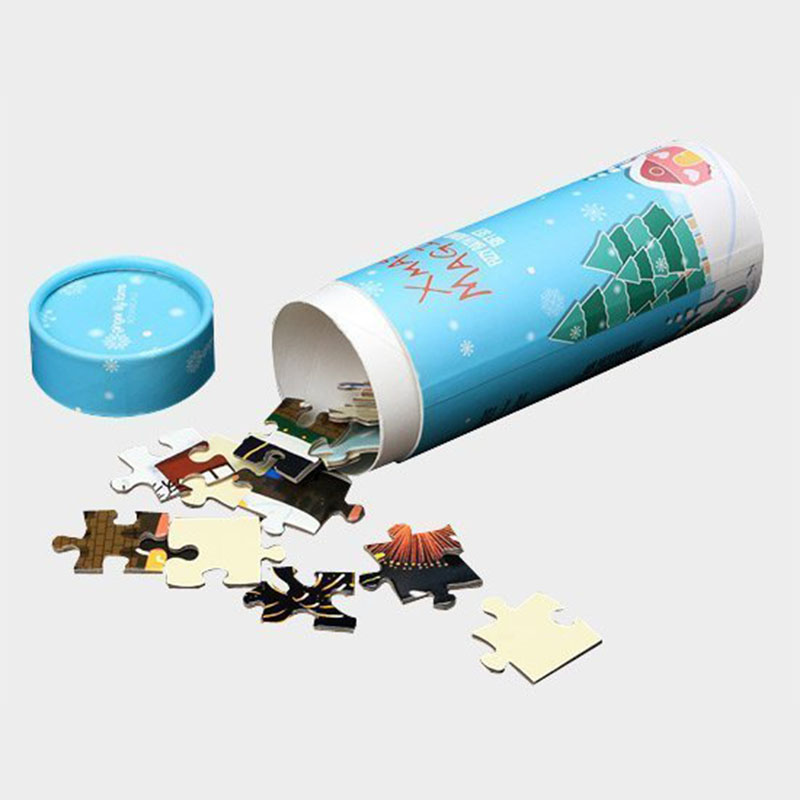
Custom puzzle tubes — a paperboard tube with a lid that holds a jigsaw in a bag, the image on the wrap, standing on a shelf — sized to your piece count from 100. Dieline and price the same working day.
A jigsaw in a tube takes a fifth of the shelf a box does
- Board
- Spiral-wound kraft 1.5–2 mm; printed paper wrap
- Builds
- Tube with fixed base and lift-off or plug lid; wrap and lid matched
- Sizing
- By piece count; 45 mm × 120 mm to 100 mm × 300 mm
Get a price for Paperboard Tube Packaging Puzzle
Send the size and quantity — we reply the same working day with a price, a dieline and a date. Artwork optional at this stage.
- Free dielineThe flat drawing comes with the quote, before you commit.
- Proof before pressNothing is printed until you have seen it laid on the dieline.
- Die kept for reordersTooling is paid once. Every reorder skips straight to press.
- Quoted in four marketsUS, UK, Canada and Australia, in the delivery currency.
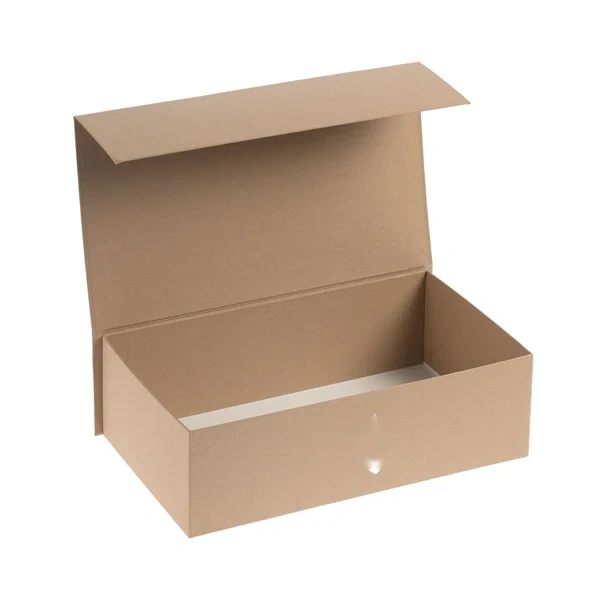
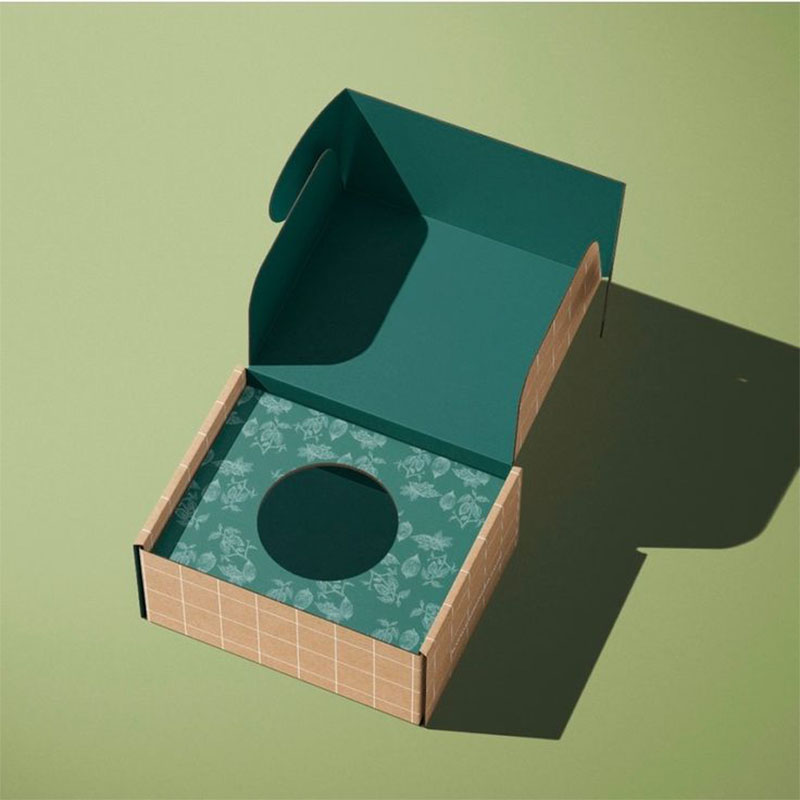

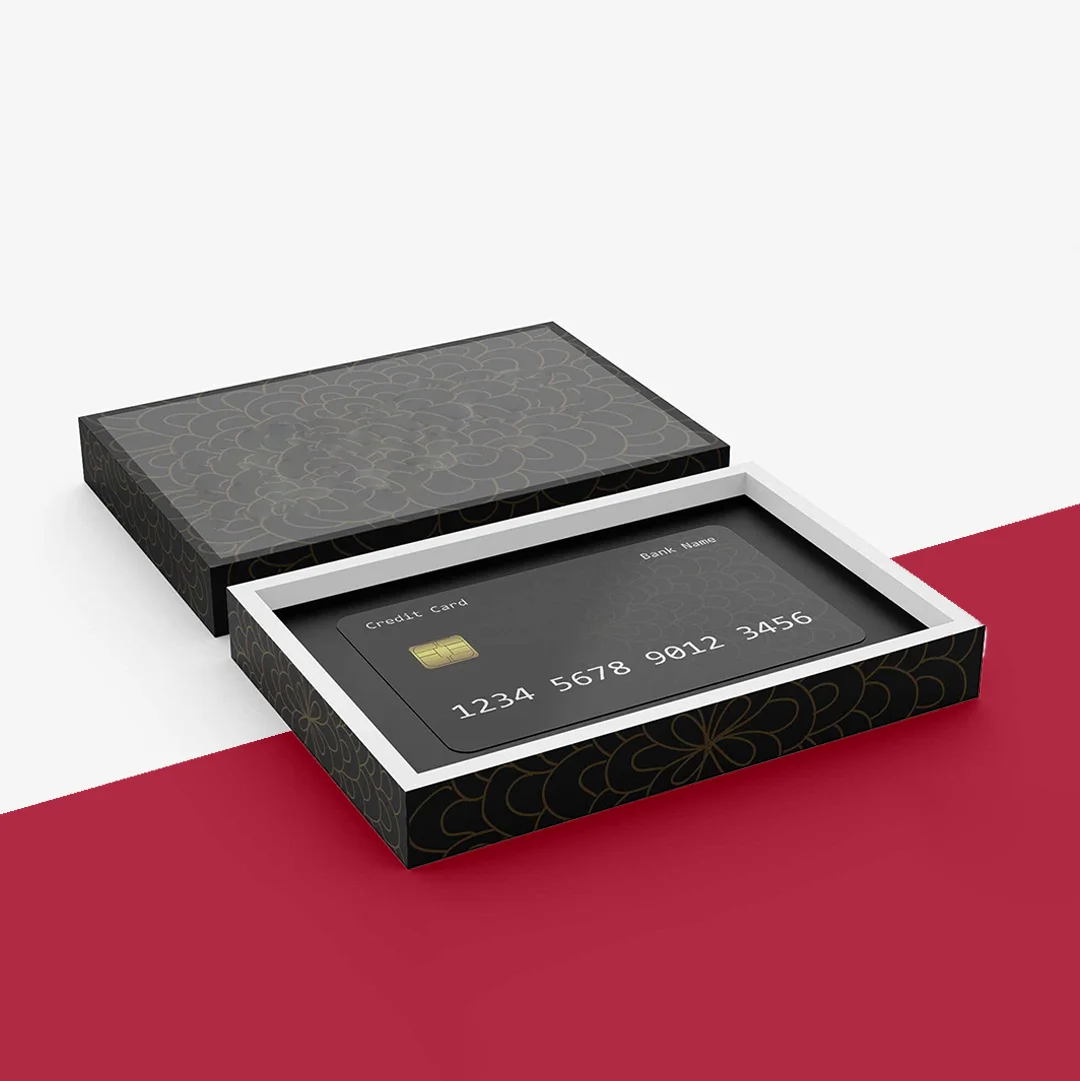

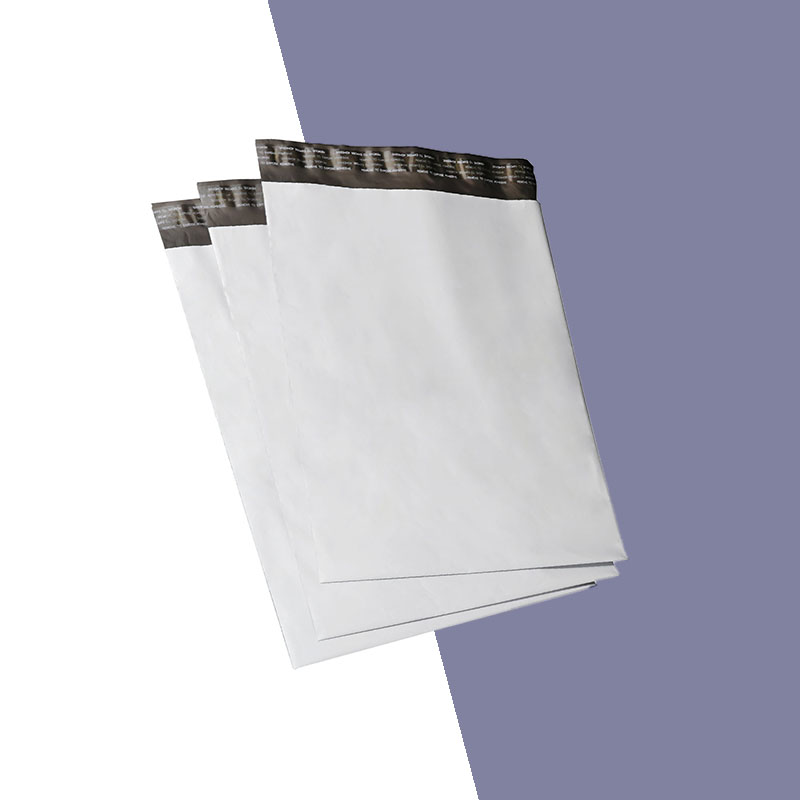
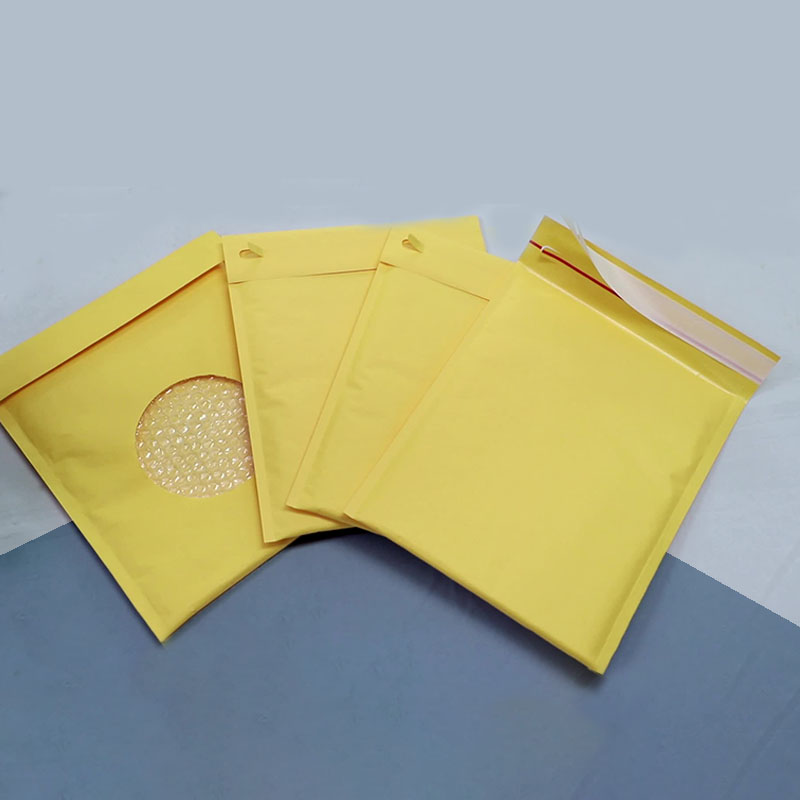
Tube size by piece count
The pieces sit in a sealed bag inside the tube, with a folded reference sheet if the wrap does not carry the whole image.
| 250–500 pieces | About 60 mm diameter × 180 mm |
|---|---|
| 1,000 pieces | About 80 mm × 250 mm |
| 1,500–2,000 pieces | About 100 mm × 300 mm |
| Mini puzzles, under 150 | About 45 mm × 120 mm; a gift or a favor |
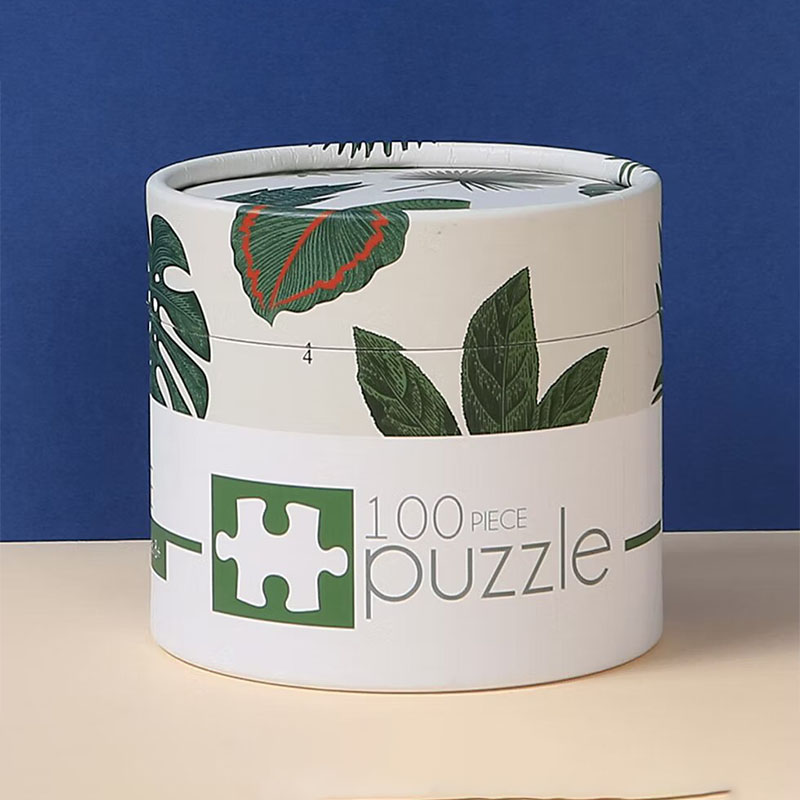
The wound tube and its lid
A spiral-wound kraft tube with a 1.5–2 mm wall, a fixed base and a lift-off or plug lid. The wrap is a printed paper applied around the tube, carrying the image, the title and the piece count; the lid is wrapped or printed to match. Our paper tubes with fitted lids cover the construction in general.
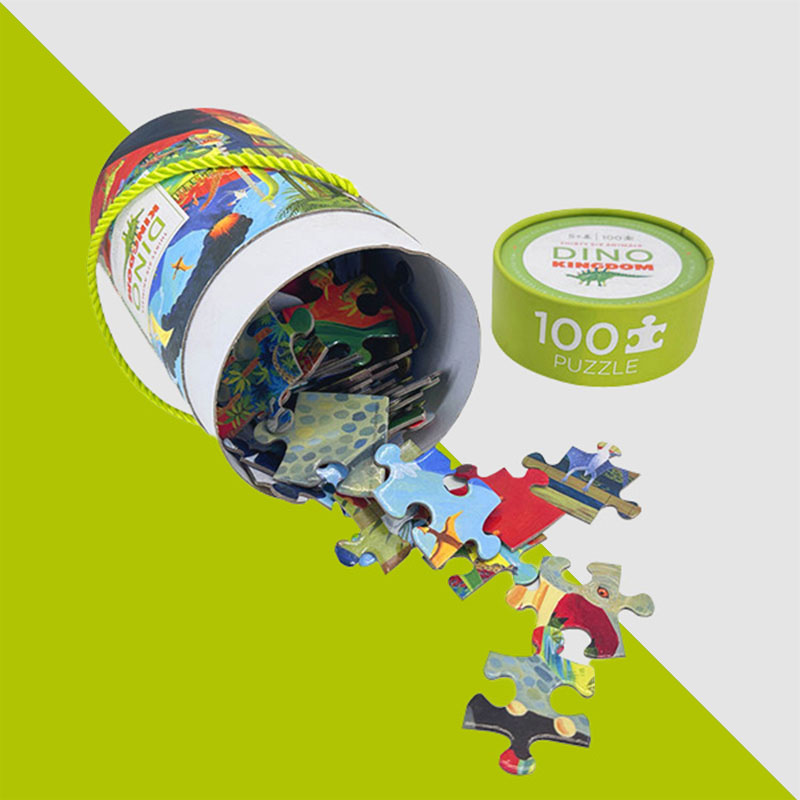
What goes on the wrap
- The puzzle image, wrapped around the tube — it reads as a continuous picture.
- Piece count and finished size on the lid or a band.
- A small version of the image on a folded sheet inside, for reference while solving.
- The barcode and the age mark on the base or the wrap seam.
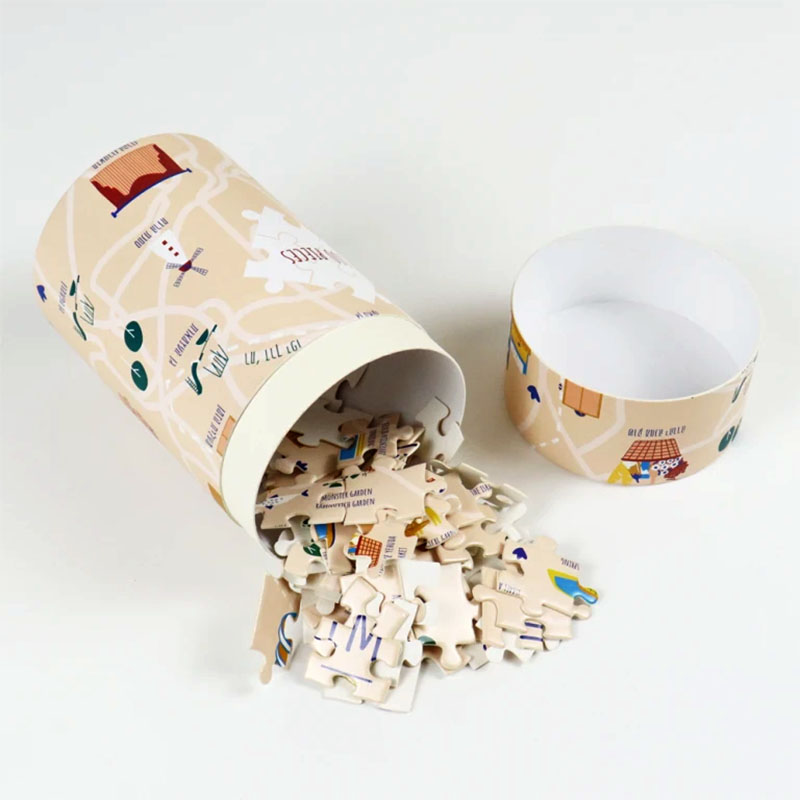
Shelf, gift and post
Tubes stand on a shelf like books on a table, and a row of them is a display. As a gift, a tube with a ribbon is already wrapped. In the post, a tube travels in a mailer tube or a small box with end pads. All three uses come from the same tube.
A puzzle bag inside the tube is sealed so no piece is lost. The bag is quoted with the tube.
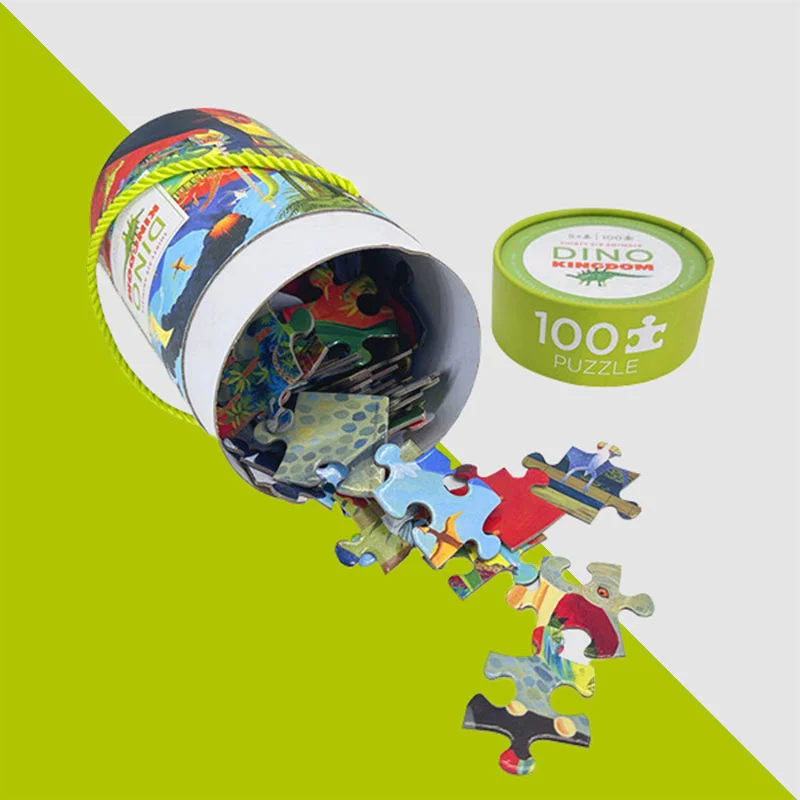
Puzzle brands, artists and short runs
Illustrators and small puzzle brands run 100 to 500 of a design. The tube is one size per piece count, the wrap changes per design, and the wrap is printed digitally for a short run. The tube is a stock item; the design is a file.
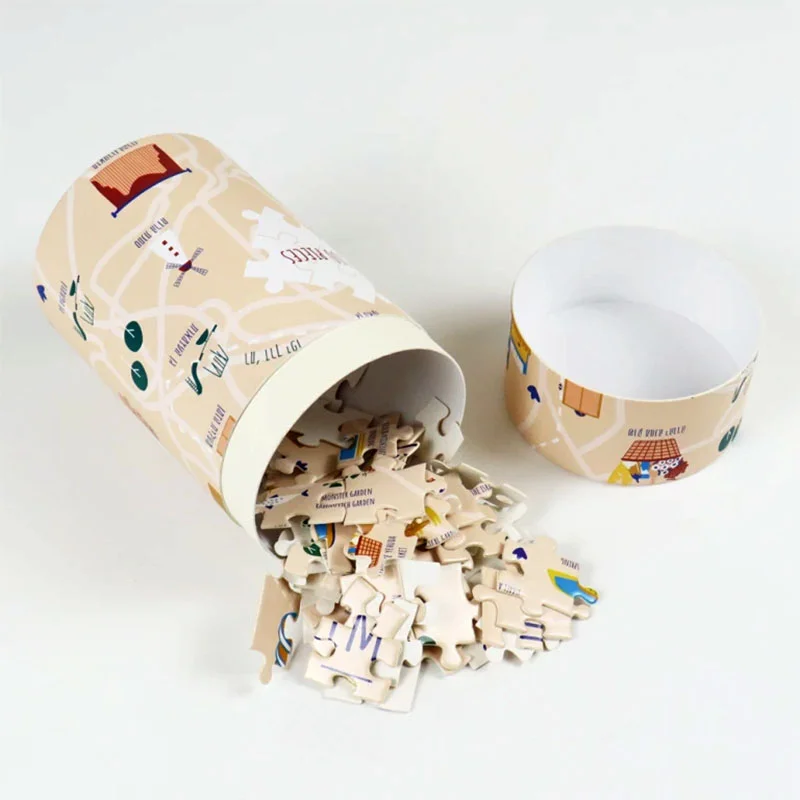
Paperboard Tube Packaging Puzzle — specification
The rows that are specific to this build first, then what applies to every job we run. Anything not listed is a question, not a limit — send the brief.
This build
- Board
- Spiral-wound kraft 1.5–2 mm; printed paper wrap
- Builds
- Tube with fixed base and lift-off or plug lid; wrap and lid matched
- Sizing
- By piece count; 45 mm × 120 mm to 100 mm × 300 mm
- Full color wrap, digital for short runs; piece count and barcode
- Inside
- Sealed bag; folded reference sheet
- Outer
- Mailer tube or box with end pads for post
- Minimum
- 100 tubes
On every job
- Print process
- The wrap is printed offset as a flat sheet and applied to the board, so the print quality is that of a sheet rather than a box.
- Color
- CMYK on the wrap with spot colors for a brand match. A textured or soft-touch wrap mutes a solid color slightly.
- Tolerance
- Board cut plus or minus 0.5 mm. Lid fit is set on a sample and held on the run, with an allowance for the delivery climate.
- Tooling
- No cutting die on the box itself. The tooling is the wrap print and any foil or emboss die, made once and kept.
- Food contact
- A food-grade liner or an inner tray where a rigid box holds unwrapped food.
- Sustainability
- Board and paper recycle together. Magnets, ribbon and foam come out first, and the spec says which the box has.
- Artwork
- Vector PDF or AI, 3 mm bleed, 4 mm safe area, fonts outlined. We check every file and send a proof before press.
- Dieline
- Supplied free with the quote, before you commit. Yours whether or not you order.
- Sample
- A plain unprinted sample at the finished size on request, for fit and construction.
- Reorders
- Skip the tooling and go straight to press at a lower unit price.
- Lead time
- Quoted with the price against your fill date rather than promised before we have seen the spec.
- Markets
- United States, United Kingdom, Canada, Australia — priced in the delivery currency, freight included.
Boards and films we build paperboard tube packaging puzzle on
A rigid box is two materials: the grayboard that holds the shape and the paper wrapped around it. The board decides the feel; the wrap decides everything a customer sees and touches.
Grayboard 1.2–1.5 mm
The light rigid box: jewelry, small cases, card boxes. Heavy in the hand for its size without thick walls on a small cavity.
1.2–1.5 mmGrayboard 2–3 mm
The full rigid box. Resists crushing, bends poorly — thickness is chosen from box size so a wide lid does not sag.
2–3 mmArt paper wrap
Printed coated paper, matte or gloss laminated. Full color, photographs, any design. The most flexible wrap and the least tactile.
128–157gsmSoft-touch wrap
A velvet-feel laminate over printed paper. Reads expensive, shows fingerprints on white, and scuffs at the corners before anywhere else.
128–157gsm laminatedLinen and textured wrap
Texture woven into the paper, so it cannot scuff off. Takes foil and deboss beautifully; breaks up a solid print.
120–140gsmLeather-grain and specialty
Embossed grain papers, metallics and colored stocks. One color and a foil mark, not a photograph.
120–160gsmFlocked and velvet liners
A short-fiber or woven pile for the interior and the insert. Holds a product without marking it and sets the color the piece is seen against.
Applied to board or foamMagnets and hardware
Neodymium magnets under the wrap, ribbon pulls, and hinges built from the wrap itself. Each is a line on the quote.
Per closureNot sure which? Say what goes in it and where it is sold — the material follows from that. Our notes on recycled, recyclable and compostable cover which claims each stock can honestly carry.
- 01
Send what you have
A dimension, a photograph beside a ruler, or the product itself. No technical drawing needed — that part is ours.
- 02
We quote and draw
A price, a dieline and a date come back together. If a different build would suit the product better, that is in the reply too.
- 03
Approve the dieline
The flat drawing is yours to check: which panel is the front, where the folds fall, how deep the cavity really is.
- 04
Artwork on the dieline
You place your design on the flat we sent, or we place it for you, and you see a proof before anything goes to press.
- 05
A sample if you want one
A plain unprinted sample at the finished size shows fit and construction — the things a drawing cannot.
- 06
Cut, printed, shipped
The die is cut once and kept, so every reorder skips the tooling and goes straight to press at a lower unit price.
Format
Vector PDF or AI where possible. Raster artwork at 300dpi at final size, in CMYK.
Bleed
3 mm past every trim line, so a fraction of drift on the cutter never leaves a white edge.
Safe area
Keep type and anything important 4 mm inside the cut and away from every fold.
Color
Convert to CMYK before sending. Uncoated stock prints lighter; a spot color is the only exact match.
Fonts
Outline them or supply the files. A missing font substitutes silently and the proof will not match.
Barcodes
On a light, matte, unvarnished patch with the quiet zone clear — a code on gloss fails the scanner.
Not set up that way? Send it anyway — fixing a file is a short conversation, and we check every one before press. Our guide to preparing print files covers each point.
On a rigid box the wrap is the finish, and the corners are where it is judged.
Soft-touch wrap
Velvet in the hand. The category default, and it scuffs at the corners first.
Linen and laid
Texture woven into the paper; hides marks and cannot rub off.
Hot foil
Stamped into the wrap. Small block, cheap die, large effect on a lid.
Blind deboss
Shape with no ink. On a textured wrap it is the quietest premium mark there is.
Spot UV on matte
A gloss shape on a matte field; a pattern that only shows at an angle.
Colored liner
A wrap on the inside face, seen for a second as the lid lifts. The cheapest thing that changes an opening.
Leather-grain
Embossed grain paper. One color and a foil mark, never a photograph.
Ribbon and hardware
A pull under the product, magnets under the wrap, a hinge built from the paper.
Not sure which suits the shelf it sells from? Say where the product is sold and we suggest one — our notes on specialty finishes show them on real boxes.
Sizing a rigid box, where the wrap is part of the wall: paperboard tube packaging puzzle
A rigid box is built up rather than folded, so the internal size is set first and the board and wrap are added outside it. The lid is then made to fit the base, and that fit is the thing people judge.
- Internal dimensions
- The product plus its insert, at the widest point. Everything else is built outward from this number.
- Wall build-up
- Each wall is the grayboard plus the wrap on both faces — roughly 2.5 mm on a 2 mm board. A small box gains noticeably in outside size.
- Lid clearance
- A few tenths of a millimeter. Set on a plain sample: a slow, air-cushioned lift, not a lid that drops off or has to be prised.
- Insert depth
- The tallest item plus 2 mm. On a two-layer box, this sets the total height and the ribbon lift.
- Humidity
- Board takes up moisture and a lid set snug in a dry factory can bind in a damp shop. We allow for the delivery market.
- Tolerance
- Plus or minus 0.5 mm on a rigid box, tighter than folding board because nothing springs back.
Not sure your numbers are right? Send the product dimensions rather than the box dimensions and we work the box out — the full method is in our guide to measuring for a box.
Interactive · five steps · no sign-up
Build your Paperboard Tube Packaging Puzzle in 3D
Pick a shape, type a size, choose a board and a finish. The preview on the left redraws as you go, and the spec lands with us exactly as you set it.
Frequently asked questions
Got a question about paperboard tube packaging puzzle? The answers below cover what we get asked most. If yours is not here, send it with a brief, message us on WhatsApp, or call +1 503-461-4788 — we reply the same working day.
Why a tube instead of a box?
It takes a fifth of the shelf, stands up, and looks like an object. Design-led puzzles use it for that reason.
What size tube do I need?
About 60 × 180 mm for 500 pieces, 80 × 250 mm for 1,000, 100 × 300 mm for 2,000. We confirm with your pieces.
Is the image on the tube?
Yes, printed on the wrap around the tube as a continuous picture, with a reference sheet inside.
Are the pieces loose in the tube?
No, in a sealed bag, quoted with the tube.
What is the minimum order?
100 tubes.
Can the wrap change per design?
Yes, the tube is one size per piece count and the wrap is a file, printed digitally for short runs.
Does it ship flat?
No, tubes ship assembled.
Can it be posted?
Yes, in a mailer tube or a small box with end pads.
Where does the barcode go?
On the base or along the wrap seam.
Can I have a ribbon for gifting?
Yes, a ribbon around the tube or the lid.
Lift-off or plug lid?
Either. A lift-off lid wrapped to match reads as a gift; a plug is cheaper.
Do you ship outside the US?
Yes, to the United States, United Kingdom, Canada and Australia, quoted in the delivery currency.
Same range