Custom Birthday Invitation Cards
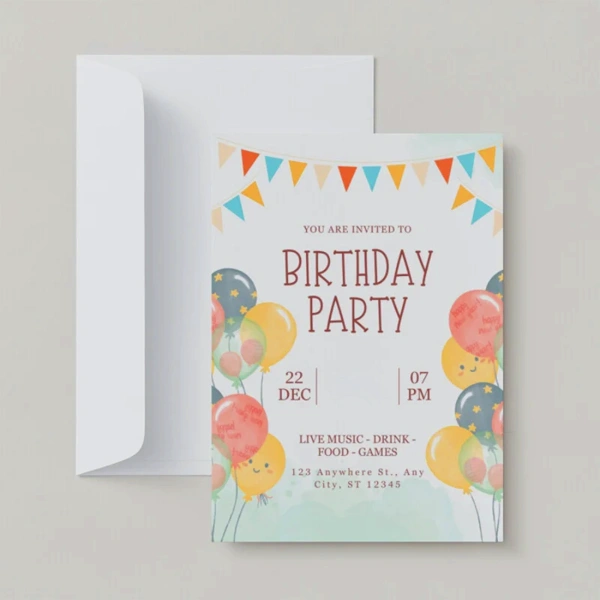
Custom birthday invitation cards on heavy card with matching envelopes, printed flat or folded and personalized per guest if you want, from 100. Proof and price the same working day.
Twenty-eight guests, one date, and no room for a typo
- Board
- Coated or uncoated card 350–400gsm; cotton stock on request
- Formats
- A6 and 5 x 7 in flat; A6 folded; square 148 mm
- Personalizing
- A name per card, printed digitally from your list, at no extra cost
Get a price for Birthday Invitation Cards
Send the size and quantity — we reply the same working day with a price, a dieline and a date. Artwork optional at this stage.
- Free dielineThe flat drawing comes with the quote, before you commit.
- Proof before pressNothing is printed until you have seen it laid on the dieline.
- Die kept for reordersTooling is paid once. Every reorder skips straight to press.
- Quoted in four marketsUS, UK, Canada and Australia, in the delivery currency.



The four facts, in the order people look for them
A card that omits the RSVP generates a week of messages. One that puts it in six-point gray does the same.
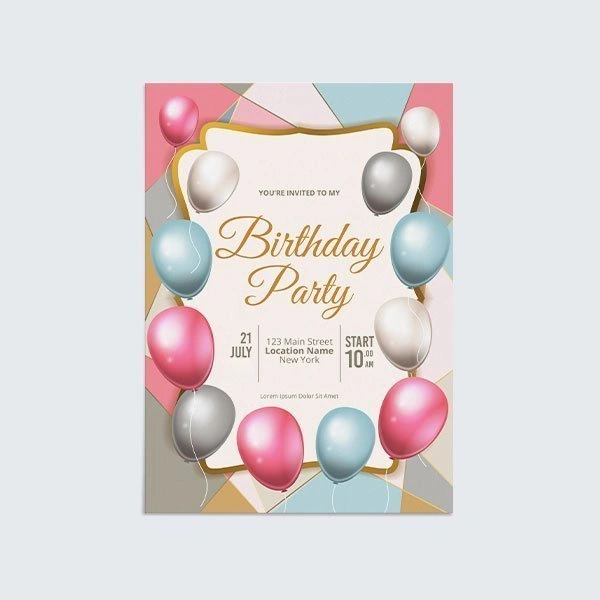
- Whose birthday and which one — the number is the headline on a milestone.
- The date and the start time, with the day of the week spelled out.
- Where, with enough address to put into a phone.
- How and by when to reply, which is the line most often left off.
Named per guest, in the same run
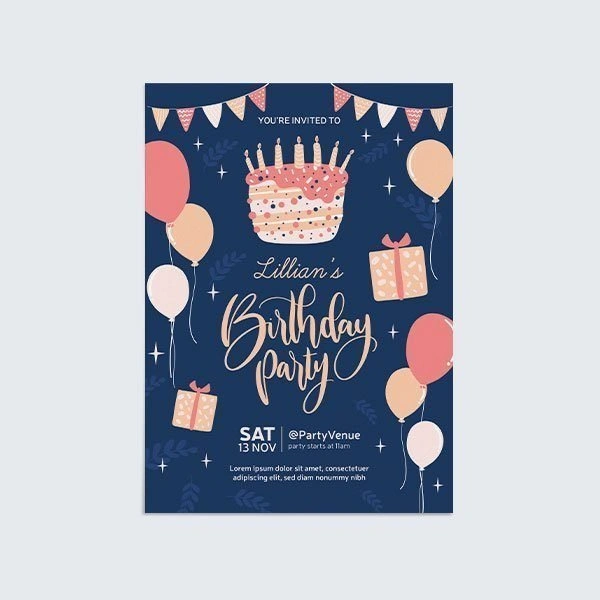
Digital print takes a spreadsheet, so each card can carry its own name without a separate job or a separate price. A hundred cards with a hundred names cost what a hundred identical cards cost. The names are proofed from your list exactly as typed, which is worth reading twice before it prints.
Send the list as a spreadsheet with one name per row. A list pasted into an email arrives with the accents stripped more often than not.
Which size for which party
| A6 flat (105 x 148 mm) | A children's party; cheapest to print and post |
|---|---|
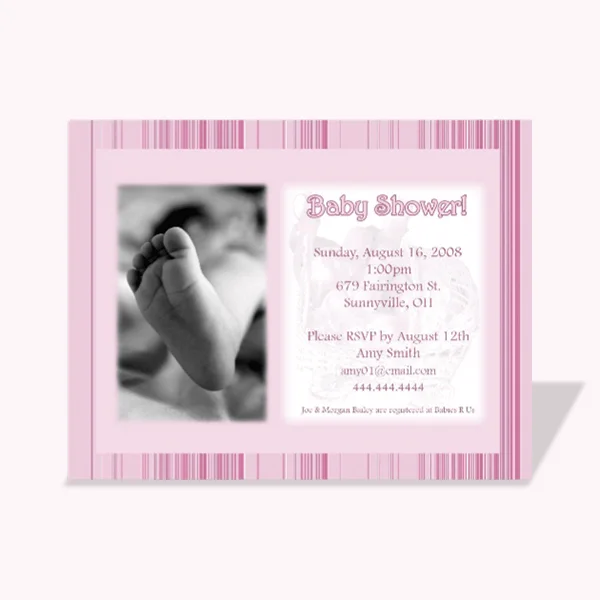
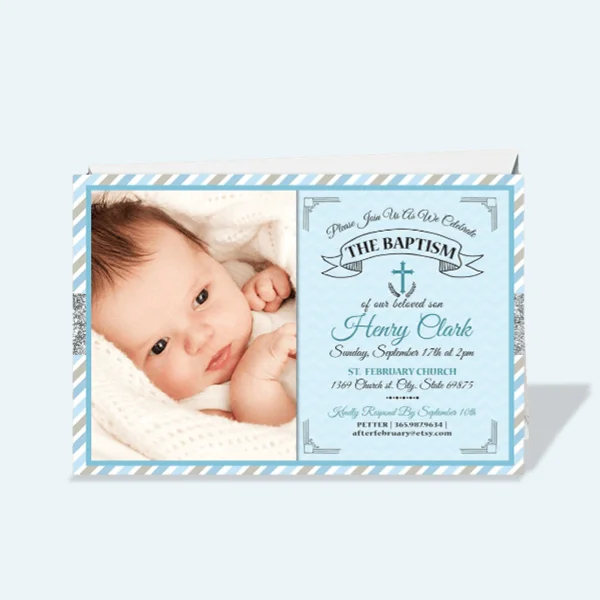
| 5 x 7 in flat | The photographic invitation; a picture fills it |
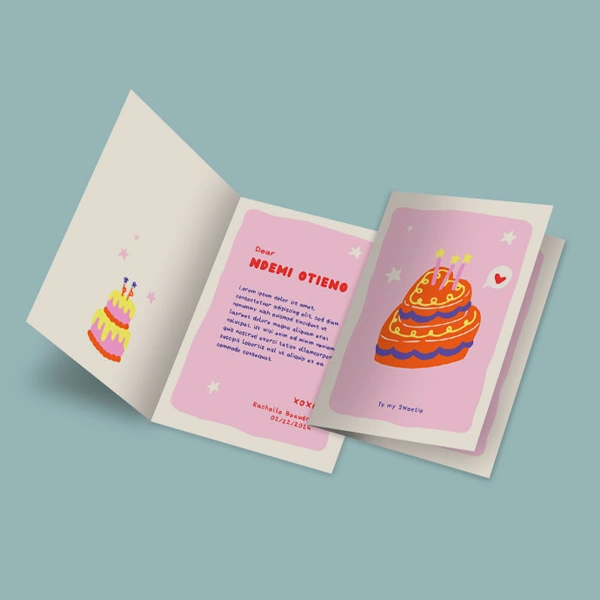
| A6 folded | Where the details need an inside panel and a map |
| Square 148 mm | A milestone or an adult party; costs more to post in some markets |
Finishes children notice and adults pay for
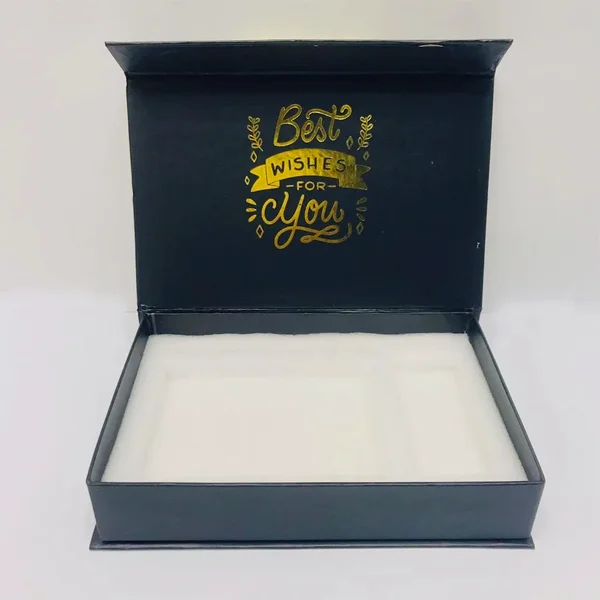
For a child's party the finish that matters is a rounded corner and a laminate, because the card goes in a school bag. For a milestone, foil on the number is the whole design — an 18, a 40, a 60 in gold on a dark card, and nothing else. Both are cheap at this size because the foil block is small. Our greeting card range and its packaging covers the boxes if the invitation is part of a set.
Envelopes, and posting them
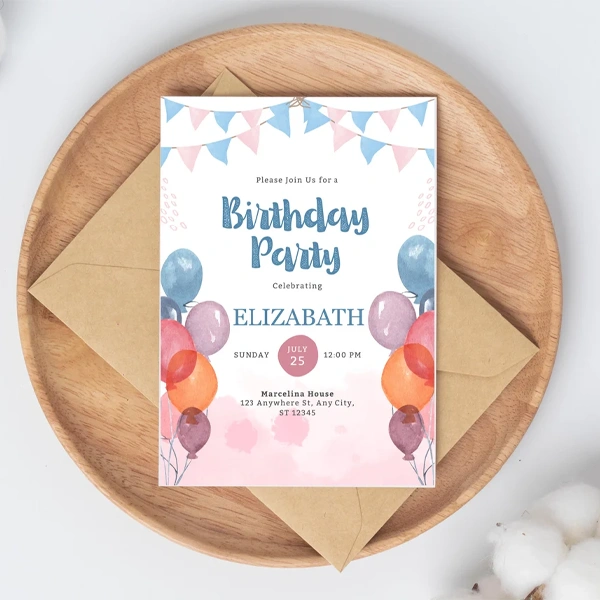
Envelopes are supplied to match the card in the same stock family, plain or with a printed liner. Order ten percent more than the guest count: invitations are always short by a few, and a reprint of five costs more than five spares.
Birthday Invitation Cards — specification
The rows that are specific to this build first, then what applies to every job we run. Anything not listed is a question, not a limit — send the brief.
This build
- Board
- Coated or uncoated card 350–400gsm; cotton stock on request
- Formats
- A6 and 5 x 7 in flat; A6 folded; square 148 mm
- Personalizing
- A name per card, printed digitally from your list, at no extra cost
- Finishes
- Foil, rounded corners, matte laminate, spot UV
- Envelopes
- Matched stock, card plus 5 mm; printed liner optional
- Proof
- All text proofed and read back before press
- Minimum
- 100 cards
On every job
- Print process
- Digital below about a thousand, offset above it. Both sides as standard on cards, tags and leaflets.
- Color
- CMYK with spot colors for a brand match. Uncoated and cotton stocks print noticeably lighter than coated ones.
- Tolerance
- Trim plus or minus 1 mm guillotined, plus or minus 0.5 mm die-cut. Anything over about 170gsm is creased before folding.
- Tooling
- A die only where the piece is shaped, perforated or drilled, made once and kept. A plain rectangle needs none.
- Food contact
- Food-safe inks on menus and counter print that will be handled where food is served.
- Sustainability
- Uncoated and unlaminated stocks recycle without separation, and FSC papers are available across the range.
- Artwork
- Vector PDF or AI, 3 mm bleed, 4 mm safe area, fonts outlined. We check every file and send a proof before press.
- Dieline
- Supplied free with the quote, before you commit. Yours whether or not you order.
- Sample
- A plain unprinted sample at the finished size on request, for fit and construction.
- Reorders
- Skip the tooling and go straight to press at a lower unit price.
- Lead time
- Quoted with the price against your fill date rather than promised before we have seen the spec.
- Markets
- United States, United Kingdom, Canada, Australia — priced in the delivery currency, freight included.
Boards and films we build birthday invitation cards on
Sheet print is judged in the hand more than a box is: the weight, the surface and whether a pen works on it. These are the stocks we run for cards, folders, leaflets and stationery.
Coated card 300–400gsm
The workhorse. Sharp full-color print, matte or gloss, laminated where it is handled. Does not take a pen unless the finish is matte.
300–400gsmUncoated card
No clay coat. Colors read softer and warmer, a deboss goes deeper, and it writes on with anything. Photographs lose punch.
300–400gsmCotton and textured card
Soft, thick and fibrous. Takes a deep blind deboss and reads as an invitation. Foil sits beautifully; four-color does not.
400–700gsmDuplexed card
Two sheets bonded, often with a colored core, for a very thick card with a visible colored edge. The heaviest thing we print.
600–900gsmText paper 100–170gsm
Leaflets, folder inners and booklet pages. Folds without cracking and takes a full-color print on both faces.
100–170gsmManila and kraft paper
Unbleached, tan, and cheap. One or two colors read well; white ink gives a light mark. Envelopes, folders and tags.
90–300gsmSynthetic stock
Polypropylene sheet for tags and cards that get wet, torn or handled outdoors. Prints like paper and does not soften.
200–400 micronBoard-backed
A printed face laminated to grayboard, for a rigid card, a folder back or a display that has to stand up on its own.
1–2 mm boardNot sure which? Say what goes in it and where it is sold — the material follows from that. Our notes on recycled, recyclable and compostable cover which claims each stock can honestly carry.
- 01
Send what you have
A dimension, a photograph beside a ruler, or the product itself. No technical drawing needed — that part is ours.
- 02
We quote and draw
A price, a dieline and a date come back together. If a different build would suit the product better, that is in the reply too.
- 03
Approve the dieline
The flat drawing is yours to check: which panel is the front, where the folds fall, how deep the cavity really is.
- 04
Artwork on the dieline
You place your design on the flat we sent, or we place it for you, and you see a proof before anything goes to press.
- 05
A sample if you want one
A plain unprinted sample at the finished size shows fit and construction — the things a drawing cannot.
- 06
Cut, printed, shipped
The die is cut once and kept, so every reorder skips the tooling and goes straight to press at a lower unit price.
Format
Vector PDF or AI where possible. Raster artwork at 300dpi at final size, in CMYK.
Bleed
3 mm past every trim line, so a fraction of drift on the cutter never leaves a white edge.
Safe area
Keep type and anything important 4 mm inside the cut and away from every fold.
Color
Convert to CMYK before sending. Uncoated stock prints lighter; a spot color is the only exact match.
Fonts
Outline them or supply the files. A missing font substitutes silently and the proof will not match.
Barcodes
On a light, matte, unvarnished patch with the quiet zone clear — a code on gloss fails the scanner.
Not set up that way? Send it anyway — fixing a file is a short conversation, and we check every one before press. Our guide to preparing print files covers each point.
Sheet print takes the widest range of finishes of anything we make.
Matte lamination
Soft, fingerprint-resistant, and it still takes a pen. The default on anything handled.
Gloss lamination
Maximum color depth. Shows every fingerprint and refuses a ballpoint.
Hot foil
Gold, rose gold, silver, holographic or a color. The block is small so the die is cheap.
Emboss and deboss
Deepest on uncoated and cotton stocks; shallow and prone to cracking on gloss coated.
Spot UV
A gloss shape on a matte laminate. Best on a dark ground where the contrast reads.
Edge paint and colored core
Color on the cut edge of a thick or duplexed card. Only seen when the card is picked up, which is the point.
Soft-touch
A velvet laminate on a cover or a folder. Marks on white; excellent on dark.
Uncoated and textured
No film at all. Writes on, debosses deeply, and reads as considered rather than cheap.
Not sure which suits the shelf it sells from? Say where the product is sold and we suggest one — our notes on specialty finishes show them on real boxes.
Sizing printed sheets, folds and the grain: birthday invitation cards
A printed piece is specified flat and finished folded, and the difference between the two is where mistakes live. Send the finished size you want and we work back to the flat.
- Finished size
- The size after folding and trimming. A6, A5, A4, DL, US letter and legal are standard; anything else is cut on its own die.
- Bleed and safe area
- 3 mm of artwork past every trim edge, and nothing important within 4 mm inside it. The guillotine drifts by a fraction on every stack.
- Grain direction
- Paper folds cleanly along the grain and cracks across it. We set the grain to the fold, which is why a sheet is not simply cut from the biggest sheet available.
- Fold allowance
- On a roll fold or a gate fold, the inner panels are cut a millimeter or two shorter so the piece closes flat.
- Creasing
- Anything over about 170gsm is creased before folding. Without it the fold cracks and the coating flakes along the line.
- Trim tolerance
- Plus or minus 1 mm guillotined, plus or minus 0.5 mm die-cut.
Not sure your numbers are right? Send the product dimensions rather than the box dimensions and we work the box out — the full method is in our guide to measuring for a box.
Interactive · five steps · no sign-up
Spec your Birthday Invitation Cards
Pick a shape, type a size, choose a stock and a finish. The preview on the left redraws as you go, and the spec lands with us exactly as you set it.
Frequently asked questions
Got a question about birthday invitation cards? The answers below cover what we get asked most. If yours is not here, send it with a brief, message us on WhatsApp, or call +1 503-461-4788 — we reply the same working day.
Can each card have a guest name on it?
Yes, printed digitally from your spreadsheet in the same run, at the same price as identical cards.
Do you supply envelopes?
Yes, matched to the card in the same stock, plain or with a printed liner.
How many should I order?
The guest count plus about ten percent. Invitations are always short by a few, and a small reprint costs more than the spares.
Flat or folded?
Flat for a short set of details and a photograph; folded where a map or a long note needs an inside panel.
Can I have foil on the age number?
Yes, and on a milestone card it is usually the whole design. The block is small, so the die is inexpensive.
What is the minimum order?
100 cards.
Are rounded corners available?
Yes, and for a child's party they are worth having — the card lives in a school bag.
Will you check the text?
We proof every card and read the date, time and address back to you before it prints.
Can I use a photograph?
Yes, at 300dpi at final size. The 5 x 7 inch flat card is the format for one.
Do square cards cost more to post?
In several markets, yes — square envelopes attract a surcharge. Worth checking before you choose the shape.
Can I write on the card?
On an uncoated stock, yes. A gloss laminate refuses most pens.
How fast can they be made?
The date comes with the quote. Invitations are a short digital run with no tooling, so they are among the quickest things we print.
Same range