Custom Chipboard Box Dividers
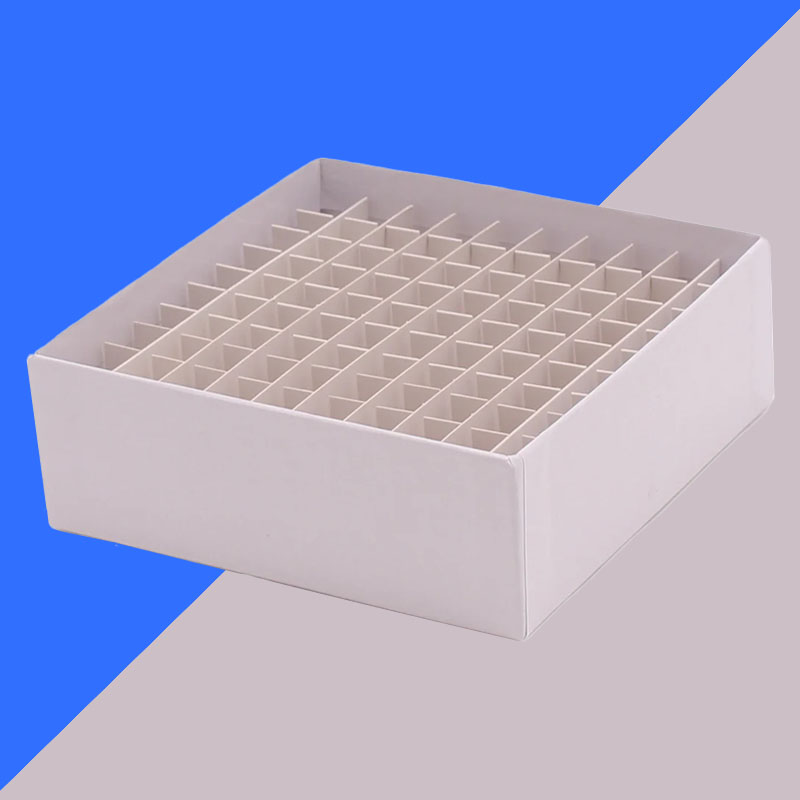
Custom chipboard box dividers from 100 — slotted partition grids in thin, dense chipboard that turn a shipping or storage box into dozens of small cells for vials, sample bottles, jars, spools and parts, without the bulk of corrugated walls.
Eighty-one cells in a box that would hold nine with corrugated
- Board
- Chipboard, gray as standard, 0.030-0.060 in; kraft or white-lined on request
- Construction
- Slotted strips that interlock into a grid; no glue
- Grids
- Any count from 2 x 2 to fine grids for vials, even or uneven cells
Order online
Order chipboard box dividers
Starting from $1.50 per unit
Printed to your artwork or plain, sold in runs of 100 up to 5,000 units per product online. Freight to the US, UK, Canada and Australia is inside the price.
How an online order runs
- Add the units you needThen check out with your delivery address. Add other products to the same order on the way.
- A digital proof comes backLaid on the dieline, before anything prints. Change it as often as you need.
- Pay once you approve itPay by PayPal invoice or bank transfer after you approve your digital proof, or cash on delivery in the US and Canada.
- We make it and ship it deliveredYour delivery date is confirmed with the proof, against the spec and your fill date. Freight and customs are handled on the way to you.
Another size, board or finish, or more than 5,000 units? Send the spec for a price instead. Freight by market and our terms cover delivery and remakes.
Get a price for Chipboard Box Dividers
Send the size and quantity — we reply the same working day with a price, a dieline and a date. Artwork optional at this stage.
- Free dielineThe flat drawing comes with the quote, before you commit.
- Proof before pressNothing is printed until you have seen it laid on the dieline.
- Die kept for reordersTooling is paid once. Every reorder skips straight to press.
- Quoted in four marketsUS, UK, Canada and Australia, in the delivery currency.



Where chipboard beats corrugated as a divider
For heavier glass, where the walls need to cushion, see our corrugated box dividers for bottles.
| Many small cells | Chipboard: thin walls leave the space for the product |
|---|---|
| Light items, under a few ounces each | Chipboard: enough stiffness, much less weight |
| Heavy bottles or jars that hit each other | Corrugated: the flutes absorb the impact |
| Long shipping on a parcel network | Either, with a corrugated outer box doing the protecting |
| Storage and reuse in a lab or a stockroom | Chipboard: dense, holds its shape, stacks flat when out |
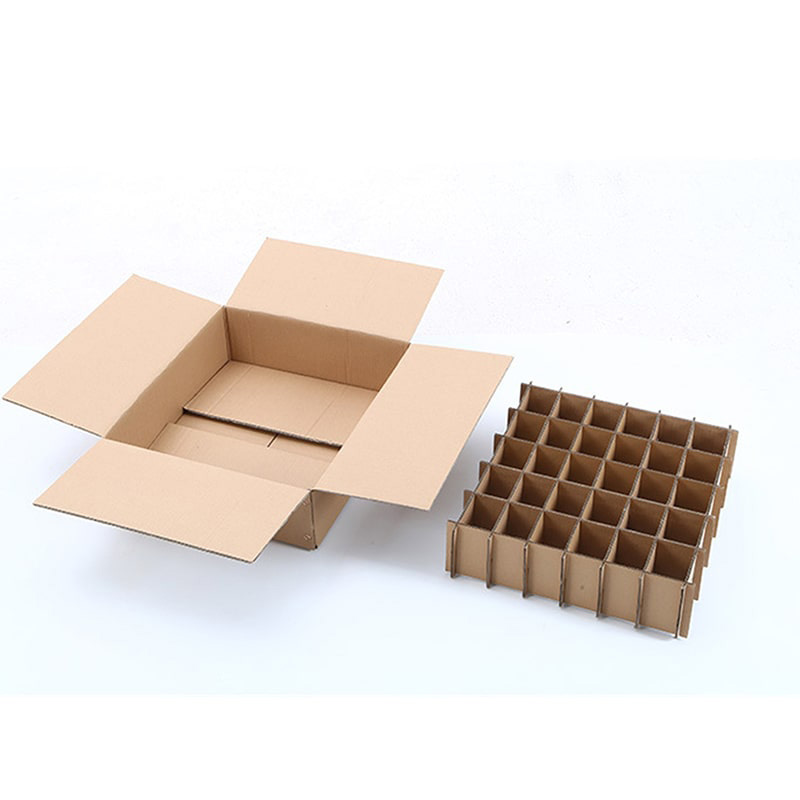
How a slotted grid goes together
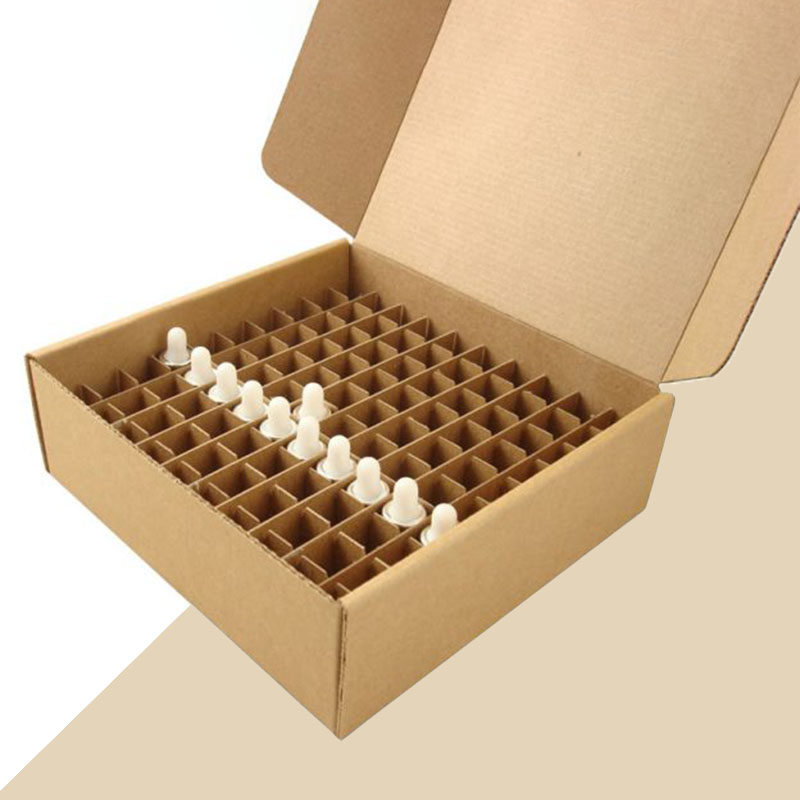
Each grid is two sets of strips, one running each way, cut with slots halfway through their height. The strips slide into each other at the slots and lock into a square or rectangular lattice. No glue is needed, and the grid drops into the box as one piece.
Grids ship flat, either as loose strips or pre-assembled and folded down, depending on whether you pack by hand or on a line.
Cell counts people actually order
- 5 x 5 and 9 x 9 grids for 2 ml and 10 ml vials, sample tubes and cryo boxes.
- 4 x 6 grids for small jars, nail polish, essential oil bottles and lip products.
- 3 x 4 grids for candles in tins, spice jars and thread spools.
- Uneven grids, with wider cells on one side, for a kit of mixed items.
Send the inside dimensions of the box and the diameter and height of the item. We set the cell size so the item drops in with a small clearance, not a rattle.
Thickness and height
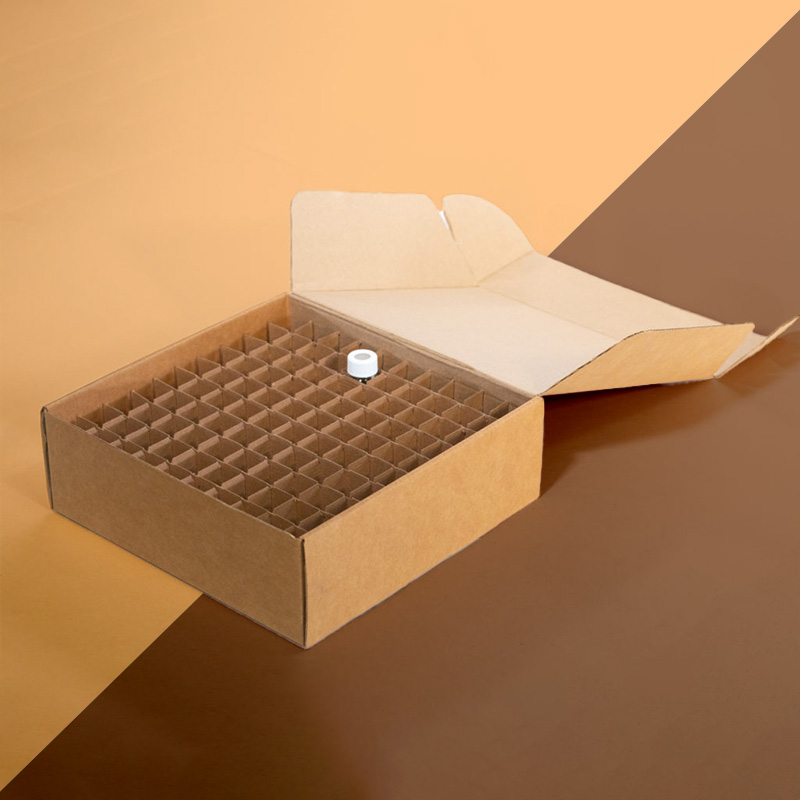
Chipboard dividers are usually cut from 0.030 to 0.060 in board. The thinner end suits light vials and spools; the heavier end holds its shape in a grid deeper than about four inches. Partition height is normally set a little below the inside height of the box so the lid closes flat, or to the full height when a pad sits on top.
The board is gray chipboard as standard, with kraft or white-lined chipboard when the grid is visible to a customer opening the box.
Labs, beauty brands and parts rooms
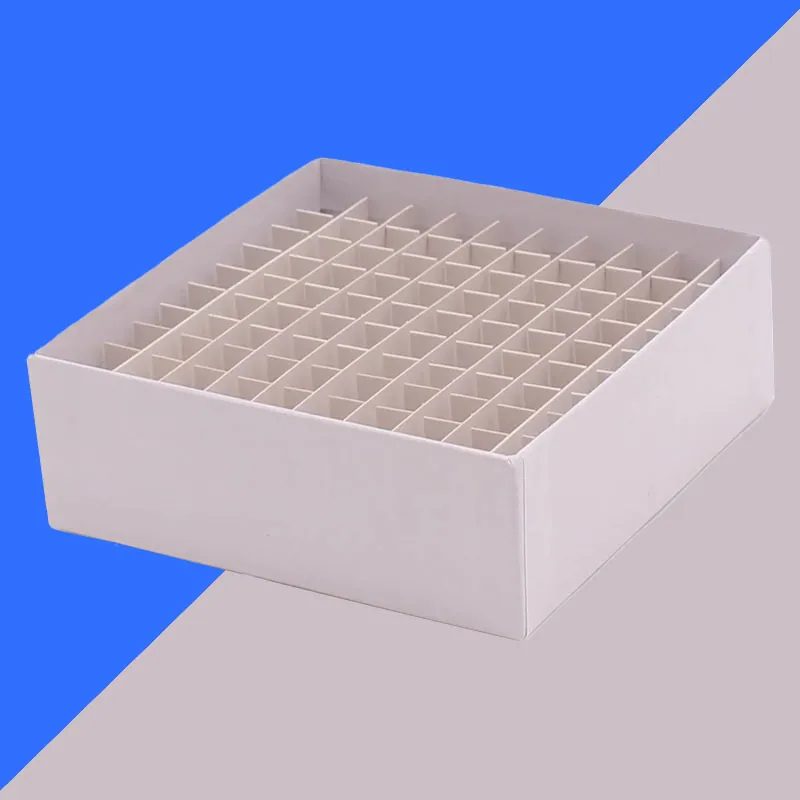
Laboratories use chipboard grids in freezer and storage boxes for sample vials. Beauty and wellness brands use them in sample kits and subscription boxes. Craft and hardware suppliers use them for spools, screws and small parts in a storage box. Our guide to inserts that hold a product covers when a grid is the right insert and when a die-cut tray is better.
Chipboard Box Dividers — specification
The rows that are specific to this build first, then what applies to every job we run. Anything not listed is a question, not a limit — send the brief.
This build
- Board
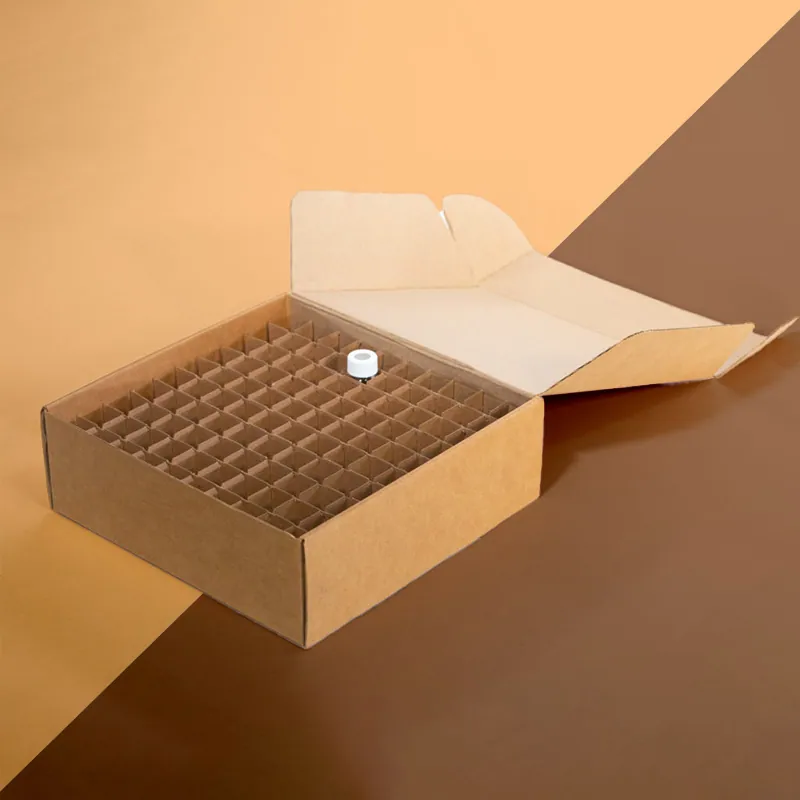
- Chipboard, gray as standard, 0.030-0.060 in; kraft or white-lined on request
- Construction
- Slotted strips that interlock into a grid; no glue
- Grids
- Any count from 2 x 2 to fine grids for vials, even or uneven cells
- Supplied
- Flat strips or pre-assembled grids folded down
- Usually plain; cell numbering or a logo printed on white-lined board
- Minimum
- 100 grids per size
On every job
- Print process
- Flexo in one to four colors straight onto the liner; litho-lamination where the box needs full color or a photograph.
- Color
- Flat colors on kraft. Full color needs a white top liner or a laminated sheet, because brown shifts every color warm.
- Tolerance
- Cutting plus or minus 1.5 mm. The flute compresses, so corrugated runs wider than folding board.
- Tooling
- No die on a regular slotted box, which is cut on a slotter. Die-cut mailers and trays need one, made once and kept.
- Food contact
- Food-grade liners and a vented build where the box carries hot food.
- Sustainability
- High recycled content through liners and flute as standard, and the box recycles whole if it is sealed with paper tape.
- Artwork
- Vector PDF or AI, 3 mm bleed, 4 mm safe area, fonts outlined. We check every file and send a proof before press.
- Dieline
- Supplied free with the quote, before you commit. Yours whether or not you order.
- Sample
- A plain unprinted sample at the finished size on request, for fit and construction.
- Reorders
- Skip the tooling and go straight to press at a lower unit price.
- Lead time
- Quoted with the price against your fill date rather than promised before we have seen the spec.
- Markets
- United States, United Kingdom, Canada, Australia — priced in the delivery currency, freight included.
Boards and films we build chipboard box dividers on
Corrugated is a fluted sheet glued between two liners, and the flute decides nearly everything: how it prints, how it dents, how high it stacks. These are the grades we run.
E flute
About 1.5 mm. Prints well and folds crisply; dents under a stack. Retail boxes, mailers and light shippers.
1.5 mm, single wallB flute
About 3 mm. The working default for parcels — takes print reasonably and stacks reasonably. Most shipping boxes are B.
3 mm, single wallC flute
About 4 mm. More cushioning than B, slightly less stacking strength per weight. Common on grocery and produce cases.
4 mm, single wallBC double wall
B and C glued together, about 7 mm. Heavy or fragile goods, pallet stacking, anything over roughly 15 kg.
7 mm, double wallKraft liner
Brown, strong, absorbent. One or two flat colors flexo print well on it; photographs drink into the brown and go muddy.
Outer and inner linerWhite top liner
A bleached outer liner for full-color print on corrugated. Costs more and marks more easily than kraft.
Outer liner onlyRecycled-content corrugated
High post-consumer fiber through liners and flute. The default for shippers; a slightly grayer brown and no loss of strength at grade.
All flutesCoated and water-resistant
A coating or a wax-free barrier liner for damp stores and cold chains. Check the recycling stream before printing a claim on it.
B and C fluteNot sure which? Say what goes in it and where it is sold — the material follows from that. Our notes on recycled, recyclable and compostable cover which claims each stock can honestly carry.
- 01
Send what you have
A dimension, a photograph beside a ruler, or the product itself. No technical drawing needed — that part is ours.
- 02
We quote and draw
A price, a dieline and a date come back together. If a different build would suit the product better, that is in the reply too.
- 03
Approve the dieline
The flat drawing is yours to check: which panel is the front, where the folds fall, how deep the cavity really is.
- 04
Artwork on the dieline
You place your design on the flat we sent, or we place it for you, and you see a proof before anything goes to press.
- 05
A sample if you want one
A plain unprinted sample at the finished size shows fit and construction — the things a drawing cannot.
- 06
Cut, printed, shipped
The die is cut once and kept, so every reorder skips the tooling and goes straight to press at a lower unit price.
Format
Vector PDF or AI where possible. Raster artwork at 300dpi at final size, in CMYK.
Bleed
3 mm past every trim line, so a fraction of drift on the cutter never leaves a white edge.
Safe area
Keep type and anything important 4 mm inside the cut and away from every fold.
Color
Convert to CMYK before sending. Uncoated stock prints lighter; a spot color is the only exact match.
Fonts
Outline them or supply the files. A missing font substitutes silently and the proof will not match.
Barcodes
On a light, matte, unvarnished patch with the quiet zone clear — a code on gloss fails the scanner.
Not set up that way? Send it anyway — fixing a file is a short conversation, and we check every one before press. Our guide to preparing print files covers each point.
Corrugated takes fewer finishes than folding board, and the ones it takes it takes well.
Flexo on kraft
One or two flat colors straight onto brown. Cheap, fast, honest.
Litho-lamination
An offset sheet glued to the flute: full color and photographs on a shipper.
Aqueous varnish
Scuff resistance with no film, so the box still recycles whole.
White top print
Full color flexo on a bleached liner; brighter, and it marks more easily.
Inside print
A second pass on the inner liner — the panel a customer sees first.
Printed tape seal
The brand applied at the last moment, on paper tape that recycles with the box.
Not sure which suits the shelf it sells from? Say where the product is sold and we suggest one — our notes on specialty finishes show them on real boxes.
Sizing a corrugated box against the carrier, not the catalog: chipboard box dividers
Corrugated is cut to your internal size, so the box goes round the product rather than the product going into a stock size. That is where the money is: a box 20 mm smaller each way is often a whole postage band cheaper.
- Internal dimensions
- Length, width and depth of the space you need. Board thickness is added outside that, and the flute is thicker than people expect.
- Clearance and void fill
- 5–10 mm a side for a rigid product. Size it properly and you need no void fill at all, which is cheaper and better received.
- Stacking
- Tell us how high the boxes stack on a pallet or a shelf. Edge crush grade is specified from that, not guessed.
- Weight
- The contents weight sets the flute and the liner grade. Over about 15 kg we move to double wall.
- Score allowance
- Corrugated needs more room at the folds than boxboard. The dieline accounts for it; a box drawn from flat dimensions comes out tight.
- Cutting tolerance
- Plus or minus 1.5 mm on corrugated, wider than folding board because the flute compresses.
Not sure your numbers are right? Send the product dimensions rather than the box dimensions and we work the box out — the full method is in our guide to measuring for a box.
Interactive · five steps · no sign-up
Build your Chipboard Box Dividers in 3D
Pick a shape, type a size, choose a board and a finish. The preview on the left redraws as you go, and the spec lands with us exactly as you set it.
Frequently asked questions
Got a question about chipboard box dividers? The answers below cover what we get asked most. If yours is not here, send it with a brief, message us on WhatsApp, or call +1 503-461-4788 — we reply the same working day.
What are chipboard box dividers used for?
Chipboard box dividers split a box into small cells so vials, jars, spools or small parts each have their own space and do not knock together.
Are chipboard box dividers strong enough for glass?
For light glass like vials and small sample bottles, yes. For heavier bottles that need cushioning, corrugated dividers are the better choice.
How thick are chipboard box dividers?
Usually 0.030 to 0.060 in. Thinner board suits light items and shallow grids; thicker board keeps a deep grid straight.
Do chipboard box dividers need glue?
No. The strips are slotted halfway through their height and slide into each other to lock as a grid.
Can chipboard box dividers fit a box I already use?
Yes. Send the inside length, width and height of your box and the size of the item, and we cut the chipboard grid to fit.
How many cells can a chipboard box divider have?
As many as the board and the item allow. Grids of 81 cells for 2 ml vials are common because chipboard walls are so thin.
Can chipboard dividers have cells of different sizes?
Yes. Uneven chipboard grids, with wider cells on one side, hold mixed kits in a single box.
Do chipboard box dividers come assembled?
Either way. They ship as flat strips for hand packing or pre-assembled grids that fold down and open up in the box.
Can chipboard dividers be printed or numbered?
Yes, on white-lined chipboard. Labs often number the cells; retail kits sometimes carry a logo on the top edge.
Are chipboard box dividers recyclable?
Yes. Plain chipboard is a paper product and goes in curbside paper recycling with the box it came in.
Do you make the box as well as the chipboard dividers?
Yes. We can supply the outer box and the grid together, sized to each other, from 100 of each.
Same range
More corrugated boxes we make
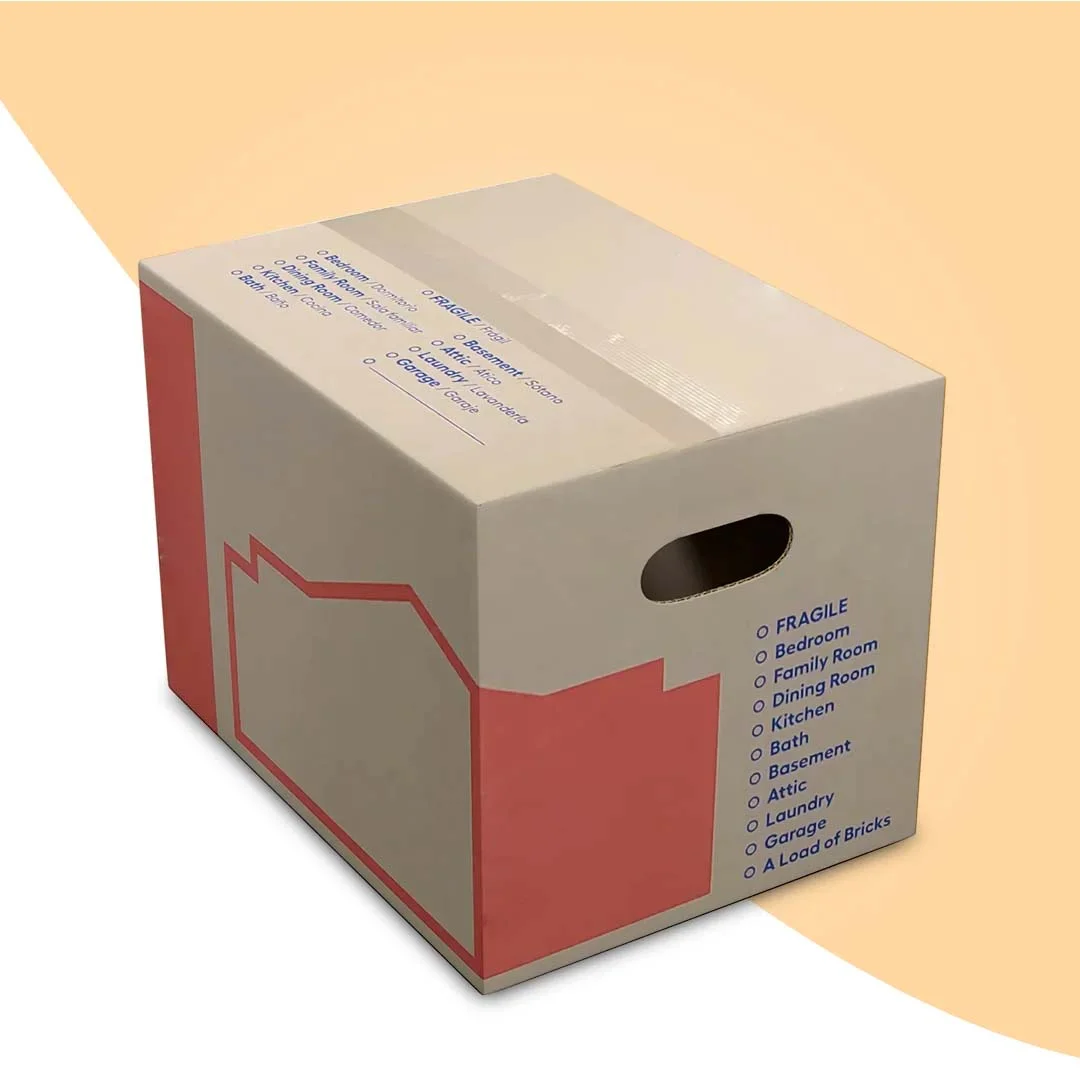
20x20x20 Cardboard Boxes
100 boxes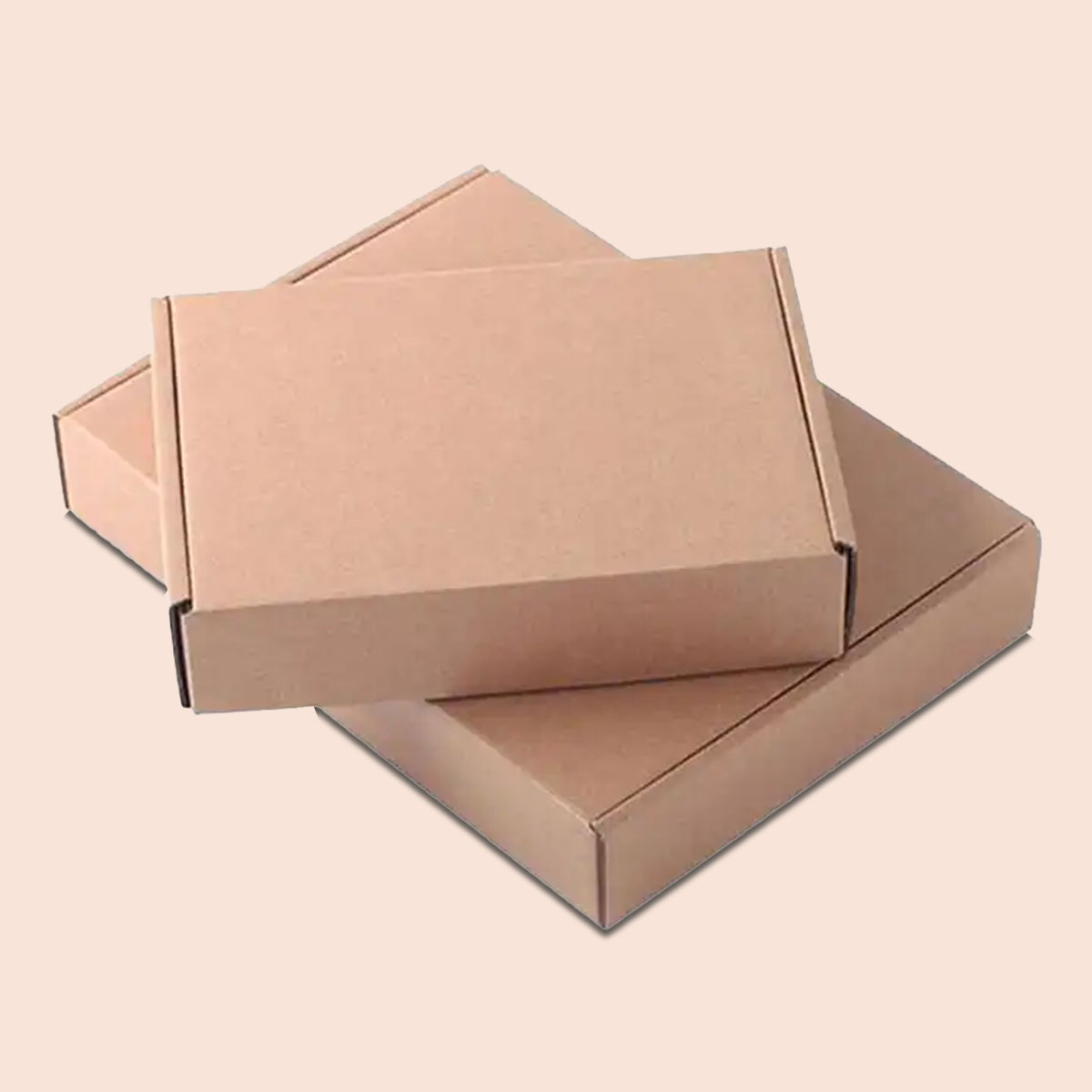
Cardboard Boxes
100 boxes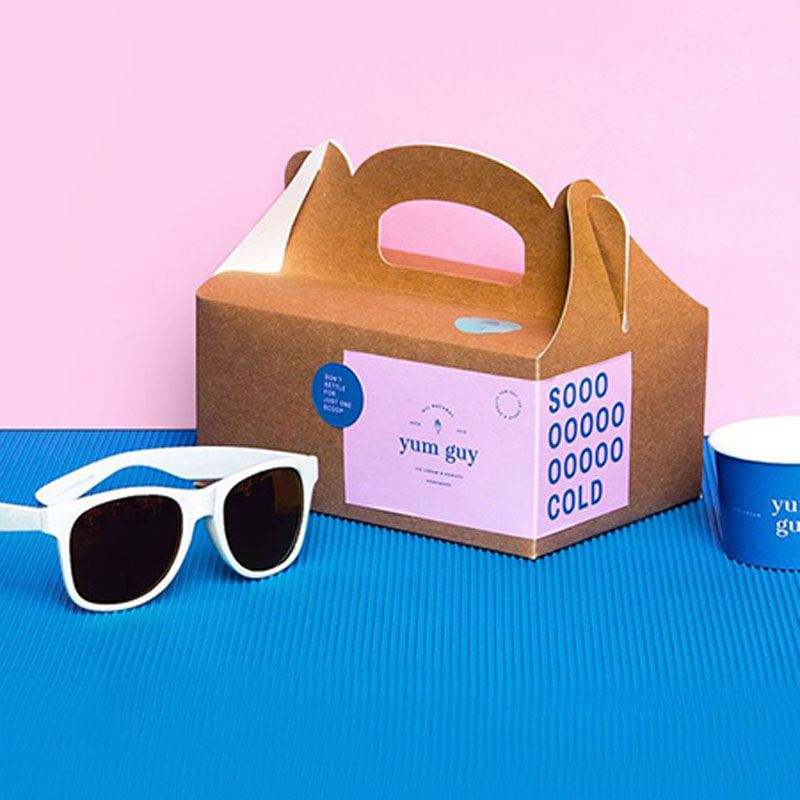
Cardboard Boxes with Handles
100 boxes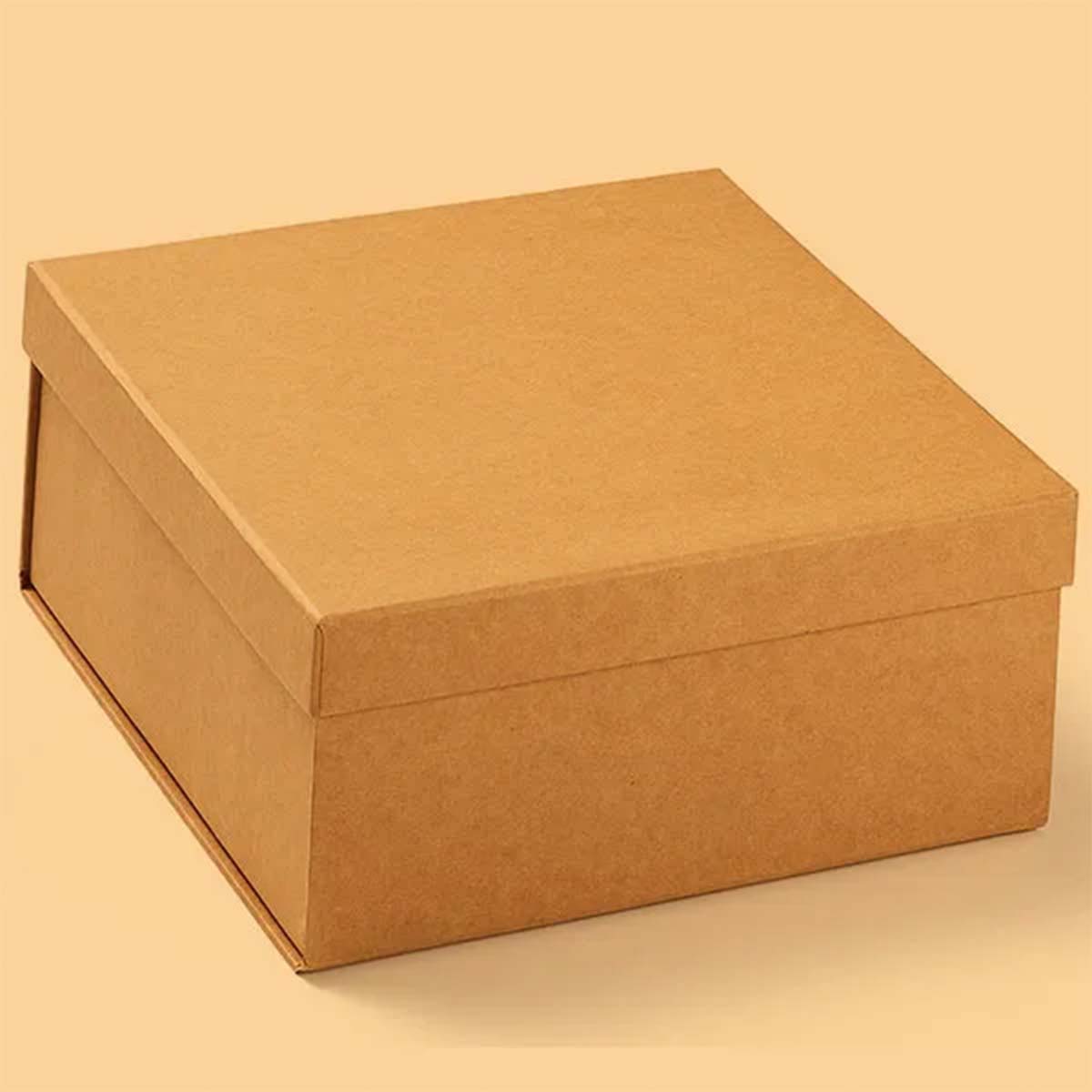
Cardboard Boxes with Lid
100 boxes
Corrugated Box Dividers
100 sets
Corrugated Boxes 24 X 24 X 4 Kraft Flat
100 boxes
Corrugated Cardboard Inserts
100 inserts